Why turning off cancer genes doesn't always stop tumors
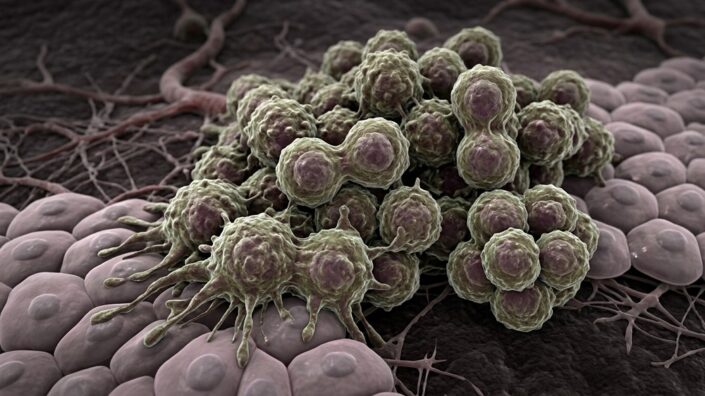
Turning off cancer-driving oncogenes often triggers senescence—a growth pause—not cell death. New research shows these surviving cells can reshape the tumor microenvironment, accumulate genetic damage, and later relapse in more aggressive forms. That is why turning off cancer genes does not always deliver lasting remission, even when tumors initially shrink.
Key Takeaways
- Oncogene withdrawal can push tumor cells into senescence rather than killing them outright.
- Senescent cancer cells stay metabolically active and secrete inflammatory, tissue-remodeling factors.
- Tumors can relapse even when the original oncogene remains suppressed.
- Relapsed cells may acquire Mdm2 dependence, polyploidy, and an immunosuppressive niche.
- Durable targeted therapy may require eliminating or neutralizing senescent survivors.
What happens when cancer oncogenes are switched off?
Many cancers depend on a single oncogenic signal to keep growing. Drugs that block drivers such as mutant BRAF can produce dramatic shrinkage, but a fraction of cells often survives. In a recent study published in Nature Communications, researchers used a switchable SV40 large T antigen (Tag) model—and human BRAFV600E melanoma cells treated with vemurafenib—to mimic what happens when that signal disappears.
When the oncogene was withdrawn, cells rapidly stopped dividing and developed senescence markers: enlarged, flattened morphology and senescence-associated β-galactosidase activity. Cell-cycle regulators shifted toward durable arrest. Notably, this senescence followed a non-canonical path driven largely by p21 rather than strong p16 induction—a pattern linked to how Tag interacts with p53 and Rb.
Why do senescent cancer cells pose a relapse risk?
These cells are not inert. They rewired gene expression, boosted both glycolysis and mitochondrial respiration, and secreted inflammatory and matrix-remodeling molecules. That metabolic flexibility and senescence-associated secretory activity can influence immune and stromal cells nearby.
The critical finding: tumors that had experienced oncogene withdrawal were more likely to recur than those that had not. In one experiment, nine of twelve mice developed tumors after a long delay despite continued Tag suppression—meaning recurrence did not require restoring the original driver. Cells from relapsed tumors showed chromosomal instability, polyploidy, and elevated Mdm2, which suppresses p53. Relapsed cells were sensitive to an Mdm2 inhibitor that left parental cells unaffected.
The tumor microenvironment shifted too. Recurrent tumors had more endothelial cells and fewer conventional dendritic cells, alongside more regulatory macrophages—suggesting an immunosuppressive, pro-growth niche. For readers tracking longevity and biohacking research, the overlap with senescence biology is hard to miss: the same cellular state linked to aging may also enable cancer escape.
Could this change how targeted therapy is designed?
Human A375 melanoma cells treated with vemurafenib developed senescence-like features, suggesting clinical relevance beyond the mouse model. However, authors caution that escape routes depend on tumor genetics—Mdm2-driven bypass may apply mainly when p53 remains functional, not in TP53-mutant cancers.
The implication is practical: suppressing an oncogene may be necessary but insufficient. Strategies that clear senescent tumor cells—senolytics—or block pathways such as Mdm2 might need to accompany driver inhibition to prevent the short-term win from becoming long-term relapse.