Why Thomas Paine remains Philly's most influential citizen
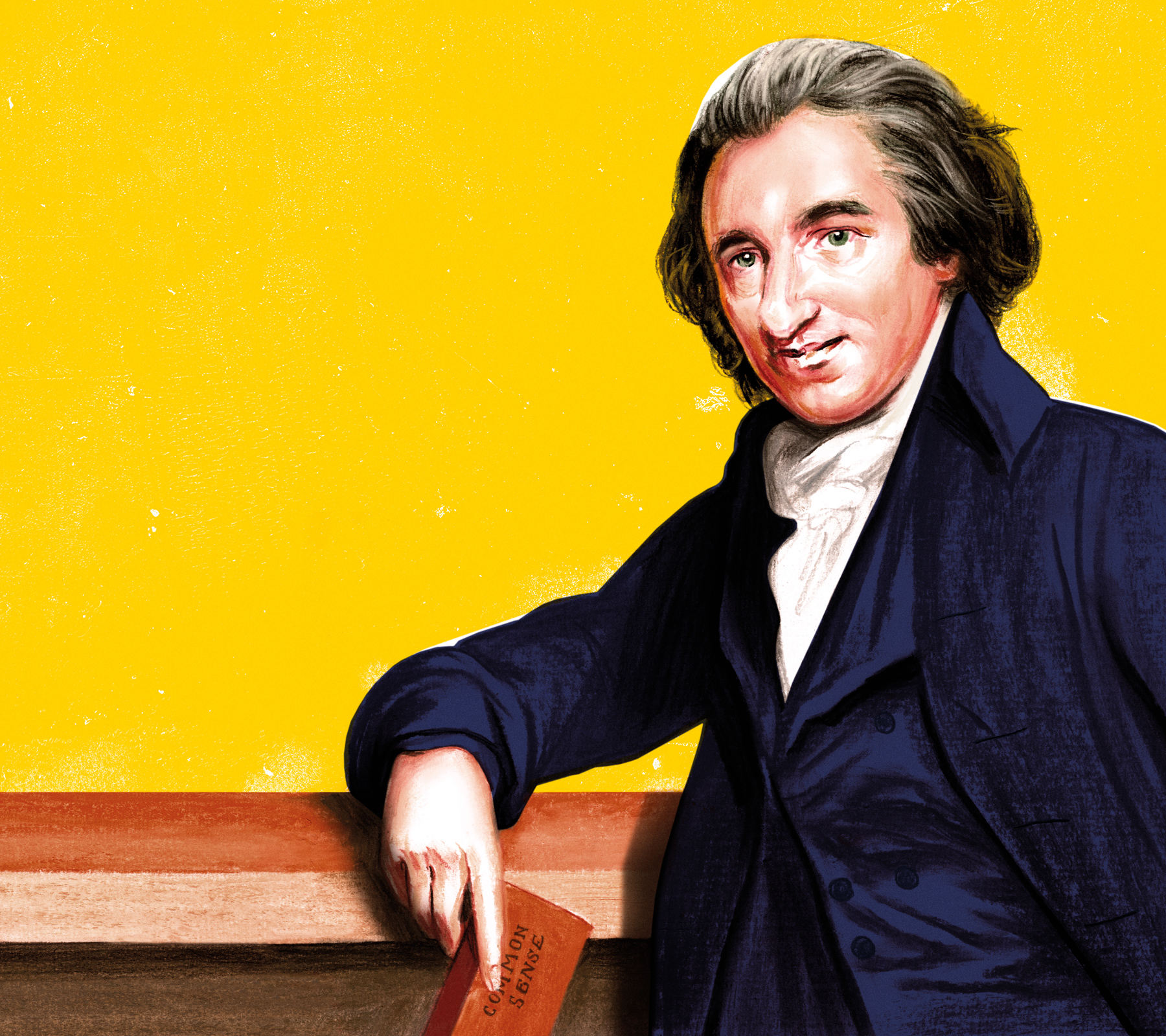
Thomas Paine is arguably the most impactful Philadelphian who ever lived because his pamphlet Common Sense, published in January 1776, reframed a colonial tax dispute into a revolution against monarchy—and reached roughly 150,000 readers in plain language ordinary citizens could spread in taverns, shops, and newspapers.
As America marks 250 years of independence, a new Philadelphia Magazine feature argues Paine—not Franklin or Jefferson—deserves top billing among the city's world-changing figures. Historians and public lectures are revisiting a founder whose words traveled faster than armies.
Key Takeaways
- Common Sense sold about 120,000 copies in its first three months—extraordinary reach in a population of roughly 2.5 million.
- Paine wrote for common people, not elites, using vivid barnyard imagery instead of classical references.
- After independence, his French Revolution activism and The Age of Reason collapsed his American reputation for generations.
- Philadelphia today barely memorializes him despite his role in the city's truth-telling tradition.
Why Did Common Sense Change the Course of the Revolution?
Until early 1776, most colonists blamed Parliament for oppressive measures and hoped for reform—not a break with King George III. Paine's pamphlet, published anonymously on January 10 at Robert Bell's print shop near 3rd Street, asked a bolder question: why should kings rule at all?
According to Zócalo Public Square, it became the first and most influential outright call for independence. In 25 editions, colonists read it aloud in taverns and shops. Delegates in Philadelphia, including John Adams, acknowledged its "manly and striking" power.
Within months, 60 towns, counties, and colonies adopted their own declarations of independence. Less than six months later, the Continental Congress moved toward the formal break Paine had demanded.
What Made Paine Different From the Other Founders?
Paine arrived in Philadelphia in late 1774, carried ashore on a stretcher after typhus ravaged his Atlantic crossing. Within two years, he had become a celebrity whose ideas helped invent a new kind of nation—one where, as he wrote, "the law ought to be King."
Unlike wealthy founders, Paine lacked formal education and was often broke. He championed democracy, opposed slavery, backed universal suffrage, and proposed a social safety net long before the United States built one. Pulitzer Prize-winning historian Gordon Wood noted Paine expected readers to know only the Bible—not Latin epigrams.
In that sense, his pamphlet worked like proto-viral media: a pop song for the masses that reframed what felt possible. That same instinct—ideas scaled through common language—echoes in today's debates covered in our Future Tech & AI Wonders section about how information moves faster than institutions.
How Did a Revolutionary Hero End Up Largely Forgotten?
Paine's post-independence career was tumultuous. He joined the French Revolution's National Assembly, was imprisoned during the Reign of Terror, and wrote The Age of Reason, which attacked formal religion. As Dr. Patrick Callaway noted in a June 2026 Jesup Memorial Library lecture listed by The Ellsworth American, Paine's U.S. reputation collapsed almost overnight.
He returned to America in 1802 largely shunned; only six people attended his 1809 funeral. Teddy Roosevelt later dismissed him as "a filthy little atheist," and his work was banned during the McCarthy era.
Yet Philadelphia Magazine contends Paine remains essential: a reminder that reason and the common good can outlast force. As he wrote in Common Sense, "We have it in our power to begin the world over again."