When will the smoke clear for Americans this weekend?
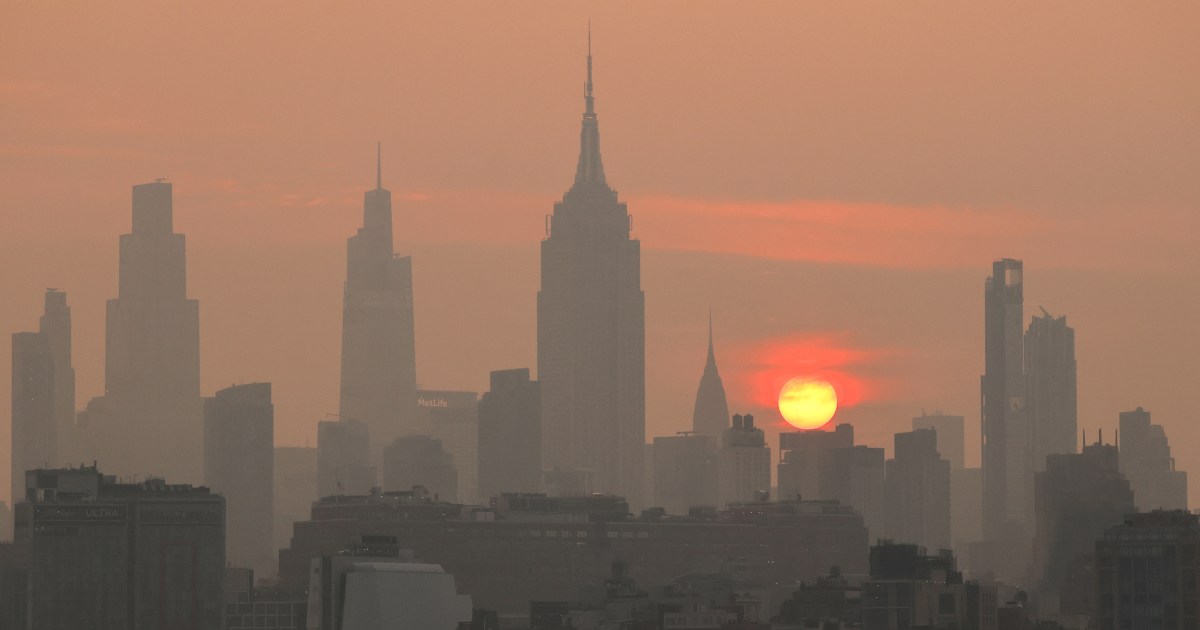
When will the smoke clear? Forecasters say a cold front should push Canadian wildfire haze out of the D.C. region Saturday, with Maine expecting less noticeable smoke Sunday—though another wave later is not ruled out. More than 100 million Americans faced unhealthy air Friday as smoke blanketed the Midwest and East.
Key Takeaways
- More than 100 million people in the U.S. faced dangerous wildfire smoke as hundreds of Canadian fires sent haze south.
- Chicago, Detroit, Milwaukee, Pittsburgh and Washington posted AQI readings above 200 on Friday; parts of Michigan, Ohio and Wisconsin hit the 300s.
- D.C. and Baltimore were under a code purple alert Friday; Maine had an Air Quality Alert Saturday from 10 a.m. to midnight.
- Relief looks likeliest Saturday into Sunday in the Mid-Atlantic and Maine, but experts still urge indoor stays, masks and air filtration.
Hot summer air turned stuffier for a huge share of the country after more than 800 wildfires burning across Canada—large clusters in Ontario near Minnesota—fed a thick smoke plume. A North American heat wave helped trap that unhealthy air and carry it from Milwaukee to Washington, D.C., NBC News reported.
Cities including Chicago, Detroit, Milwaukee, Pittsburgh and Washington led global worst-air rankings Friday with Air Quality Index scores above 200, according to IQAir data cited by NBC. Parts of Michigan, Ohio and Wisconsin saw AQI readings in the 300s—levels where experts advise skipping outdoor activity. For more coverage of how sensors and data shape daily risk maps, see Future Tech & AI Wonders.
Where can Americans expect the worst air and haze?
Smoke shrouded swaths of the Midwest and northern states through the Mid-Atlantic. New York opened emergency operations Wednesday with free KN95 masks and shelter space. Philadelphia suspended trash pickup and closed public pools Friday as air quality worsened.
In the capital region, a code purple alert covered D.C. and Baltimore on Friday, meaning pollution was unhealthy for everyone, the National Weather Service and local health agencies said via WTOP. Maine remained under an Air Quality Alert Saturday from 10 a.m. to midnight, with particles potentially unhealthy for sensitive groups and more haze possible in the afternoon, WMTW reported.
When will the smoke ease in hard-hit regions?
For the D.C. area, an incoming cold front was expected to begin clearing smoky air Saturday while bringing strong storms and heavy rain, with further improvement Sunday despite muggy starts. Maine forecasters said Sunday should look clearer as smoke pushes out, though they did not rule out another wave later.
Nationwide timing still depends on wind and fire activity; Friday’s peak left more than 100 million people breathing particle-laden air from the Canadian plume.
Who faces the greatest health risks from this smoke?
EPA AQI scores of 100 or higher signal unhealthy air. Wildfire smoke’s fine PM2.5 can reach deep into lungs and the bloodstream. Children, pregnant people, older adults and those with asthma or heart disease are especially vulnerable, and high levels can harm anyone who breathes them.
UCLA’s Suzanne Paulson told NBC that wildfire particles can be more toxic than typical urban pollution and that people should treat the AQI as “the next color up” when wildfire smoke dominates. In D.C., physicians warned of chest tightness, airway inflammation and extra risk for anyone with lung disease.
How can you protect yourself while the haze lasts?
Stay indoors and limit outdoor exertion where AQI is high. Use an air purifier or set AC to recirculate; wear N95 or KN95 masks outside—surgical masks do little against fine particles. Limit children’s outdoor time, and watch for headache, itchy eyes, sore throat, coughing or chest pain.
D.C. cancelled outdoor activities and closed outdoor pools; Fairfax County halted recess and outdoor practices. Officials also urged shorter outdoor pet walks until the air improves.