What's wrong with the United States Congress right now?
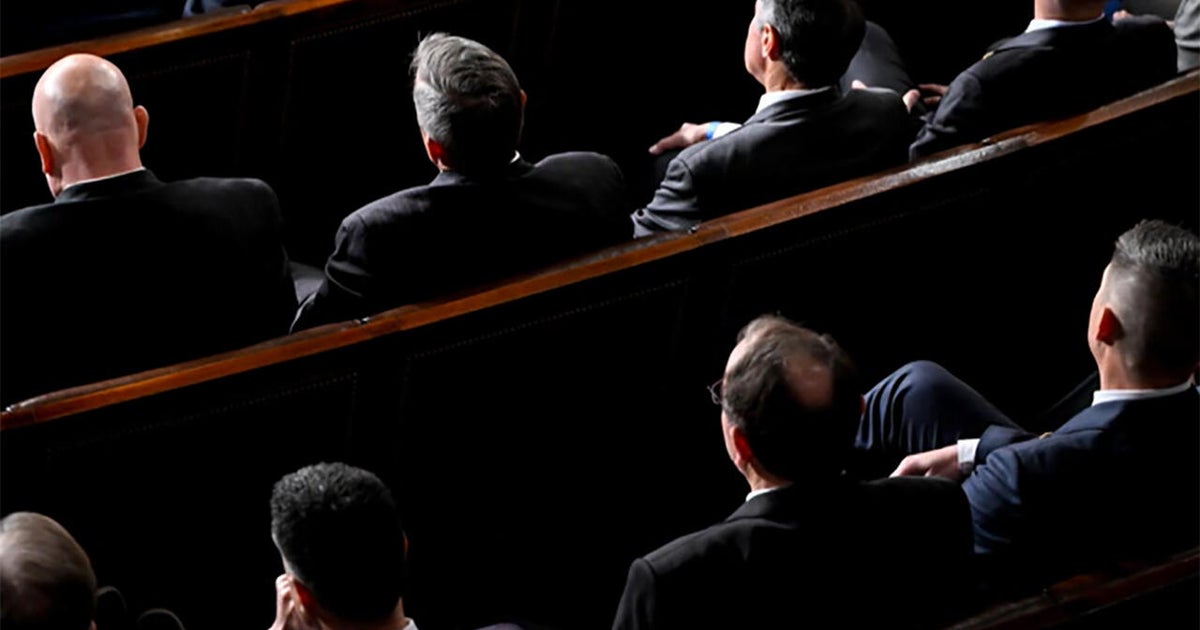
The United States Congress is struggling because partisan gridlock, weak institutional capacity, and a willingness to cede constitutional powers to the president have left lawmakers unable to legislate through regular, deliberative processes. Nearly nine in ten Americans say they are unhappy with the institution, and experts describe it as both broken and diminished.
Key Takeaways
- Nearly 9 in 10 Americans say they are unhappy with Congress, and veterans of Capitol Hill call the institution broken.
- Lawmakers have repeatedly ceded Article I powers—on tariffs, war powers, and more—to a presidency that now drives much of federal policymaking.
- House offices remain capped at 18 full-time staff since 1975 even as districts approach 800,000 people, draining expertise and slowing real legislating.
- Power has concentrated in party leaders, producing complex omnibus bills with limited rank-and-file input instead of regular committee-driven lawmaking.
- Experts say restoring capacity—staff, committees, and support agencies—is a prerequisite for Congress to reclaim its constitutional role.
That frustration is not new. New York Times chief Washington correspondent Carl Hulse told CBS News that hating Congress is a great American pastime—but the current breakdown is deeper than jokes about lawmaking. He has covered Capitol Hill since the Reagan years and says he has spent a career watching the institution decline, with very little cooperation between the parties.
For households watching federal debt, housing costs, and Social Security headlines, the dysfunction is not abstract. Those same pressures shape the money questions tracked in our Wealth Hacks & Passive Income coverage, from long-term savings risk to how Washington’s gridlock spills into everyday budgets.
Why has the United States Congress lost so much power?
Under the Constitution, Congress holds real authority. Hulse reminded viewers that Article I is “a real thing,” yet he argued Republicans in this Congress have made a lasting mistake by ceding ground to the administration on tariffs, war powers, and other enumerated powers. Once given away, he warned, that power does not come back—even under a future Democratic president.
Brookings Institution senior fellow Sarah Binder told CBS News the legislative branch is both broken and diminished. Congress still has the power of the purse and the power to declare war, she said, but for decades it has often handed that authority to the president and then struggled to use it—or reclaim it. The “muscle memory” for dealmaking and problem-solving, in her words, has atrophied.
American Enterprise Institute senior fellow Philip Wallach described Congress as “marginalized,” partly because an empowered presidency now looks like where the real action is. In his current term, President Trump has issued more than 260 executive orders—more, CBS News noted, than were issued across the combined 12 years of the Obama and Biden administrations during Trump’s five-and-a-half years in office.
CBS News also reported that Congress has been routinely bypassed on trade and on the war with Iran, while facing pressure from the White House on other priorities, including an overhaul of federal voting rules. When presidents govern by executive order, the public’s question—“What is Congress doing?”—gets louder.
Is polarization the only reason Congress cannot legislate?
Polarization is real, and both parties still point fingers. Rep. Peter Welch (D-Vt.) called the Republican-controlled House chaotic. Sen. Katie Britt (R-Ala.) accused Democrats of putting politics over people. Sen. Chris Coons (D-Del.) said the biggest voice in the room, Trump, is fighting against his own Congress.
Republicans currently control the Senate and the House, yet legislation often stalls. CBS News reported that the 119th Congress has so far passed fewer bills than many of its predecessors. Some measures still landed with force: a GOP mega-bill projected to cut taxes by $4.5 trillion over the next decade, a recently passed bipartisan housing bill, and a partial government shutdown over homeland security funding.
Wallach argued that what has changed is how members see the job. Compromise, he said, has become a dirty word; too many lawmakers treat their role as defending an allied White House or opposing the other party’s president, rather than building coalitions to solve public problems. Binder added that polarized America, with factions inside each party, makes the broad bipartisan majorities needed for major action extremely hard to assemble.
Hulse also pointed to tighter margins, heavily gerrymandered districts, and a grim political climate worse than when he arrived in 1985—when more members were World War II veterans who, in his telling, treated hard bargaining as part of the work. Recent disruptions, including former majority leader Mitch McConnell’s weeks-long hospitalization and the sudden death of Sen. Lindsey Graham of South Carolina, underscored how age and uncertainty compound the institutional strain.
What capacity problem is quietly crippling Capitol Hill?
Partisan theater gets the headlines. Underneath it, University of Virginia public policy professor SoRelle W. Gaynor argues in a Democracy Project essay, sits a more basic failure: Congress is understaffed and under-resourced relative to the executive branch it is supposed to check.
Gaynor notes that the average congressional staffer stays less than two years, and Congress has not had a meaningful pay raise in almost 20 years—pay has fallen in real terms after inflation. House rank-and-file offices have been capped at 18 full-time staff since 1975, even as districts now approach 800,000 people. That churn erodes institutional knowledge in policymaking, investigations, procedure, and constituent service.
Since the mid-1990s, she writes, power and information have also been centralized in party leadership. After Newt Gingrich became House Speaker in 1995, key alternative power centers—committee staff, caucus staff, and support agencies such as the Congressional Research Service—were defunded or weakened. The legislation that does pass often arrives as large omnibus packages managed by leaders: useful for cobbling together coalitions, but complex and light on rank-and-file input.
Gaynor’s fix starts with institutional investment through the Legislative Branch Appropriations Act: more resources for rank-and-file offices, committee staff, and agencies such as CRS and the Government Accountability Office, with ratios and cost-of-living adjustments that do not simply reinforce partisan control. Members, she adds, can also choose committee work and policy staffing over dependence on leadership talking points.
Should the public keep pressuring Congress to deliver?
Wallach cautioned that even a functioning Congress will rarely be popular—“sausage-making” is messy by design. Binder disagreed that the public should ease up. With about $30 trillion in public debt, Social Security under strain if lawmakers do not act, and housing costs weighing on families, she said people should be mad—while also recognizing that unreasonable expectations collide with polarized math.
Looking ahead, Binder remains an “eternal optimist” but not hopeful that today’s roots of dysfunction fade soon; Congress often kicks hard problems to the future. Wallach took the long view: over two centuries, members have reformed the institution before, and Congress retains the power to put itself back at the center of American governing.
The United States Congress is not failing for one reason. It is failing because polarization, executive shortcuts, and hollowed-out capacity reinforce one another. Until lawmakers rebuild the staff, committees, and habits that make regular-order legislating possible, public anger—and policy drift—are likely to remain the status quo.