What is a heat dome bringing record heat to the US?
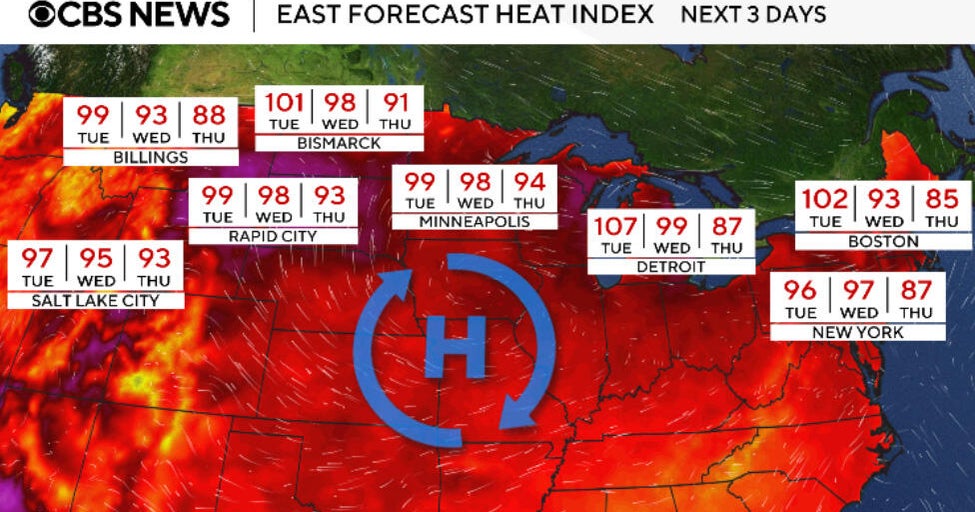
If you are asking what heat dome means, it is an atmospheric phenomenon that traps hot air over a region—and roughly 100 million Americans are now under heat alerts as that system spreads from the Plains and Rockies into the Midwest and Northeast. Forecasters warn temperatures could run 20 to 30 degrees above average, with heat indices reaching the high 90s to over 100 for days.
Key Takeaways
- Roughly 100 million people face extreme temperatures as alerts stretch from the Northern Plains to New England and the mid-Atlantic.
- All-time records fell Sunday in Billings, Montana (111°F), Salt Lake City (109°F), Sheridan, Wyoming (109°F), and Idaho Falls, Idaho (103°F).
- The Northern Tier is expected to peak Tuesday; the Northeast peak arrives Wednesday with widespread 90s and heat indices topping 100.
- Forecasters call the prolonged heat exceptionally rare for mid-July and warn of heat stroke, wildfire risk, and limited overnight cooling.
- Cold fronts from eastern Canada may ease conditions in northern states from Wednesday through the weekend.
What is a heat dome and why is it spreading east?
A heat dome is high-pressure air that essentially traps hot air over a particular location, building intensity with limited relief even at night. According to CBS News, the dome built in the West after the summer's first major heat wave and is now pushing searing heat and humidity across the Midwest toward the East.
The National Weather Service said hazardous heat would spread eastward while lingering across central states through next weekend. The Weather Channel reports a strong upper-level high building toward New England, carrying triple-digit highs across the northern Plains and 90s into the upper Midwest before reaching the Great Lakes and Northeast.
Where are the hottest temperatures expected this week?
Maps show heat alerts—including extreme heat watches, warnings, and advisories—from the Northern Plains through New England. CBS News meteorologist Nikki Nolan said widespread highs between 105 and 115 degrees could break local records and elevate wildfire danger.
In Billings, Montana, Sunday's 111-degree reading set a record as heat gripped the Great Basin, Rockies, and desert Southwest. Miles City, Montana, hit 115 degrees, shattering its prior mark. Salt Lake City reached 109 degrees, an all-time high per the National Weather Service, with most of Utah under an extreme heat warning through Tuesday morning.
Extreme heat warnings also cover vast sections of the Dakotas. By Tuesday, hot humid air reaches the Midwest and East, with afternoon temperatures in the 90s and some areas approaching 100. Daily records are possible Tuesday and Wednesday from New England and upstate New York to the mid-Atlantic.
How long will the extreme heat last?
CBS News reports the Northern Tier peaks Tuesday while the Northeast peaks Wednesday, with heat indices in the high 90s to over 100 for several days. Morning lows in larger cities may only fall into the 70s, offering little overnight recovery.
Relief may arrive in stages. The Weather Channel notes a fairly strong cold front plunging from eastern Canada into the northern tier late Tuesday into Wednesday, followed by a secondary front later in the week. That could cool the northern Great Lakes and northern New England by Wednesday, then more of the Midwest and Northeast from Friday into the weekend.
What health and safety risks should people watch for?
Forecasters warn the unusually prolonged heat is exceptionally rare even for mid-July. The weather service cautioned that extremely hot daytime highs combined with potentially record-warm lows will increase heat stress due to limited relief, raising the chance of heat-related illnesses including heat stroke.
Extreme heat watches signal conditions favorable for dangerous heat within 24 to 48 hours; warnings mean those conditions are more certain. Officials advise suspending major outdoor activities, locating cooling shelters, and checking on vulnerable neighbors without air conditioning.
As this heat dome shifts across heavily populated regions, tracking these alerts matters for public health and daily planning—topics we also explore in our Future Tech & AI Wonders section.