What did Trump announce about midterms emergencies?
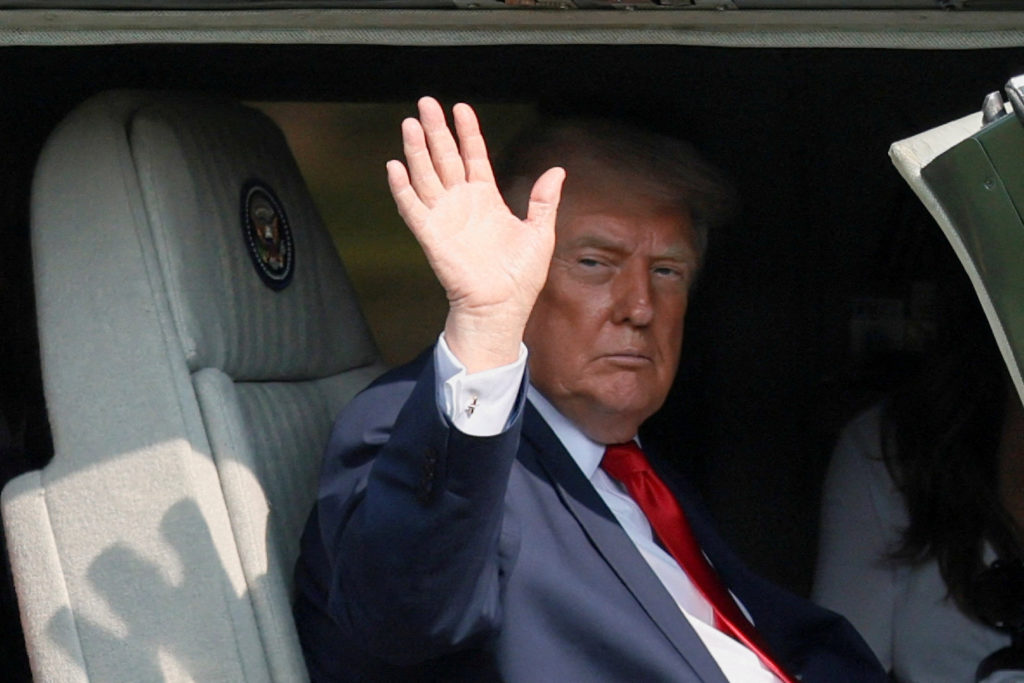
What did Trump announce? He has not declared a national emergency around the midterms. In a Thursday primetime speech on election integrity, former White House attorney Ty Cobb told PBS NewsHour the address was meant to build a legal and political predicate for an emergency near Election Day—while Democrats separately warn about firings at the Election Assistance Commission.
Key Takeaways
- Trump has not announced a midterms national emergency; Ty Cobb argues his Thursday speech was designed to set that stage.
- Cobb tied the speech to a wider pattern: voting-machine focus, mail-in and registration fights, and removals at the Election Assistance Commission (EAC).
- CNN reporting shows Democrats at high alarm after Trump fired three of four EAC commissioners, though election experts say states still run the vote.
- Allies have floated ICE agents at polling places; Cobb called that a “virtual certainty,” while CNN notes no publicly reported concrete deployment plan.
- Watchdogs say the EAC purge may have limited immediate effect on November logistics, but they still see a broader push to centralize election influence.
The viral question—“what did Trump announce”—is easy to oversimplify. The clearest reporting from PBS NewsHour is not that an emergency was declared. It is that a former Trump White House attorney believes Thursday’s address was meant to justify one later.
That distinction matters for anyone reading politics as market risk, policy risk, or household planning. Readers who track those knock-on effects can also browse BlasterPost’s Wealth Hacks & Passive Income coverage for related money and risk context.
What did Trump announce in Thursday’s speech?
PBS framed the night around what President Trump was trying to achieve with a White House address on elections, authority limits, and consequences for future contests. Geoff Bennett interviewed Ty Cobb, who served as a White House attorney in the first Trump administration and managed the response to special counsel Robert Mueller’s Russia probe.
Cobb’s bottom line was blunt. “I think tonight’s speech is intended to add the predicate that he needs to declare an emergency at or about the time of the elections,” he said.
In Cobb’s telling, the speech sits inside a longer pattern: a presidential focus on voting machines, efforts to change mail-in voting and voter registration rules, and the recent removal of Election Assistance Commission members. He did not describe the speech as a formal emergency proclamation.
So if you are asking what did Trump announce in the legal sense of invoking emergency powers, the sourced answer from this coverage is: he has not. The claim in play is that the speech builds the case for such a move later.
Why are Democrats warning about an election takeover?
A CNN analysis published days earlier captured Democratic alarm at a different, concrete step: Trump’s firing of three of the four commissioners on the Election Assistance Commission.
Congress created the EAC in 2002 as an independent bipartisan body that distributes federal money and support so states can run more secure elections. CNN noted that the Federal Election Commission, which handles campaign finance, also lacks a quorum.
Democratic strategist David Axelrod wrote that “all the signals are flashing red,” arguing Trump was preparing a “Plan B” if Republicans face a tough fall. Rep. Debbie Wasserman Schultz told CNN some voters in her district fear canceled elections or martial law—fears she said she tries to calm.
Issue One policy director Michael McNulty warned that even though the EAC does not directly run elections, the firings fit “a broader pattern of efforts to centralize control over election administration and tilt the playing field.”
Election experts quoted by CNN were more measured on immediate impact. David Becker of the Center for Election Innovation and Research said Americans should still expect votes to be cast and counted accurately, arguing states—not the White House—administer elections under the Constitution.
Is a midterms emergency declaration actually happening?
Not based on the available announcements in these sources. Cobb’s argument is predictive and critical: he says Trump wants a predicate, not that one has already been signed.
Cobb also pointed to comments from Steve Bannon and Todd Blanche suggesting ICE agents could appear at the polls. “I think that that’s a virtual certainty,” Cobb said, adding that National Guard involvement was unknown. He framed such steps as pressure on minority and immigrant voters and as a path toward seizing voting machines—something he said Trump wanted in 2020 until then–Attorney General Bill Barr said there was no basis.
CNN’s separate reporting aligns on the rumor climate but not on a finished plan. It notes Trump has pushed hard for the SAVE America Act, sought more federal leverage over mail-in voting, and faced court pushback, including a ruling that blocked an attempt to order the Postal Service to limit mail ballots to states that complied with his terms. CNN also reported no publicly documented concrete plan to station ICE agents at polling places, even as the idea has been floated in confirmation politics.
Cobb argued that internal White House “guardrails” from the first term are gone, and that the remaining check is turnout. “I think the only real guardrail is for people to get to the polls,” he told PBS.
What should voters and markets watch next?
Three storylines dominate the sourced record. First, watch whether rhetoric about foreign interference and voting machines hardens into an actual emergency declaration or executive order near Election Day. Second, watch how state election offices operate without a functioning EAC quorum—and whether courts keep blocking federal attempts to rewrite mail-ballot and data rules. Third, watch whether federal law-enforcement presence at or near polling places moves from speculation to operational guidance.
Cobb dismissed much of the voting-machine panic as inflated, noting Fox News paid $787 million after supporting Trump’s unfounded 2020 machine claims. CNN likewise stated there is no evidence of widespread election fraud, while documenting real administrative fights over maps, mail voting, and federal agencies.
For now, the accurate headline is narrower than the buzz. What did Trump announce? A contested election-integrity case in a primetime speech—not a declared midterms emergency. What former counsel Cobb and many Democrats say is that the stage-setting is the story.