Valine restriction increases male mouse lifespan by 23%
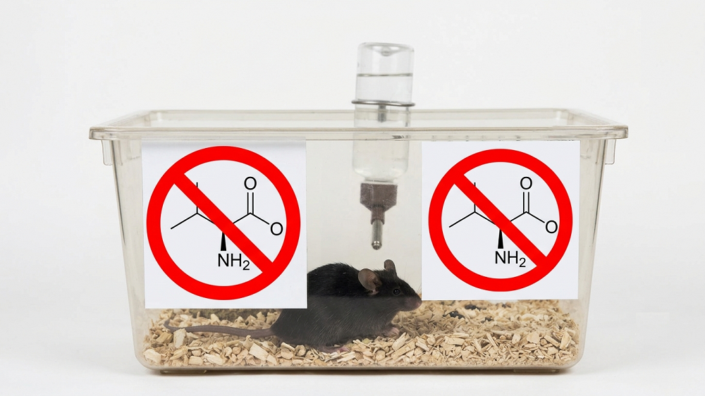
Restricting dietary valine by 67% from four weeks of age extends median lifespan in male mice by roughly 23%, a Nature Aging study reports. Valine restriction increases male maximum lifespan about 15% among the longest-lived animals, while healthspan markers improve in both sexes. Female median lifespan barely budged.
Researchers at the University of Wisconsin–Madison placed male and female C57BL/6J mice on a control amino-acid diet or one with 67% less valine from four weeks of age. Diets were isocaloric and matched for fat, carbohydrates, and total calories from amino acids, with missing valine replaced by non-essential amino acids. As reported by Lifespan.io, the work was led by Dr. Dudley Lamming’s team and published in Nature Aging.
Key Takeaways
- Male median lifespan rose from 777 to 959 days—a 23.4% gain—under lifelong valine restriction.
- Male maximum lifespan also rose roughly 15% among the longest-lived ten animals versus controls.
- Female median lifespan was essentially unchanged (842 vs 850 days, under 1%).
- Both sexes stayed leaner and showed lower frailty; glucose tolerance improved, especially in males.
- Hepatic mTORC1 increased rather than decreased, unlike classic mTOR-suppressing longevity drugs.
How much longer did the male mice live?
Lifelong valine restriction lifted male median lifespan from 777 to 959 days. Maximum lifespan moved in the same direction: the longest-lived ten treated males lived about 15% longer than the longest-lived ten controls, pointing past simple mortality compression.
Female median lifespan barely shifted—842 days on the control diet versus 850 days with restriction. Lamming noted that very few interventions extend lifespan in both sexes, and that known sex differences in BCAA catabolism could help explain the split. Females might still benefit under other restriction levels, start ages, or genetic backgrounds.
Did healthspan improve for females too?
Treated mice of both sexes gained much less fat and lean mass and stayed markedly leaner through adulthood. Fat fell more than lean mass, so adiposity percentage declined. Femur and tibia lengths were unchanged, arguing against simple stunting, though bone structure and microarchitecture showed some potentially unfavorable shifts.
Valine-restricted animals ate more calories relative to body weight yet remained leaner, possibly via higher energy expenditure rather than more movement. Glucose tolerance improved in males from early adulthood through 24 months and across most of the female lifespan. Frailty index scores fell in both sexes, covering coat condition, gait, tumors, body condition, and related signs, while motor performance did not improve consistently. More coverage sits in our Longevity & Biohacking category.
Why is the mechanism still unclear?
Researchers expected essential amino-acid restriction to suppress mTORC1. Instead, hepatic mTORC1 signaling rose in both sexes, separating valine restriction from rapamycin and from some forms of total protein restriction. Male liver mitochondria showed greater respiratory activity—a correlational but leading clue tied to the male lifespan effect.
Senescence-associated staining and gene-expression signatures fell in liver, kidney, and adipose tissue, though some markers moved the other way. Glial inflammatory markers eased in selected brain regions, clearest in males. Prior work already linked restriction of all three BCAAs, or isoleucine alone, to male lifespan gains; valine had been the understudied piece. Human translation is unproven, but the result fits a broader push for measurable longevity interventions tracked in Lifespan.io’s July 2026 Rejuvenation Roundup.