US Electron-Ion Collider could unlock secrets of matter
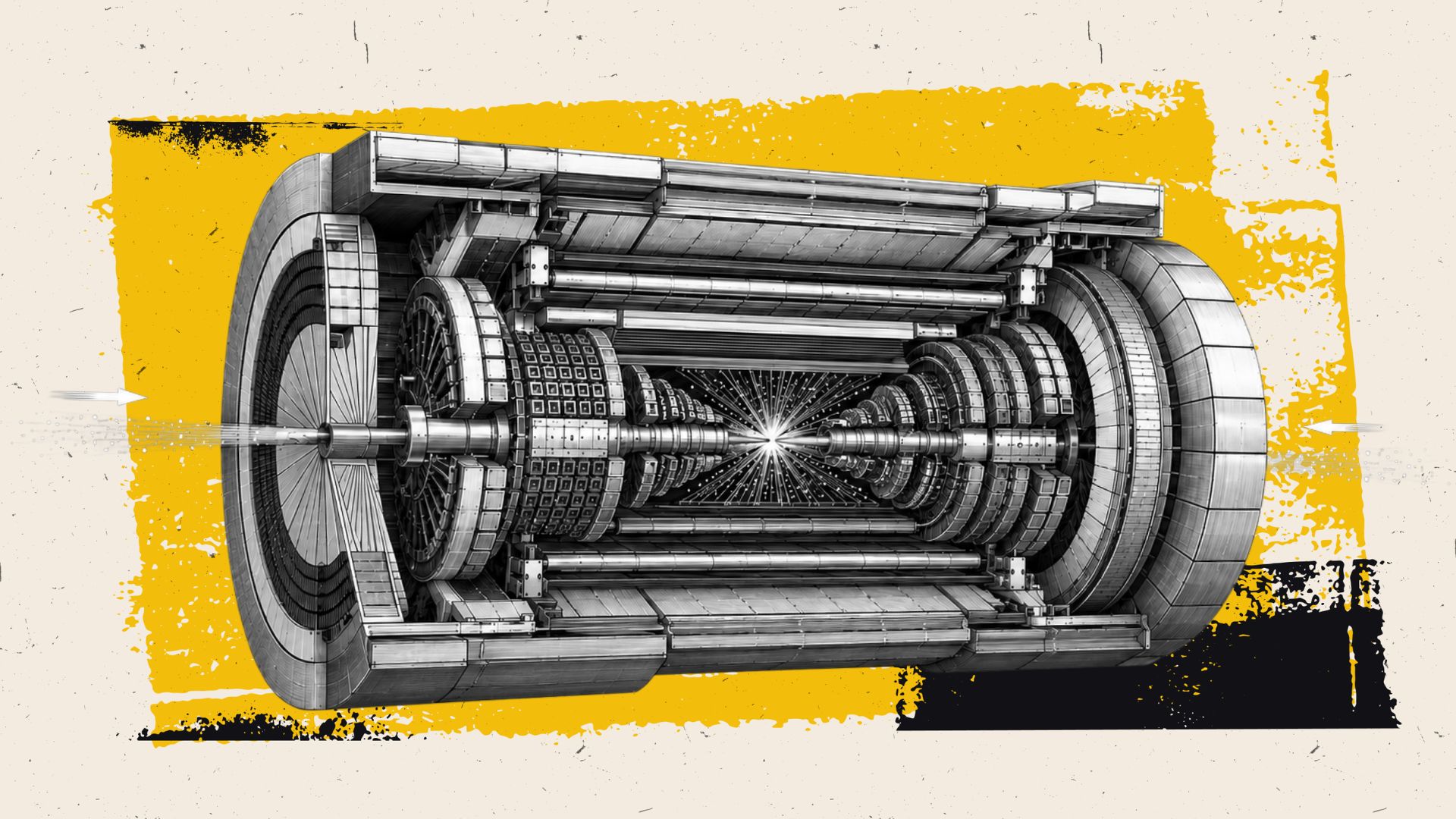
The United States is building the Electron-Ion Collider at Brookhaven National Laboratory to fire electrons at protons and ion beams, creating CT-scan-like 3D maps of every atom's core. Set to start in the early 2030s, it aims to reveal how quarks and gluons create proton mass and spin.
Key Takeaways
- The Electron-Ion Collider at Brookhaven will smash polarized electrons into protons and heavier nuclei.
- Planned luminosities are up to 1,000 times higher than Germany's earlier HERA machine.
- Operations are targeted for the early 2030s, with ePIC as the flagship detector.
- Scientists hope to map proton spin, mass origins, and a dense gluon state called Color Glass Condensate.
What is the Electron-Ion Collider designed to do?
Scientists still know surprisingly little about what happens inside the heart of every atom. The EIC, one of the world's most ambitious particle physics sites, will fire electrons at protons and atomic nuclei to produce the clearest 3D images ever of their internal structure—much like a CT scan for matter.
According to Interesting Engineering, the first-of-its-kind machine could show how quarks and gluons generate a proton's mass and spin, why they never appear alone, and whether an exotic Color Glass Condensate exists. Brookhaven's Elke-Caroline Aschenauer and Jefferson Lab's Alex Eslinger say it could redefine how we understand matter.
How will this ion collider differ from the LHC?
The EIC will use two intersecting accelerators to collide highly polarized electron beams with protons or heavier nuclei at center-of-mass energies from 20 to 140 GeV. Aschenauer said luminosities of 10^33–10^34 cm^-2s^-1 would be 100 to 1,000 times higher than HERA at DESY in Germany—the only prior electron-ion collider.
Unlike the Large Hadron Collider, built to discover new particles at extreme energies, the EIC is meant to "x-ray" protons and nuclei with a clean electron probe. Aschenauer stressed the LHC, RHIC, and EIC are complementary: RHIC studies quark-gluon plasma and spin but lacks the reach to fully map nucleon structure, which is the EIC's focus.
Eslinger noted it will be the world's first collider of high-energy electrons with a range of high-energy ion beams, and the first to pair polarized electrons with polarized proton or light-ion beams. Follow related coverage on our Fintech & Crypto Alerts hub.
Why does the proton spin crisis still matter?
Most proton data remain one-dimensional. Traditional deep-inelastic scattering tracks how quarks and gluons share momentum (Bjorken-x) but says little about where they sit or how they move sideways. The EIC will combine Transverse Momentum Dependent distributions and Generalized Parton Distributions to build a tomographic map of the proton.
Until the late 1980s, physicists thought proton spin was just the sum of quark spins—then found that was wrong. Spin also comes from antiquarks, gluons, and orbital motion. Eslinger said polarized beams make a full accounting possible, critical because protons and neutrons make up over 99.9 percent of visible mass.
The ePIC detector will catch charm decays to map gluons and hunt saturation effects. Electron and ion beam polarization of about 70 percent will be maintained and switched rapidly so spin signals do not average away. Aschenauer expects the facility to lead nuclear physics for two to three decades—and would not be surprised if its biggest discovery is one no one planned for.