A $30m T. rex auction divides scientists and billionaires
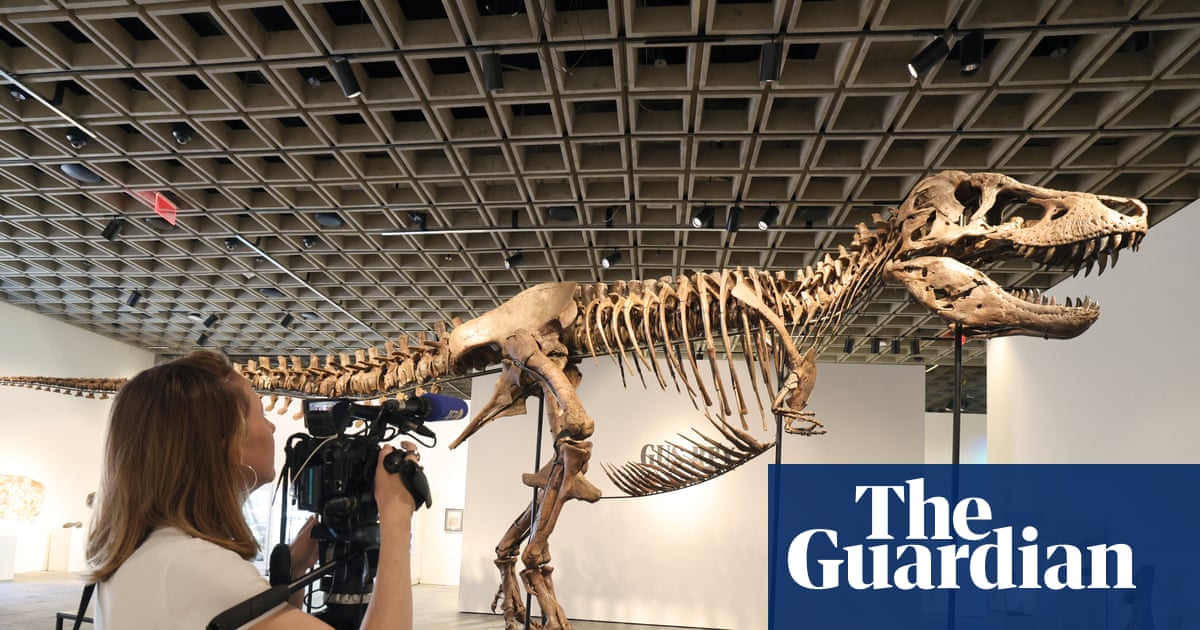
A multimillion-dollar tyrannosaurus rex auction at Sotheby's in New York on 14 July 2026 has alarmed scientists worldwide. The 67-million-year-old skeleton nicknamed Gus carries a $30 million pre-sale estimate, yet researchers warn that selling such specimens to private collectors could lock priceless fossils away from museums—and from science.
On Tuesday, one of the largest and most complete T. rex skeletons ever found goes under the hammer with an estimated sale price of $20 million to $30 million. Bids open at $19 million. For paleontologists, the stakes are not just financial. They fear another record-breaking sale will treat dinosaur bones like trophy assets for the ultra-wealthy rather than data for public research.
Key Takeaways
- Gus, a 61% complete T. rex from South Dakota, is valued at up to $30 million ahead of Sotheby's New York sale.
- Scientists say museums are priced out and top journals often refuse research on privately owned fossils.
- Sotheby's argues commercial excavators recover specimens that might otherwise erode and vanish.
- The record dinosaur auction remains Apex, a stegosaurus that sold for $44.6 million in 2024.
- Some buyers later loan fossils to museums, but researchers say that does not guarantee long-term access.
Why is the Gus tyrannosaurus rex auction alarming scientists?
Prof Richard Butler of the University of Birmingham told The Guardian that marketing dinosaur fossils like rare artworks at vast prices is deeply concerning. A fossil outside a recognised museum collection cannot be properly studied and is effectively lost to research.
Prof Susannah Maidment of London's Natural History Museum told the BBC that leading scientific journals will not accept studies based on specimens in private hands. What happens if an owner dies, divorces, or simply loses interest? Maidment said specimens have ended up discarded after brief scientific attention.
How complete is Gus, and why does that matter?
Discovered in 2021 on a Harding County ranch in South Dakota, Gus was excavated over three years by Theropoda Expeditions and named for late cattle rancher Gary "Gus" Licking. The team then spent three more years documenting and reconstructing the skeleton in the lab.
Sotheby's says Gus stands 3.8 metres tall and ranks among the largest T. rex specimens found, with 61% of bones identified. Bite marks on the skull and healed rib fractures hint at a violent life. That anatomical detail is exactly what researchers say should remain available for repeat study—not locked behind a private door.
Can museums still compete at a tyrannosaurus rex auction?
Prof Stephen Brusatte of the University of Edinburgh told The Guardian that if a dinosaur fetches tens of millions, scientists and universities have little hope of bidding. The five most expensive dinosaurs sold at auction have all changed hands since 2020, including Stan, a T. rex that sold for $31.8 million in 2020.
Cassandra Hatton, Sotheby's global head of natural history, told the BBC she has contacted museums worldwide and wants scientifically important fossils to reach public trust. Yet she argues the price must reflect years of fieldwork, specialist skill, and financial risk borne by excavators who are often far from wealthy.
What happens after the hammer falls?
Not every private sale ends in a vault. Apex, the record $44.6 million stegosaurus sold in 2024, was bought by billionaire Ken Griffin and later loaned to the American Museum of Natural History for four years. Prof Michael Benton of the University of Bristol told The Guardian that loaning or donating a trophy purchase can sometimes benefit the wider public.
Dr Thomas Carr of Carthage College warned that museum loans offer no permanent guarantee—a private owner can recall a fossil at any moment. For buyers treating Gus as the ultimate luxury collectible, scientists hope the outcome looks more like Sue, the 1997 Field Museum purchase, than another skeleton lost to a billionaire's living room.