One win, three defeats: Trump's Supreme Court day explained
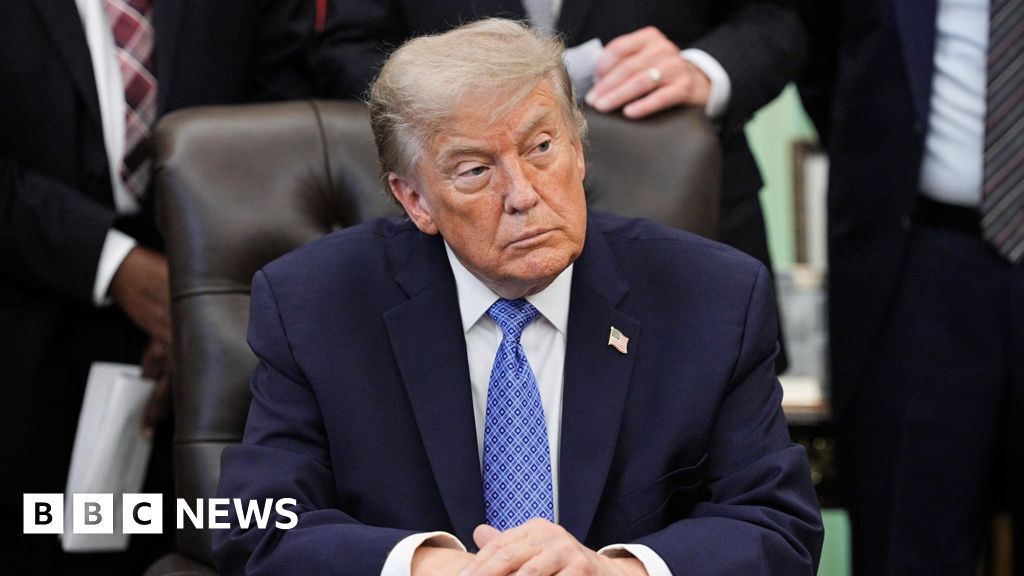
DIRECT ANSWER: On Monday, 29 June 2026, Donald Trump won one major Supreme Court victory—expanded power to fire heads of independent federal agencies—while losing three times: the court blocked his bid to remove Federal Reserve Governor Lisa Cook, upheld late-arriving mail-in ballots, and let a $5 million E. Jean Carroll defamation judgment stand.
Key Takeaways
- Trump secured a 6-3 win overturning the 1935 Humphrey's Executor precedent, giving presidents broad authority to remove independent agency leaders.
- A 5-4 majority preserved Fed independence by pausing Trump's attempt to fire Lisa Cook, a setback for his push to lower interest rates.
- The court rejected Trump's mail-in voting challenge and declined to review the Carroll defamation verdict, leaving three policy and legal defeats on the same day.
- Chief Justice John Roberts authored both the expansion of presidential firing power and the ruling that blocked Cook's removal.
- For savers and investors tracking wealth and passive-income strategies, the split decisions signal sharper regulatory swings but a still-independent central bank.
What Did Trump Win at the Supreme Court on Monday?
On the penultimate opinion day of the Supreme Court's term, the justices delivered Donald Trump his biggest victory by decisively scrapping nearly a century of precedent. In a challenge Trump brought over the firing of Federal Trade Commission member Rebecca Slaughter, the court ruled 6-3 that presidents may remove leaders of independent regulatory agencies without cause.
The decision overturned Humphrey's Executor v. United States, a unanimous 1935 ruling that had held Congress could shield multi-member agency commissioners from at-will presidential removal. Chief Justice John Roberts, writing for all six conservative justices, declared: "Subordinates who exercise the president's power are subject to removal by him. Then, and only then, can they remain accountable to the president, and the president to the people."
The three liberal justices, all Democratic appointees, dissented. Justice Sonia Sotomayor called the ruling "egregiously wrong" and warned that "chaos will follow," according to The Guardian's live coverage. Rachel Rossi, president of the progressive judicial group Alliance for Justice, said the decision was "disastrous" and handed an "authoritarian president" even more power.
Trump celebrated on Truth Social, writing that "Ninety years of precedent has been completely and unequivocally overruled" and that the ruling "greatly increasing presidential power at a time when it is most needed!" The precedent extends well beyond the FTC to agencies overseeing election law, communications policy, labour disputes, and financial and environmental regulation.
Why Did Roberts Fight for Decades to Overturn Humphrey's Executor?
According to CNN, Chief Justice John Roberts has pursued this outcome for more than 40 years, dating to his work as a young lawyer in the Reagan administration. Since his 2005 appointment as chief justice, he has steadily narrowed Humphrey's Executor through rulings in 2010 and 2020 that lifted congressional limits on presidential removal power, elevating the 1926 Myers v. United States precedent over the 1935 decision.
On Monday, Roberts made the reversal explicit. "If anything more is left of Humphrey's, we overrule it," he wrote. The original Humphrey's case arose when President Franklin D. Roosevelt tried to fire a Federal Trade Commission member appointed by his predecessor, Herbert Hoover. The Supreme Court ruled Roosevelt lacked that authority unless Congress authorized it.
For Americans who build wealth through markets sensitive to regulation—from antitrust enforcement to consumer protection—the ruling means future presidents can more quickly install allies at agency helm. Policy whiplash between administrations, already familiar from shifts under Barack Obama, Trump, Joe Biden, and Trump again, is likely to intensify.
Why Did the Court Block Trump From Firing Lisa Cook?
Despite the sweeping expansion of presidential power, a different coalition drew a hard line at the Federal Reserve. In a narrow 5-4 decision, Roberts and Justice Brett Kavanaugh joined the three liberal justices to block Trump's attempt to remove Federal Reserve Governor Lisa Cook, the first Black woman to serve on the Fed's board.
Trump has alleged Cook committed mortgage fraud, which she has denied. Beneath those specifics, the dispute reflected Trump's broader frustration that the Fed—including Cook—has not cut US interest rates as aggressively as he wants. Roberts wrote that Cook deserved a chance to challenge her removal and rebut the accusations, and he warned of the "calamities that could arise" if presidents could impose their will on the central bank.
For mortgage holders, bond investors, and anyone whose passive-income plans depend on rate stability, that 5-4 outcome matters as much as the 6-3 agency-firing win. The BBC noted that while Trump gained sweeping new powers over regulators, the court majority was "not his friend" on two of his biggest goals: lower interest rates and tighter election rules.
What Were Trump's Other Two Supreme Court Defeats?
The mail-in ballot ruling broke 5-4 against Trump. The court upheld a Mississippi law allowing ballots postmarked by Election Day but received up to five business days later to be counted. Justice Amy Coney Barrett, a Trump appointee, wrote for a majority joined by Roberts and the three liberals. She held that states retain broad constitutional authority to set the "time, place and manner" of congressional elections and dismissed fraud concerns as issues for the "democratic process."
Trump reacted by urging Congress to pass his election-reform package curtailing mail-in voting, but the Republican-controlled House has not overcome Democratic and some Republican opposition in the Senate. States that count late-arriving postal ballots lean Democratic, The Guardian reported.
The third defeat was quieter but costly. Among dozens of orders Monday, the court declined without explanation to hear Trump's appeal of a $5 million civil judgment against him. A 2023 New York jury found Trump defamed writer E. Jean Carroll, who accused him of sexually assaulting her in a department store dressing room in the 1990s. Trump wrote on Truth Social that he would fight on, but the BBC reported this is likely the end of the line for blocking that $5 million award, though he still contests a separate $83.3 million Carroll judgment.
How Should Investors Read Trump's Split Supreme Court Day?
Monday's rulings paint a complicated picture for anyone mapping financial risk. Trump gained tools to reshape the regulatory landscape that touches everything from mergers to environmental compliance—changes that can ripple through sectors and index funds. Yet the Fed's insulation from political pressure, at least for now, limits one of the most direct levers affecting borrowing costs and savings yields.
The court's term was not finished when these opinions landed. The Guardian noted the justices were also expected to rule Tuesday on Trump's executive order challenging birthright citizenship, along with cases on campaign finance limits and transgender athletes in school sports. Each could carry its own economic and legal ripple effects.
As the BBC's Anthony Zurcher observed, when it comes to interpretations of the law, Supreme Court rulings are final—a reality Trump experienced in a single morning of both triumph and frustration. For readers following wealth hacks and passive income amid political upheaval, the lesson is clear: presidential power over agencies just grew, but the institutions that set interest rates and count ballots pushed back.