Trump fires EAC commissioners before midterms: what it means
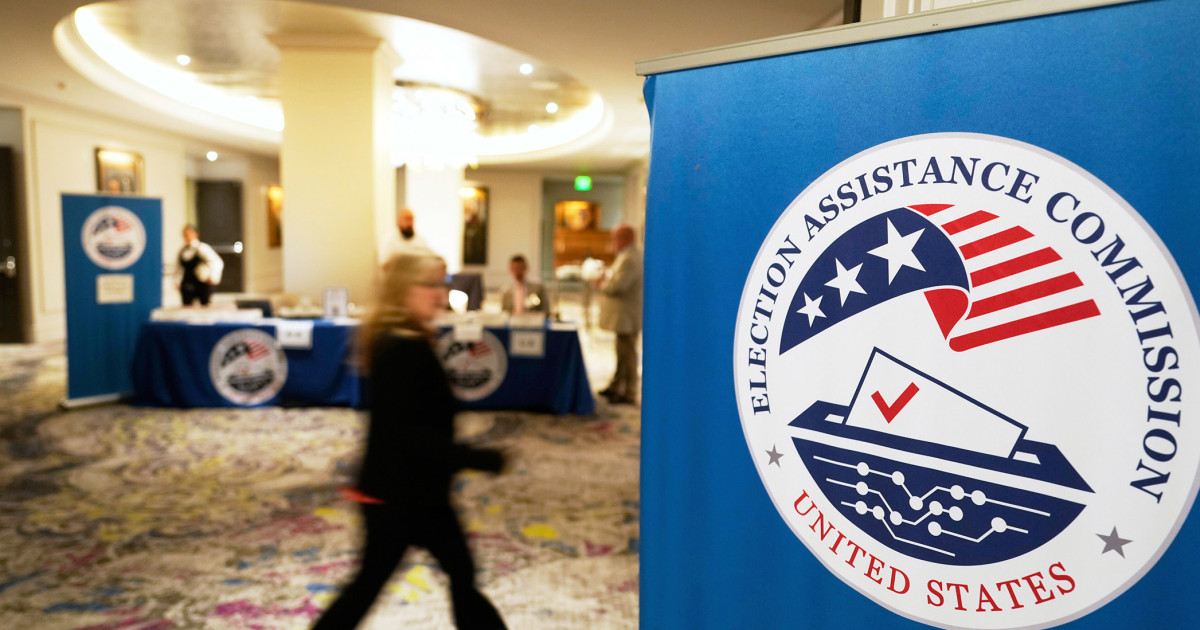
President Donald Trump fired all three remaining U.S. Election Assistance Commission commissioners on July 9, 2026, leaving the only federal agency devoted solely to election administration without leadership months before the midterms. The EAC commissioner dismissals before November freeze voting-system certification, federal guidance, and election funding until new Senate-confirmed appointees are installed.
Key Takeaways
- Trump terminated Democratic commissioners Thomas Hicks and Benjamin Hovland by email and allowed Republican Christy McCormick to resign, leaving zero commissioners on the four-seat panel.
- The agency cannot take official action without a quorum, potentially stalling voting-machine certification and federal election guidance ahead of the 2026 midterms.
- The firings follow a late-June Supreme Court ruling expanding presidential power to remove leaders of independent agencies.
- Trump has previously sought to use the EAC to add proof-of-citizenship requirements to voter registration forms and reshape voting-system standards.
- Replacements require presidential nomination and Senate confirmation, with no more than two commissioners from the same party.
What happened to the Election Assistance Commission?
On Thursday, July 9, President Donald Trump removed every sitting member of the U.S. Election Assistance Commission, according to NBC News and Votebeat. Democratic commissioners Thomas Hicks, the commission chair, and Benjamin Hovland received termination emails signed by Morgan DeWitt Snow, deputy director of presidential personnel in the Executive Office of the President.
The emails stated: "On behalf of President Donald J. Trump, I am writing to inform you that your position as Commissioner of the Election Assistance Commission is terminated, effective immediately. Thank you for your service." Republican commissioner Christy McCormick was allowed to resign rather than be fired, according to three sources within the agency cited by Votebeat.
A fourth seat was already vacant. Republican Donald Palmer, who had served on the commission since 2019, voluntarily departed earlier in 2026 to join the Heritage Foundation, according to Votebeat and Democracy Docket. The result is a bipartisan agency with no commissioners at all.
Why do the EAC commissioner dismissals before midterms matter?
Congress created the EAC after the disputed 2000 presidential election to help states improve election administration without federalizing elections. Its responsibilities include distributing federal election funds, maintaining the national mail voter registration form, testing and certifying voting systems, and offering best-practice guidance to local officials.
With no commissioners in place, the agency cannot take official action. Votebeat reports this could stall routine commission business and any attempt to alter the federal voter registration form or voting-system standards before the 2026 midterms. Many states rely on the EAC's Voluntary Voting System Guidelines certification before purchasing or deploying voting equipment.
The Democratic Association of Secretaries of State denounced the dismissals as "incredibly irresponsible," Democracy Docket reported. Election law experts note the move marks Trump's first major removals of independent-agency officials since the Supreme Court's late-June ruling in Trump v. Slaughter expanded presidential removal authority.
How does this connect to Trump's broader election agenda?
Trump has sought to reshape federal voting rules through the EAC. Democracy Docket reports that an anti-voting executive order issued last year directed the commission to add a proof-of-citizenship requirement to the federal voter registration form, change the standards used to certify voting systems nationwide, and withhold federal election funds from states that did not comply with other requirements.
Trump cannot simply install replacement commissioners on his own. Under the Help America Vote Act, nominees must be confirmed by the Senate, and no more than two commissioners may come from the same party. The president is supposed to consider recommendations from congressional leaders of both parties when selecting nominees, though election law professor Rick Hasen told Votebeat that bipartisan consultation is "more a custom than something that's in the statute itself."
Whether any fired commissioner challenges the removal in court could become the first direct test of whether the Supreme Court's new removal-power doctrine extends to bipartisan election agencies structured around party balance.
What should investors and savers watch next?
Markets often react to political uncertainty, and the EAC commissioner dismissals before a major election cycle add another layer of institutional volatility. For readers tracking how policy shifts affect portfolios, retirement planning, and passive-income strategies, midterm-election risk is worth monitoring alongside tax and regulatory headlines in our Wealth Hacks & Passive Income coverage.
Neither the White House nor the EAC immediately responded to requests for comment from Votebeat. Filling all four commissioner seats could take months given the Senate confirmation process. Until then, the federal government's primary election-assistance body remains frozen at a moment when states are preparing for the 2026 vote.