Trump opens America's 250th at Mount Rushmore with partisan attack
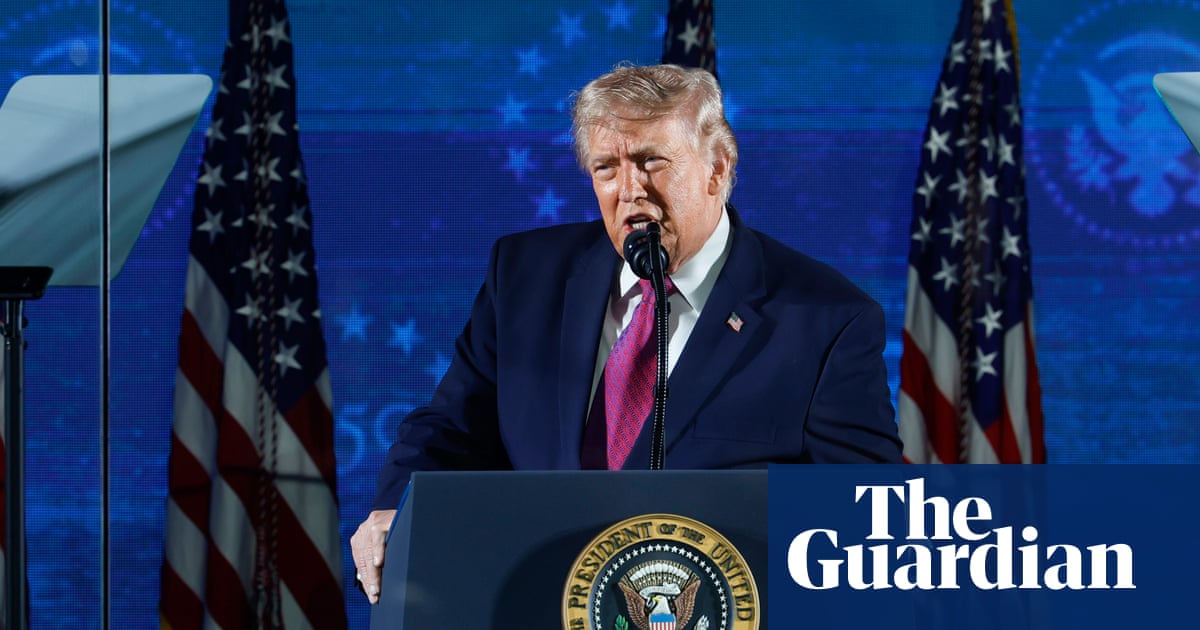
Donald Trump opened America's 250th birthday weekend with a sharply partisan Mount Rushmore speech on Friday night, casting progressive Democrats and immigrants as a resurgent communist menace and the enemy of July 4, 1776. The half-hour address kicked off semiquincentennial celebrations and previewed a divisive tone before his Saturday National Mall appearance and fireworks.
Key Takeaways
- Trump spoke for 30 minutes at Mount Rushmore on Friday, framing progressive Democrats as communists ahead of November's midterm elections.
- He has never ruled out adding his own face to Mount Rushmore, an idea the BBC reports has sparked support, opposition, and practical questions.
- The president tied anti-communist rhetoric to immigration, vowing to vanquish communism and expel those he called threats to American identity.
- Critics say Trump is weaponising the 250th anniversary to rewrite history while ignoring that Washington and Jefferson were slaveholders.
- On Saturday, Trump is scheduled to address crowds on the National Mall before a massive fireworks display amid a searing heatwave.
When Americans ask what happened at the start of the country's 250th birthday celebrations, the clearest answer came from a granite stage in South Dakota. The Guardian reported that Trump delivered what amounted to an extraordinary partisan attack, opening the weekend by targeting what he called the communist menace in America.
Supporters chanted USA as F-16 jets flew overhead. Trump praised George Washington, Thomas Jefferson, Theodore Roosevelt and Abraham Lincoln, the four presidents carved into Mount Rushmore, calling them men of action, ambition, daring, destiny and truly great intelligence. He has never ruled out the idea of his own likeness joining them.
What did Trump say at Mount Rushmore?
Trump spoke for half an hour on Friday night at Mount Rushmore, the latest stop on his tour marking the milestone anniversary of the US declaration of independence from Britain. He argued that American exceptionalism rests not only on the constitution but on a distinctive culture and identity under renewed attack.
He condemned recent attempts to beat the American spirit out of us and alienate us from our history, telling an overwhelmingly white crowd: We are going to give our country its identity back. Then he abandoned any pretence of a traditional head-of-state address meant to unify political parties.
Four months before November's midterm elections, Trump cast progressive Democrats as communists posing an existential threat. He spoke hours after New York Mayor Zohran Mamdani, a democratic socialist, delivered a pro-immigrant address widely seen as a rebuke of Trump's Make America Great Again movement.
Four progressive candidates, including three democratic socialists, had won Democratic primaries in New York the previous week and in Colorado on Tuesday. Progressive candidates also won contests in Kentucky, New Jersey, Ohio, Pennsylvania and Texas.
Trump described communism as a greater threat to American liberty than both world wars and the September 11 attacks. It is the enemy of the constitution, he declared, and above all the enemy of July 4th, 1776. He told the crowd you can be loyal to Karl Marx or loyal to America, but not both.
He linked that rhetoric to immigration, warning of a resurgence of the communist menace including from newcomers who embrace ideas totally opposed to our way of life. Pledging to vanquish communism quickly and send them into exile, he said America will never be a communist country.
Trump urged Congress to terminate the filibuster and pass the Save America Act, widely criticised as a voter suppression bill. He claimed the communist party is made up of illegal immigrants, criminals and everybody that does not want to work.
Why does Trump want his face on Mount Rushmore?
Mount Rushmore has become more than a backdrop. According to the BBC, Trump has expressed interest in having his face added to the iconic monument alongside Washington, Jefferson, Roosevelt and Lincoln. The idea has sparked both support and opposition.
The BBC's Sarah Smith reported from South Dakota ahead of the president's visit, examining the political debate and practical challenges the proposition poses. The BBC noted the plan raises questions about whether adding another face is even possible.
On Friday evening, actors portraying Washington, Jefferson, Roosevelt and Lincoln stood behind lecterns on a blue-carpeted stage and delivered famous quotations. Country music artist Chancey Williams played a set. In the crowd, a boy held a handwritten sign reading Trump the GOAT.
Yet the setting carried its own contested history. The Guardian noted Trump was speaking in the Black Hills, which the US government illegally seized from the Sioux Nation in 1877 after Congress forced the tribe to cede land guaranteed under treaty. That tension sat alongside his attack on progressive narratives about stolen land and oppressive heroes.
How is America's 250th anniversary dividing the country?
Critics accuse Trump of weaponising the semiquincentennial to rewrite history. The Guardian reported he promotes a narrative focused on white Christian men such as Washington and Jefferson while neglecting to acknowledge both were slaveholders. He used Friday's speech to attack those who tell children we live on stolen land or that our heroes were oppressors.
Trump's approval ratings are near historic lows, according to The Guardian, yet he is pressing ahead with a celebration tour that puts his political brand at the centre of the nation's birthday. Readers following how major news cycles affect personal finance can explore related coverage in our Wealth Hacks & Passive Income section.
On Saturday he is scheduled to address a crowd on the National Mall ahead of a massive fireworks show. The Guardian reported the event will take place amid a searing heatwave that has disrupted Independence Day celebrations across the country.
What happens next in the 250th birthday celebrations?
The Mount Rushmore rally was the opening act. The Guardian reported that Saturday's programme shifts to Washington, DC, where Trump will speak before fireworks.
Whether the rest of the weekend follows the same partisan script is the question many Americans will carry into July 4 itself. Trump has already shown he is willing to use the country's 250th birthday not merely as a commemoration, but as a campaign stage framed around Mount Rushmore, national identity and a fight he defines in the starkest possible terms.