Supreme Court justices detail chilling threats to safety
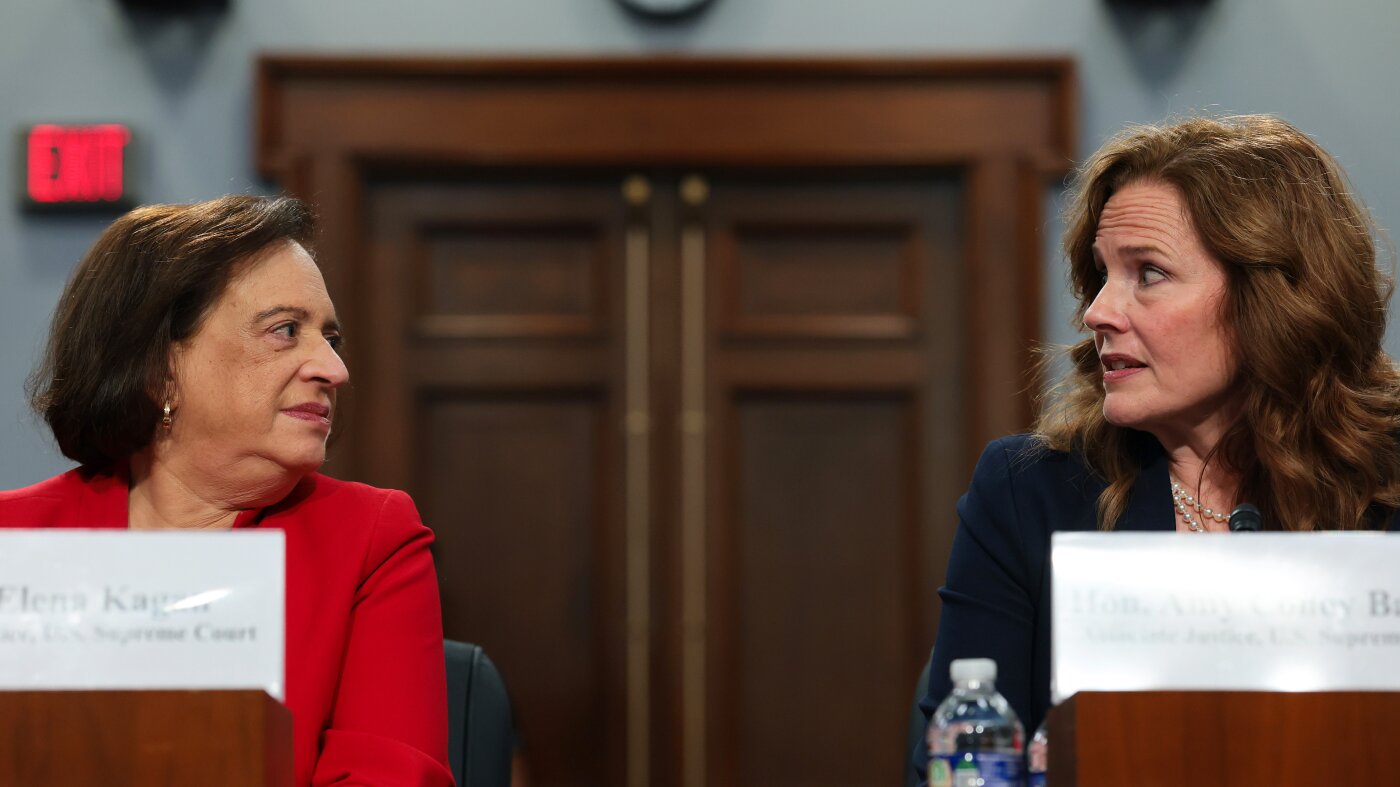
Supreme Court Justices Elena Kagan and Amy Coney Barrett told Congress on July 14, 2026, that threats against justices and federal judges have surged, sharing accounts of a bulletproof vest, a recent swatting scare, and intimidation deliveries as the court seeks a larger security-focused budget.
Key Takeaways
- Justices Elena Kagan and Amy Coney Barrett made a rare Capitol Hill appearance—the first by Supreme Court justices since 2019—to discuss the court's budget and security needs.
- Barrett said the threat level against judges "is really high," describing a bulletproof vest brought home after the 2022 Dobbs draft leak and a swatting incident about six weeks before the hearing.
- Kagan said Supreme Court Police expect a 38% rise in threats this year, after a 25% increase last year, and that for some justices "those threats have come very close."
- The court is asking Congress for $228.4 million for fiscal 2027, nearly 10% above the $207.8 million appropriated for 2026, with the increase tied mainly to security and cybersecurity.
According to NPR reporting, the justices testified before the House Appropriations Committee as threats to judicial safety have grown in both number and intensity. BlasterPost's Fintech & Crypto Alerts desk is covering the hearing as a high-stakes institutional risk story with market-wide confidence implications.
Why did Supreme Court justices testify before Congress?
The Supreme Court had not sent justices to Capitol Hill for budget testimony in seven years. Kagan, appointed by President Obama, and Barrett, appointed by President Trump, were designated to explain the court's funding request for the coming year.
Kagan noted that security reforms accelerated after Justice Antonin Scalia's death on a hunting trip a decade earlier, when no nearby security could respond quickly. Lawmakers Darrell Issa and Elijah Cummings had pressed the court to catch up with protections given to other senior federal officials.
Before those changes, justices often drove themselves, shopped alone, and traveled privately. In recent years the court has expanded its police force to guard justices and their homes at all times and added cybersecurity measures.
What threats did Justice Barrett describe in detail?
Barrett told lawmakers that threat statistics "sound abstract, but being on the receiving end of them is not." She said increased threats "have required my children to think about and see things that children should not have to see or think about."
In spring 2022, after a draft opinion in the Dobbs abortion case leaked, her security detail sent her home with a bulletproof vest. Her 12-year-old son saw it and asked what it was. "I didn't expect that performing this service was going to put me in the position of explaining to my children what a bulletproof vest was and why I had to wear one," she said.
About six weeks before the hearing, her home was swatted. Local police responded to a false emergency call; Barrett said a teenage son opened the door to find the street filled with police cars. Supreme Court Police already on site stopped county officers from attempting to enter, explaining it was a false alarm.
Barrett also said she and other judges have received threatening anonymous deliveries meant to intimidate and harass, including packages echoing the name of Daniel Anderl, the slain son of U.S. District Judge Esther Salas. "The threat level is really high," she concluded.
How serious is the rise in threats to the Supreme Court?
Kagan cited Capitol Police testimony that threats against Congress are up 50% this year versus 2025. She said Supreme Court Police expect a still-substantial 38% annual increase in threats this year, following a 25% rise last year.
"For some of us, those threats have come very close, and all of us live with the knowledge that they may again materialize," Kagan said. U.S. Marshals Service data cited in coverage show 512 threat investigations involving federal judges since the start of 2026, compared with 807 for all of 2025.
Asked about heated political criticism after rulings on tariffs and birthright citizenship, Kagan drew a bright line: criticism is fair game, but intimidation by political figures of any stripe crosses it. The court continues to seek more funding so justices can decide cases without fear or favor.