SpaceX launch: Starship Flight 13 hits key milestones
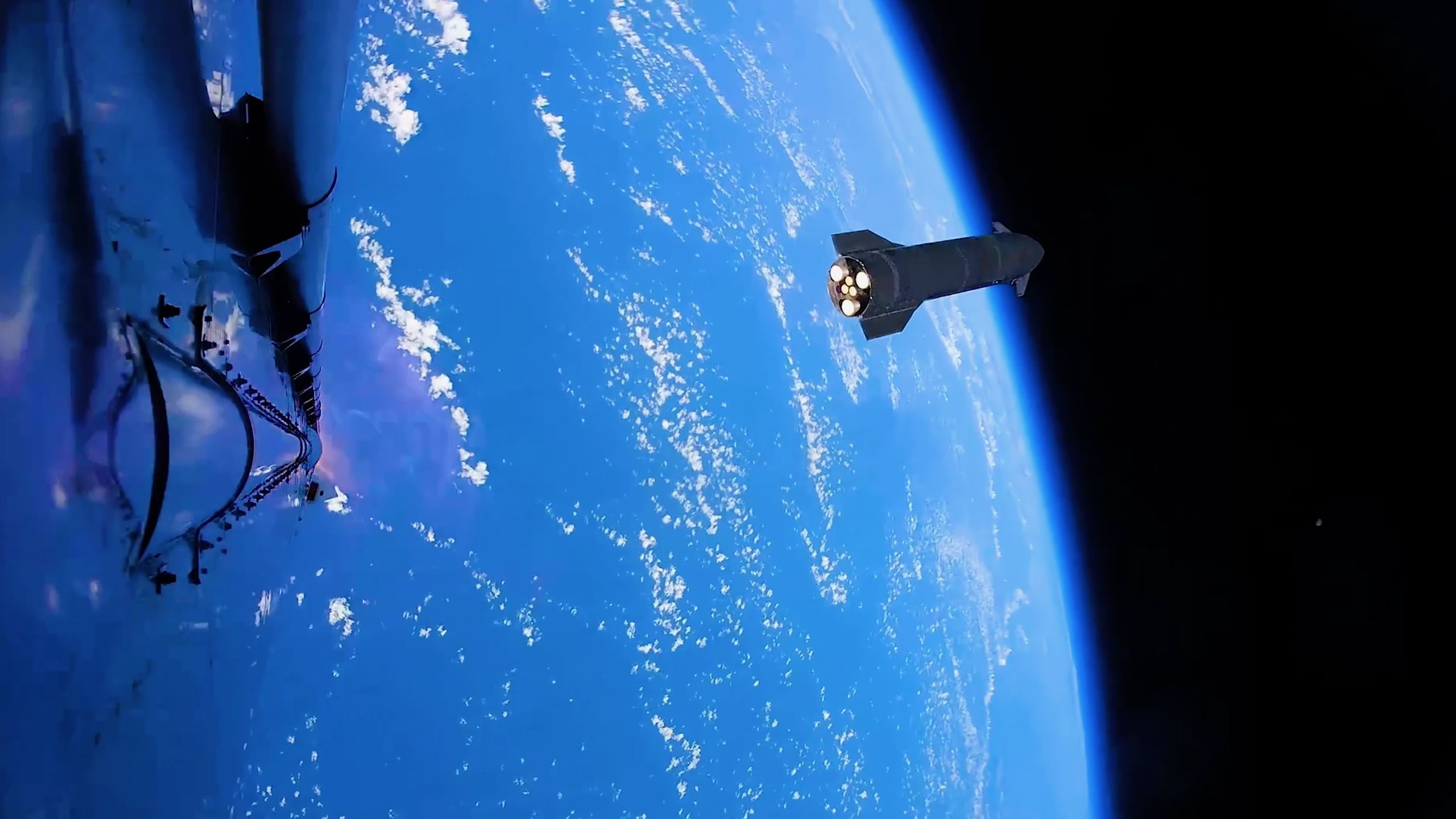
SpaceX's Starship Flight 13 was a mostly successful SpaceX launch on July 24, 2026, lifting off from Starbase in South Texas. The Ship upper stage deployed 20 Starlink satellites, restarted a Raptor in space, and made a soft Indian Ocean splashdown intact—a first—while the Super Heavy booster had a hard Gulf splashdown after engine restart trouble.
Key Takeaways
- Flight 13 lifted off at 5:51 p.m. EDT on July 24 from Starbase, Texas, as the second Version 3 Super Heavy-Starship test.
- All 33 booster Raptors ignited at liftoff; the Ship stage hit its marks, including a soft splashdown that left the vehicle intact.
- The booster made a hard Gulf splashdown after only 10 of 13 engines restarted and five were running at impact.
- Ship deployed 20 third-generation Starlink satellites and briefly re-ignited a Raptor in space before landing off Western Australia.
- Elon Musk said SpaceX may attempt a tower "chopstick" catch of Ship on Flight 14 if Flight 13 data looks clean.
What happened during the SpaceX launch?
The roughly 408-foot Starship Version 3 stack thundered off the pad Friday with some 16 million pounds of thrust, Spaceflight Now reported. A July 16 attempt aborted when four Raptors failed to start; low clouds then delayed a Thursday try before Friday's clear weather window.
After separation, Super Heavy flipped for a tail-first Gulf descent. Only 10 of 13 engines restarted for landing burn, and just five appeared running at splashdown, producing a higher-than-expected impact. SpaceX is using Gulf splashdowns for early V3 flights before returning boosters to the tower arms.
Ship climbed on all six Raptors, coasted on a sub-orbital path, and released 20 next-gen Starlinks one by one from its Pez-style dispenser. Six carried cameras to inspect heat-shield tiles. After a planned single-engine restart in space, Ship re-entered belly-first and settled into a soft splashdown northwest of Australia about one hour and five minutes after liftoff.
Why does Flight 13 matter for NASA and Starship?
For the first time, Starship remained fully intact after splashdown, with onboard cameras still working as it floated in the Indian Ocean—an encouraging reuse signal for a rocket built to fly again quickly. Both stages are meant to return to the launch tower for "chopstick" catches; SpaceX has already caught Super Heavy on three prior tests.
NASA is counting on a Starship variant as a lunar lander. Per Space.com reporting, Starship is slated for NASA's Artemis III astronaut mission to Earth orbit next summer and to land crew near the moon's south pole on Artemis IV in late 2028. That path still demands many tanker flights and propellant transfer demos before crew landings.
Follow more viral space and celebrity headlines in our Celebrity Breaking News hub.
What visuals and next steps came from Flight 13?
SpaceX streamed the flight live and later posted highlight clips on X, including Super Heavy views of Ship pulling away after separation and drone footage of the soft Indian Ocean splashdown—even as a fire briefly flared near Ship's nose. Space.com called several of the views "decidedly sci-fi."
Musk said SpaceX will try to catch Ship with the tower arms on Flight 14 if no red flags emerge from Flight 13 review. Engine restart reliability on the booster and the broader push toward orbital ops remain open work as the company races toward Artemis milestones.