South Korea president demands probe as World Cup coach resigns
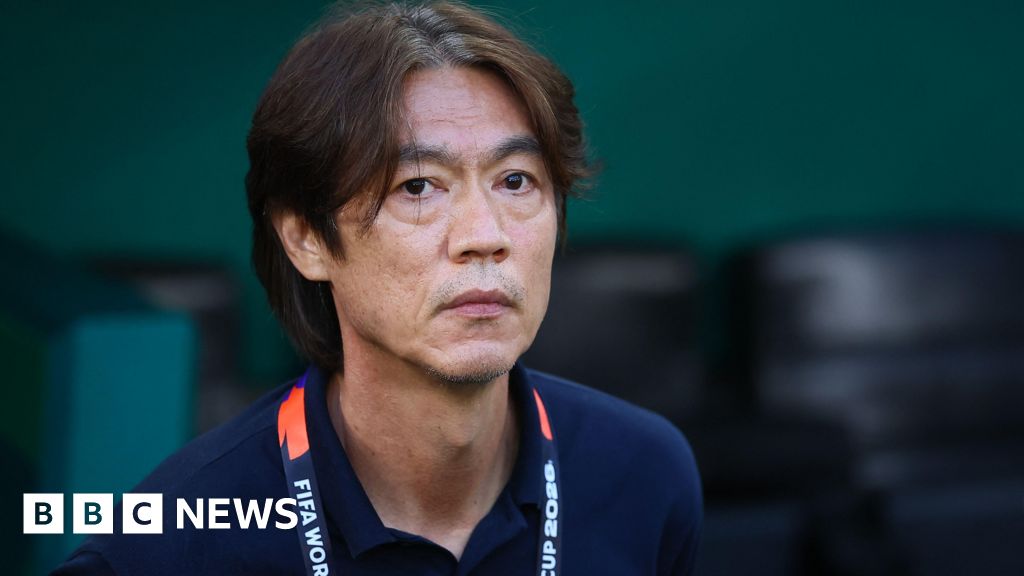
South Korea president demands a government investigation into the national football team's disastrous 2026 World Cup exit, after head coach Hong Myung-bo resigned on Sunday and apologised for a group-stage failure that ranks as the country's worst tournament result ever. President Lee Jae-myung has ordered the Ministry of Culture, Sports and Tourism to review what went wrong, targeting Korea Football Association leadership and controversial coaching appointments.
The crisis erupted after South Korea failed to advance as one of the eight best third-placed teams in the expanded 48-nation tournament. Hong announced his departure at a press conference in western Mexico, saying responsibility "rests entirely with me as head coach" and that the team "didn't deliver the results that our fans expected."
Key Takeaways
- Head coach Hong Myung-bo resigned on Sunday, less than 24 hours after elimination was confirmed.
- President Lee Jae-myung called the exit a failure of organisation and personnel, ordering a government probe.
- South Korea finished third in Group A with one win and two losses, ranking 10th among third-placed sides—outside the knockout cutoff.
- The 34th-place finish is Korea's worst World Cup result in the nation's history.
- Years of KFA mismanagement, including opaque coach hirings, are now under intense scrutiny.
Why did Hong Myung-bo resign as South Korea coach?
Hong stepped down on Sunday following widespread domestic criticism of South Korea's premature exit. It was his second disappointing World Cup stint; he also left immediately after the 2014 tournament, when the team posted its previous worst group-stage showing.
Reading from a prepared statement in Guadalajara, Hong apologised to Korean fans and accepted full blame. "As the head coach, no explanation can supersede the ultimate result," he said, according to BBC News. He did not take questions from reporters.
What went wrong in South Korea's World Cup campaign?
Ranked 32nd in FIFA's men's standings and led by star Son Heung-min, South Korea opened with a 2-1 win over Czechia on June 11. A 1-0 loss to co-host Mexico a week later left survival possible, but a 1-0 defeat to 60th-ranked South Africa on Thursday sealed their fate.
A draw against South Africa would have secured second place behind Mexico and an automatic last-32 berth. Instead, Korea collected three points with a minus-one goal difference and ranked 10th among 12 third-placed teams—two spots short of the eight slots available under the expanded format, as The Guardian reported when the final group-stage results were settled Saturday.
Yonhap News Agency called the exit "dismal," noting three days of agonising hope before Iran and South Korea both missed the cut in a dramatic third-place race decided in stoppage time elsewhere.
Why does South Korea's president demand a government probe?
President Lee said he felt "not just confusion but utter bewilderment at the unexpected outcome." In a post on X, he argued the early exit "appears to be a failure of organisation and personnel," adding: "When favoritism and cronyism take precedence over competence in selecting a commander, the result is as predictable as fire burning paper."
Lee has asked the sports ministry to investigate causes and develop reforms, citing significant taxpayer funds invested in World Cup participation. He apologised for "the deep disappointment caused by this absurd situation" and pledged swift administrative reform.
How did KFA mismanagement contribute to the crisis?
The Korea Times traced the collapse to years of governance failures at the Korea Football Association. After Jürgen Klinsmann's brief, controversy-marred tenure—he spent only 67 days in Korea during his first six months—the KFA appointed Hong in July 2024 amid accusations that proper procedures were bypassed.
The Ministry of Culture, Sports and Tourism had previously flagged irregularities in the hiring process and demanded disciplinary action against KFA president Chung Mong-gyu; a court ruled against Chung in April. Lawmakers summoned Chung twice in 2024, criticising appointments as disorganised and unprincipled.
As public pressure mounts, debates over accountability increasingly intersect with how technology could modernise sports governance—an area covered in our Future Tech & AI Wonders section. For now, the immediate question is whether a presidential probe can break a cycle of opaque hiring decisions and procedural breakdowns that left Korea unable to capitalise on a favourable group draw.