Solar weather sleep ends overnight, predicting next cycle
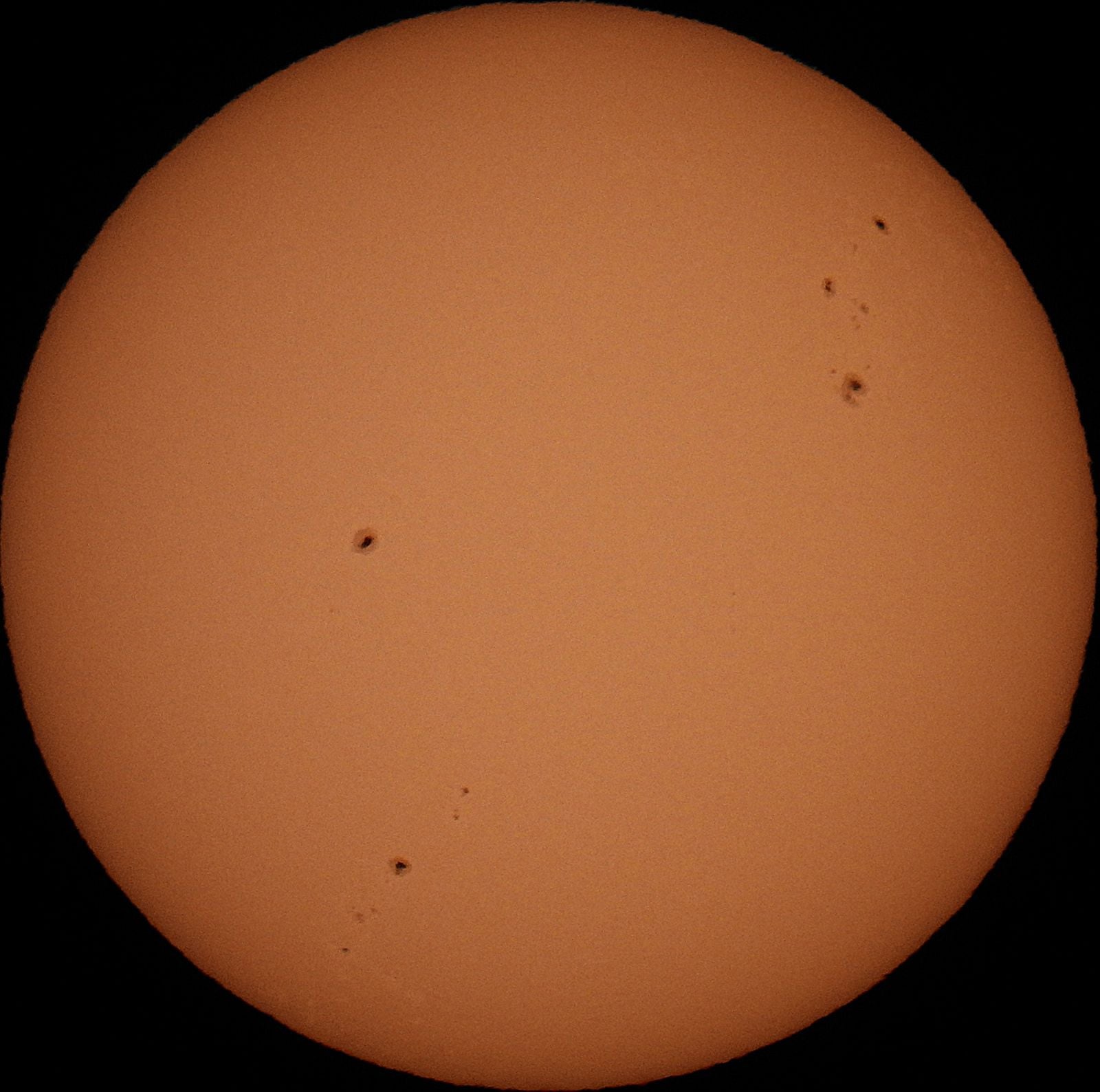
Extreme solar space weather sleep is not a slow fade: University of Warwick physicists say the Sun’s most violent storms shut off almost overnight at a fixed cycle point, and the sunspot count then predicts the next solar maximum’s strength about six to seven years early.
Key Takeaways
- Sandra Chapman’s Warwick team says extreme space weather ends abruptly each ~11-year cycle, not gradually.
- Sunspots at that switch-off point forecast the next cycle’s peak six to seven years ahead.
- The method correctly flagged Solar Cycle 25 as stronger than many consensus forecasts.
- An early read points to a moderate Cycle 26, with a peak sunspot number around 100–120.
Why does extreme space weather shut off so suddenly?
Chapman, director of Warwick’s Centre for Fusion, Space and Astrophysics, is presenting the work at the Royal Astronomical Society’s National Astronomy Meeting in Birmingham. “The sun doesn’t gently go to sleep and then gently wake up again,” she said. Instead, the most extreme space weather switches off quite suddenly at a specific point in every cycle.
In a 2024 Scientific Reports paper, Chapman and Thierry Dudok de Wit linked the cutoff to when more than 90% of solar active-region areas have migrated to within about 15 degrees of the equator, where differential rotation weakens. That physical “off switch” is what makes the moment useful for forecasting.
How far ahead can the sunspot switch-off forecast?
Standard cycle outlooks often firm up only a year or two before solar maximum, once polar magnetic-field precursors are clearer. Identifying the switch-off lets researchers read the next climb six to seven years before it peaks—extra lead time for satellite operators, power grids, aviation, and navigation networks.
The approach builds on Chapman’s “sunclock,” which uses a Hilbert transform of the sunspot record to map irregular cycles onto a standardized clock face so recurring features line up. A follow-up in Frontiers in Astronomy and Space Sciences showed the switch-off can also be estimated from the raw sunspot time series.
Readers tracking how Earth systems and human resilience intersect with big science can browse more explainers in our Longevity & Biohacking category hub.
What does this mean for Solar Cycle 26?
Cycle 25 began in December 2019. Chapman estimates its switch-off is still about two years away—around 2028 on current timing—so Cycle 26 forecasts remain preliminary. Early application of the technique points to a moderate cycle with a peak sunspot number of about 100 to 120, roughly as strong as Cycle 25 or slightly weaker. Once the switch-off is observed directly, the team says a more precise call should still leave about seven years’ warning.
How was the method tested on Cycle 25?
Official consensus forecasts had expected a weak Cycle 25, akin to Cycle 24. The switch-off approach pointed stronger. That call was backed by events including the May 2024 “Gannon” storm—the largest geomagnetic storm in more than two decades—which drove aurora as far south as Devon and Cornwall in the UK and, worldwide, Mexico and Puerto Rico, according to Space Daily reporting on the Warwick announcement.
The technique still needs validation across more cycles before it becomes an operational tool. Cycle 25’s real switch-off will be the next critical test of whether the seven-year lead holds.