11 Sundance films that defined '90s style and attitude
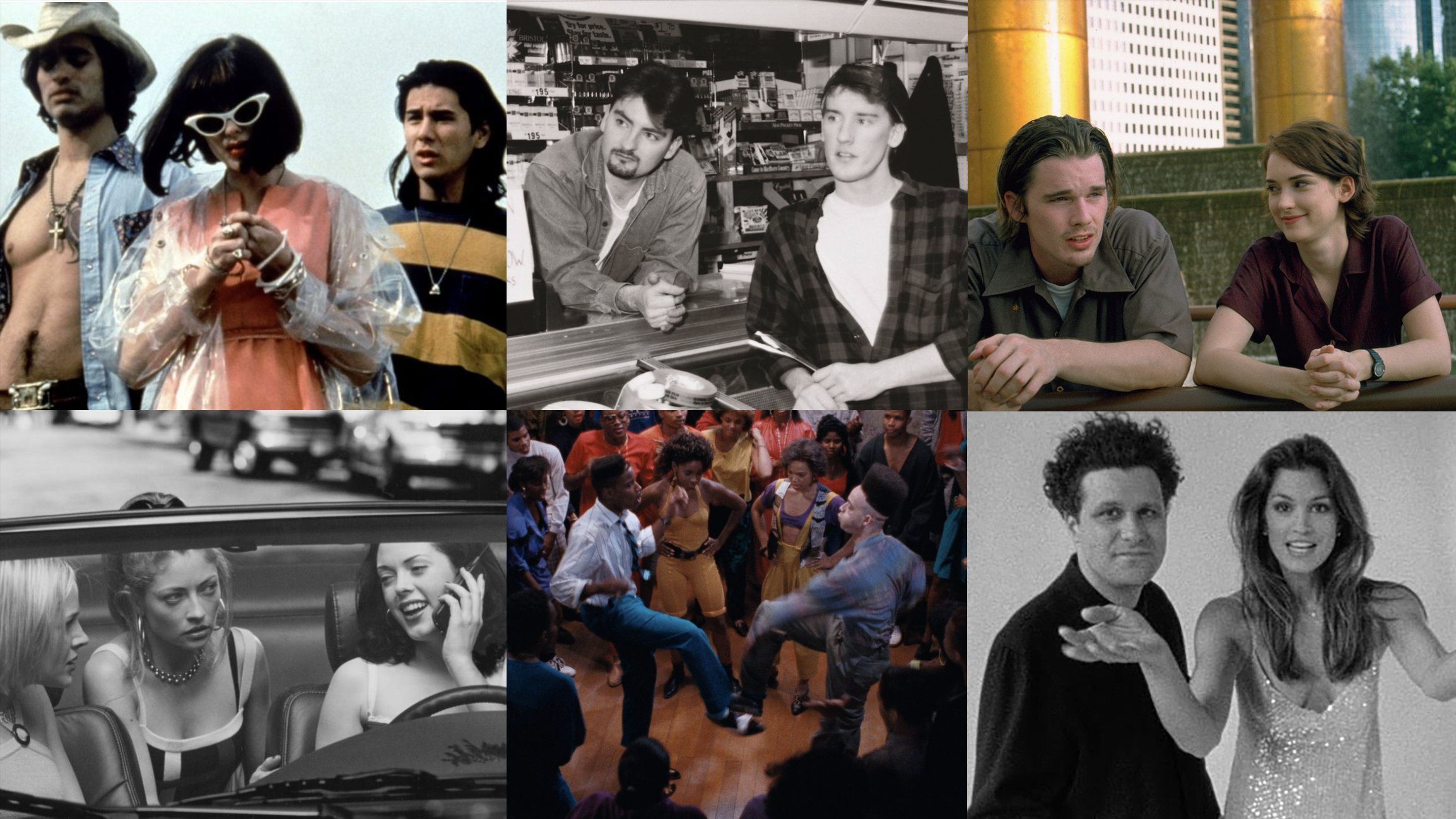
Eleven Sundance Film Festival premieres from the 1990s — from Clerks and House Party to Kids and Unzipped — captured and helped define the decade’s style, sound, and attitude. As Sundance prepares for its Colorado debut in Boulder, these Fest titles remain irresistible time capsules of Gen X cool, New Queer Cinema, and indie grit.
Key Takeaways
- Sundance.org’s “So ’90s” list highlights 11 Fest premieres that bottled ’90s fashion, music, and attitude as they happened.
- Standouts range from Clerks and Reality Bites to House Party, New Jack City, Kids, and Gregg Araki’s The Doom Generation.
- House Party later entered the U.S. Library of Congress National Film Registry; Unzipped returns in a 4K restoration.
- With Sundance set for Boulder in January 2026, a University of Denver preview event is teasing the festival’s artist-driven history.
The 1990s are back in rotation — baby tees, baggy denim, pixie cuts, tiny sunglasses, and grainy analog aesthetics — and film fans are rewinding, too. Long before the decade became mood-board material, filmmakers who premiered at Sundance were documenting young people figuring out who they were, counterculture colliding with pop culture, and independent experiments in how those stories looked and sounded.
According to a Sundance.org roundup by Jessica Herndon, titles from New Jack City and Reality Bites to Party Girl, Kids, and The Doom Generation did more than capture the era. Many helped define its attitude, style, and visual language. For more throwback culture coverage, browse our Nostalgia: Then & Now hub.
Why did these Sundance premieres define the ’90s?
Herndon’s list argues these Fest films doubled as time capsules: physical film grain, dramatic slow motion, Dutch angles, and the occasional wink into the camera. Wardrobes ran from babydoll dresses and chunky boots to oversize silhouettes, while soundtracks pulsed with new jack swing, alternative and industrial rock, house, and shoegaze.
House Party (1990 Sundance Film Festival) won the Filmmaker Trophy Dramatic and an Excellence in Cinematography Award: Dramatic. Reginald Hudlin’s comedy — starring Kid ’n Play with Martin Lawrence, Tisha Campbell, and A.J. Johnson — centered an epic house party spinning LL Cool J and Lisa Lisa and Cult Jam on vinyl. High-top fades, bold colors, and a dance-off helped put young Black culture on mainstream teen-movie screens. It was added to the Library of Congress’ National Film Registry in 2022.
New Jack City (1991) cast Wesley Snipes as drug kingpin Nino Brown opposite Ice-T and Judd Nelson in Mario Van Peebles’ Harlem crime drama. Slow motion, Dutch angles, and saturated color gave it an early-’90s stamp, while the soundtrack’s hip-hop, R&B, and new jack swing — including Guy, Keith Sweat, and Ice-T — hit No. 1 on Billboard’s Top R&B/Hip-Hop Albums chart for eight weeks.
Clerks (1994), winner of the Filmmaker Trophy Dramatic, was shot on black-and-white 16mm for less than $30,000, largely at the Quick Stop where Kevin Smith worked. Brian O’Halloran and Jeff Anderson’s bored New Jersey clerks proved a raw, quotable slacker comedy could make a cultural mark without a polished look.
Reality Bites (1994), Ben Stiller’s feature directorial debut, bottled Gen X nonchalance with Winona Ryder, Ethan Hawke, Janeane Garofalo, Steve Zahn, and Stiller. Camcorder footage, thrift-store layers, and Lisa Loeb’s “Stay (I Missed You)” — a Billboard Hot 100 No. 1 — locked in the alt-rock vibe alongside Juliana Hatfield Three, The Knack, and U2.
Which Sundance ’90s titles still feel like cultural landmarks?
Kids (1995) followed New York teenagers over one chaotic day, with Chloë Sevigny, Rosario Dawson, Leo Fitzpatrick, and Justin Pierce. Larry Clark and cinematographer Eric Edwards used handheld camerawork and grainy celluloid for documentary-like immediacy. Baggy jeans, baby tees, and skater gear framed frank depictions of sex, drugs, and HIV amid the AIDS crisis — making it one of the decade’s most provocative youth portraits.
Party Girl (1995) sent Parker Posey’s downtown club kid through New York’s underground scene on textured 16mm. Leopard print, colorful tights, tiny sunglasses, and house music — including voguing to Cajmere’s “U Got Me Up” with Natasha Twist — made it a fashion-forward Fest classic.
The Doom Generation (1995) pushed New Queer Cinema into hyperstylized territory. Rose McGowan, James Duval, and Johnathon Schaech’s surreal road trip mixed saturated colors, skewed angles, and dark humor with shoegaze and industrial sounds from The Jesus and Mary Chain, Nine Inch Nails, Slowdive, and Cocteau Twins.
Unzipped (1995), winner of the Audience Award: Documentary, followed Isaac Mizrahi’s fall 1994 collection with fly-on-the-wall access to Naomi Campbell, Cindy Crawford, Linda Evangelista, Kate Moss, and Christy Turlington. A new 4K restoration returns to U.S. theaters beginning September 25.
Jawbreaker (1999) gave the teen movie a candy-coated, darkly comic twist with McGowan, Rebecca Gayheart, Julie Benz, and Judy Greer. Capris, platforms, and monochrome pinks and limes met alt-pop from The Donnas, Imperial Teen, and Shampoo — a cult classic of late-’90s excess.
Hav Plenty (1998) starred writer-director Christopher Scott Cherot opposite Chenoa Maxwell, with cameos from Nia Long, Shemar Moore, Mekhi Phifer, Lauryn Hill, and TLC’s Chilli. A soundtrack stacked with Babyface, Teddy Riley, Faith Evans, SWV, and Erykah Badu, plus high-rise jeans and oversize blazers, painted Black culture at the decade’s end.
Relax…It’s Just Sex (1998), from P.J. Castellaneta, broke the fourth wall and mixed black-and-white confessional interviews as Jennifer Tilly, Mitchell Anderson, Lori Petty, Cynda Williams, and T.C. Carson navigated love and friendship in a multiracial LGBTQ+ and straight circle — expanding representation as indie cinema confronted AIDS-era conversations.
How does Sundance nostalgia connect to Colorado’s 2026 moment?
The look-back lands as Sundance prepares for its first Colorado run. The Denver Post reports Boulder will host the Sundance Film Festival from Jan. 21 to Jan. 31, with Hollywood names and tens of thousands of attendees expected at the foot of the Flatirons. More pass and ticket details are due in September.
Ahead of that debut, “Mostly True Stories From the Sundance Film Festival” lands Sept. 8 at the University of Denver’s Newman Center for the Performing Arts. The Sundance Institute lineup includes Amy Redford, Rian Johnson, Dee Rees, and producer Christine Vachon, with tickets starting at $29 for adults and $15 for students.
Festival Director Eugene Hernandez said the history of Sundance is really the history of the artists who participated over the decades — the films they debuted, the risks they took, and the experiences they shared with audiences. That framing fits Herndon’s ’90s reel: risk-taking premieres that still shape how we remember the decade.
Whether you lived through high-top fades and Walkmans or discovered them on a mood board, these 11 Sundance titles offer a credible rewind — no VHS required — just as Colorado gets ready for the festival’s next chapter.