Sette Colli 2026 Day Two finals: world record frenzy
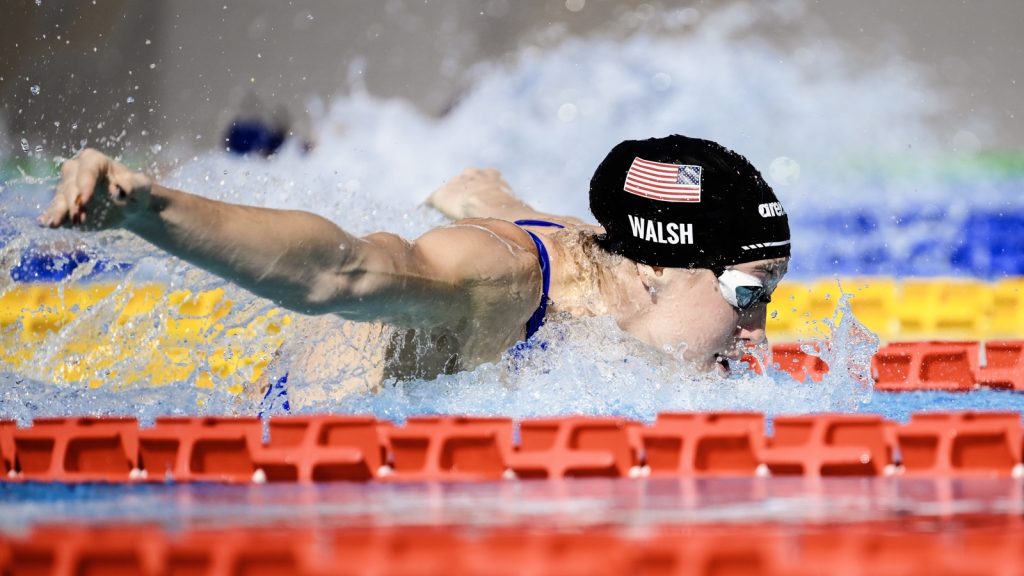
Day Two finals at the 2026 Sette Colli Trophy delivered a swimming competition highlight reel: Gretchen Walsh smashed the meet record in the 100m fly (54.82), Marrit Steenbergen broke the women’s 100m freestyle world record (51.68), and David Popovici dropped a meet-record 47.26 in the men’s 100 free—results that instantly reset the weekend’s stakes in Rome.
Key Takeaways
- Record chaos: Steenbergen lowered the women’s 100 free world record to 51.68; Walsh opened the night with a 54.82 meet record in the 100 fly.
- Virginia-powered impact: Alex Walsh won the women’s 400 IM (4:35.25) and Sara Curtis grabbed 100 free bronze in a new Italian record (52.69).
- Meet momentum: Popovici’s 47.26 meet record in the men’s 100 free and Christou’s 52.47 in the men’s 100 back sharpened the men’s sprint picture.
- Host-nation headlines: Italy swept the women’s 100 back podium and picked up wins from Burdisso (200 fly), Razzetti (400 IM), Pilato (50 breast), and Quadarella (800 free).
What happened on Day Two finals, and why does it matter?
Rome’s Foro Italico is built for big-night swimming, and Day Two finals at the 2026 Sette Colli Trophy leaned into that tradition with a stack of statement swims. The session opened with Gretchen Walsh turning her morning meet record into an even louder night-time one, and it escalated from there into a world record in the women’s premier sprint.
Why it matters: this meet is an elite, international checkpoint with deep fields—Virginia’s meet preview noted more than 700 athletes from 36 nations—so a “fast in June” swim here is both a medal and a message. In other words, these finals weren’t just wins; they were signals about who’s trending, who’s peaking, and who can handle pressure when the lights come on.
If you follow the attention economy side of sport (yes, even in a “Wealth Hacks & Passive Income” section), this is also the kind of night that turns a routine recap into a week of clips, headlines, and carryover buzz. If you want more evergreen reads from our section, start here: Wealth Hacks & Passive Income.
Which races delivered the biggest records and breakout swims?
Women’s 100m butterfly: Walsh won gold in 54.82 for a meet record, ahead of Roos Vanotterdijk (57.24) and Anna Ntountounaki (57.79). SwimSwam reported Walsh split 25.26 / 29.56 and had already set a meet record in the morning with 55.47, lowering the previous meet standard of 56.04 set in 2015 by Sarah Sjostrom.
Women’s 100m freestyle: Marrit Steenbergen detonated the world record with a 51.68, erasing Sjostrom’s 51.71 from 2017 (per SwimSwam’s recap). Siobhan Haughey took silver in 52.52, and Sara Curtis hit 52.69 for bronze—also flagged as an Italian national record and her first time under 53 seconds.
Men’s 100m freestyle: David Popovici won in 47.26 for a meet record, with Gui Caribe (47.88) and Kristof Milak (47.89) also under 48. SwimSwam noted Popovici was 47.72 in the morning, then improved at night to take down the previous meet record listed as 47.60.
Who won the other Day Two titles, and what were the decisive moments?
Men’s 200m butterfly: Italy’s Federico Burdisso grabbed the host nation’s first gold of the night in 1:55.10, with Richard Marton (1:55.51) second and Noe Ponti (1:56.10) third. SwimSwam characterized it as Burdisso tightening late but holding off the charge.
Women’s 100m backstroke: An all-Italy podium sweep, led by Martina Biasioli in 1:00.77, followed by Federica Toma (1:00.84) and Anita Gastaldi (1:00.98). SwimSwam also noted no one broke 1:00 in the final.
Men’s 100m backstroke: Apostolos Christou of Greece won convincingly in 52.47, with Adam Jaszo taking silver in 53.70 and Italy’s Francesco Lazzari earning bronze in 53.91. SwimSwam included Christou’s splits (25.36 / 27.11) and framed the swim as close to his career best.
Women’s 400m IM: Alex Walsh of the United States won in 4:35.25, with Ellen Walshe (4:37.20) second and Anna Pirovano (4:39.38) third. SwimSwam described Walsh’s swim as her second-fastest ever and within a second of the meet record listed at 4:34.65.
Men’s 400m IM: Alberto Razzetti won in 4:13.37 ahead of Gabor Zombori (4:14.55) and Emanuele Potenza (4:16.36). SwimSwam summarized it as a solid, controlled final with nobody under 4:10.
Women’s 50m breaststroke: Benedetta Pilato took gold in 30.00, Lisa Angiolini earned silver in 30.49, and Mona McSharry got bronze in 30.66. SwimSwam added that Pilato improved on her season-best of 30.13 from April.
Men’s 100m breaststroke: Ivan Kozhakin won in 59.49, ahead of Melvin Imoudu (59.78) and Nicolo Martinenghi (59.79). SwimSwam noted Kozhakin dropped time from his morning 59.75 and that he competed as a neutral athlete.
Women’s 800m freestyle (fastest heat): Simona Quadarella won in 8:21.03, with Sarah Dumont second in 8:30.44 and Antonietta Cesarano third in 8:33.02.
Men’s 800m freestyle (fastest heat): Vasileios Kakoulakis won in 7:52.56, Guilherme Costa took silver in 7:53.20, and Daniel Wiffen earned bronze in 7:53.76.
Where do the Virginia Cavaliers fit into this Day Two story?
Virginia’s official preview framed Sette Colli as a three-day international meet (June 26–28) with prelims and finals sessions and a packed schedule that included Day Two events like the 100 fly, 100 back, 400 IM, 100 free, and 50 breast. It also highlighted a Cavaliers-heavy roster in Rome: Sara Curtis, Lana Pudar, Nina Jazy, plus alumnae Gretchen Walsh and Alex Walsh.
Day Two finals made that connection feel immediate rather than promotional. Gretchen Walsh didn’t just win—she put the meet on notice in the 100 fly. Alex Walsh delivered a title in the 400 IM. And Curtis, already a headline name entering the night, added a 52.69 bronze in the 100 free that SwimSwam called an Italian record and a barrier-breaking swim under 53 seconds.
For an authoritative overview of Virginia’s contingent and the meet’s scale, see the Cavaliers’ official site: Virginia Sports’ Settecolli meet preview.
So what’s the top question after Day Two: who left Rome with the loudest statement?
If you’re ranking “statement” swims by impact, the women’s 100 free world record sits at the top—Steenbergen’s 51.68 is the kind of time that instantly changes how every next final feels. Right behind it is Walsh’s 54.82 meet record in the 100 fly, which SwimSwam framed as another entry on her record-level trajectory.
On the men’s side, Popovici’s 47.26 meet record was the cleanest answer to the night’s sprint question: could anyone make the men’s 100 free feel like an event, not just a time trial? Day Two said yes—and it did it with three swimmers under 48.
That’s what made this Day Two finals recap feel “live”: not one narrative, but multiple—records, depth, and a crowded leaderboard across nations—stacked into a single Rome evening.