Scaloni: no single way to win as Argentina face Jordan
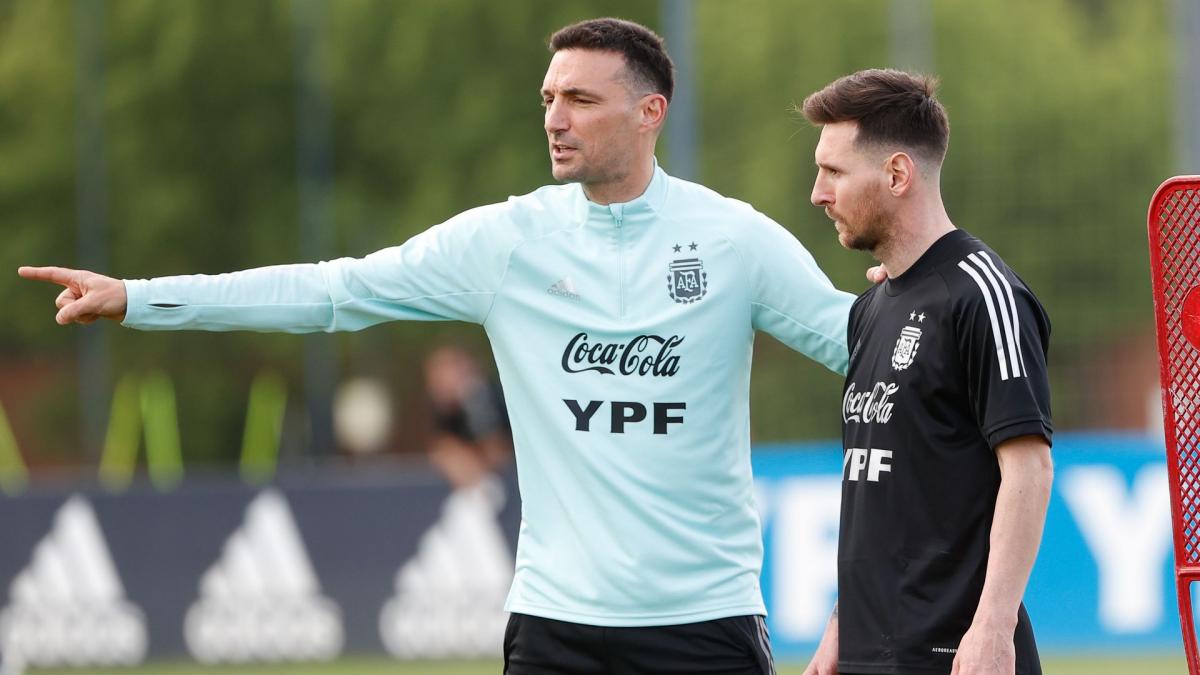
DIRECT ANSWER: Before the Jordan-Argentina Group J finale at World Cup 2026, Lionel Scaloni rested Lionel Messi on the bench and said there is no single winning formula. Argentina had already topped the group after beating Algeria and Austria, with Messi scoring all five Albiceleste goals in the tournament so far.
Key Takeaways
- Argentina entered the Jordan match already qualified for the round of 16 and assured of first place in Group J.
- Scaloni confirmed Messi would start on the bench and enter later, after scoring all five Argentine goals in the first two group games.
- Nicolás Tagliafico was in line for a first World Cup 2026 start after returning from a muscle injury.
- Scaloni argued multiple tactical styles can win at this tournament, citing possession teams, transition sides, and defensive blocks.
- Group J also saw Algeria and Austria contest the remaining qualification spots on the same matchday.
Why did Jordan vs Argentina matter with so little at stake?
The Jordan-Argentina clash was the final Group J fixture of the 2026 World Cup, played on 28 June. For Argentina, the stakes were already settled. The Albiceleste had won both previous group matches—3-0 against Algeria and 2-0 against Austria—securing progression and the group lead before kickoff.
Jordan, by contrast, arrived already eliminated. That asymmetry turned the tie into a management exercise for Scaloni rather than a qualification thriller. He could rotate, protect key players, and audition squad members before the knockout phase.
Yet the fixture still carried narrative weight. It was a chance for fringe players to state their case. For audiences tracking the Nostalgia: Then & Now beat, the contrast was sharp: an Argentina leaning on squad depth while Messi, at 39, moved from undisputed spearhead to managed match-winner.
Will Lionel Messi keep scoring at World Cup 2026?
That was the headline question heading into the last group game. Messi had been Argentina's entire scoring output so far—five goals across two wins—and had recently celebrated his 39th birthday. Vietnam.vn reported that Scaloni officially confirmed Messi would play against Jordan on 28 June, but only as a substitute rather than from the opening whistle.
The logic was straightforward. With first place secured and a knockout schedule looming, Scaloni prioritized minutes management for his captain. Foot Mercato noted the coach's pre-match confirmation that Messi would begin on the bench, preserving him for when Argentina truly needed a decisive intervention.
From a records perspective, every appearance still mattered. Messi entered the Jordan fixture as the focal point of Argentina's attack and the source of every Albiceleste goal in the competition to that point. Whether he added to his tally depended on how many minutes Scaloni granted him after halftime—or whether the rotated starters seized the spotlight first.
Can Nicolás Tagliafico finally start for Argentina?
While Messi's minutes dominated headlines, Lyon left-back Nicolás Tagliafico had his own subplot. Olympique & Lyonnais reported that Tagliafico missed Argentina's opener against Algeria because of a muscle injury suffered just before the tournament, despite remaining in the squad.
He returned to collective training and made his World Cup debut as a late substitute against Austria, entering in the 81st minute of a 2-0 win. By the eve of the Jordan game, the French outlet framed him as a credible candidate for a first start in the competition.
Scaloni's expected rotation opened the door. With six points, five goals scored, and none conceded through two matches, Argentina could afford to hand opportunities to players fighting for knockout roles. For Tagliafico, a start against an eliminated Jordan side represented more than cosmetic lineup shuffling—it was proof his body had caught up with the squad's rhythm after a worrying pre-tournament setback.
What did Scaloni say about how teams win in 2026?
Scaloni used his pre-match platform to send a broader message to rivals. Speaking at a press conference before the Jordan fixture, he rejected the idea that only one playing philosophy succeeds at a World Cup.
As quoted by Foot Mercato, Scaloni said teams that dominate through possession can prevail, but so can sides built on rapid transitions or compact defensive organization. He pointed to a recent Australia–Paraguay stalemate as evidence that disciplined, hard-to-break-down opponents will trouble anyone in the knockouts—even when both sides advance.
His counsel to stay true to identity resonated with Argentina's own approach. Scaloni acknowledged tactical tweaks for specific opponents, but warned against abandoning the style that defines a team. For a manager navigating a squad around an aging Messi, the comments read less like theory and more like a warning to bracket pickers: expect variety, not uniformity, at this World Cup.
How does this Group J finale fit the bigger World Cup picture?
The Jordan-Argentina match was not the only Group J business on 28 June. Vietnam.vn noted that Algeria and Austria kicked off simultaneously, battling to determine the remaining qualification places from the pool. Argentina's comfort allowed Scaloni to experiment; elsewhere in the group, tension remained.
Argentina's group-stage numbers told the story of a side in control: six points, five goals, a clean defensive sheet across 180 minutes before the Jordan game. That foundation explains why rotation carried minimal risk. Even a heavily changed XI still carried experienced internationals across every line.
Whether the night produced another Messi goal or a breakthrough for Tagliafico, the through-line was consistent. Scaloni treated the Jordan fixture as a laboratory—test minutes, protect stars, and remind the football world that championships are won by adaptable teams, not copy-paste tactics. In a tournament already showcasing contrasting winners, Argentina intended to remain themselves while proving they could win another way, too.