Calls grow for safer Eleventh Night bonfires before parades
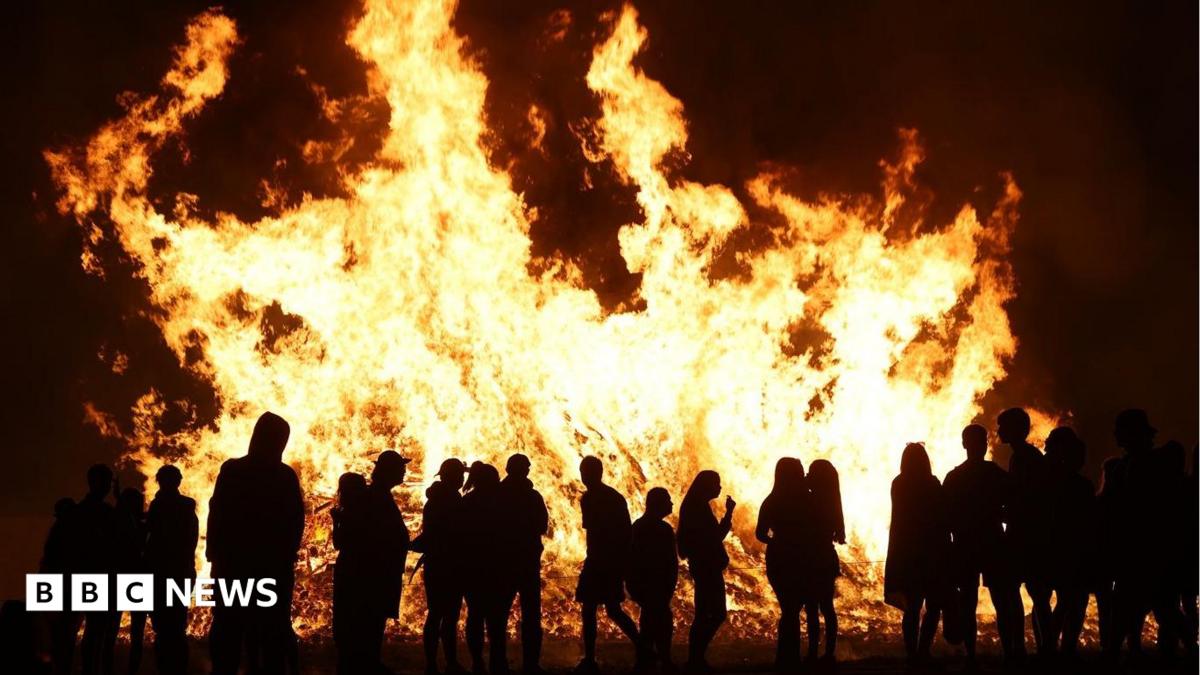
Politicians across Northern Ireland are urging stronger action to keep Eleventh Night bonfires safe and lawful after a fatal fall in east Belfast and a blaze that destroyed two Greenisland homes. The fires mark unionist celebrations ahead of the Orange Order's Twelfth of July parades, with leaders calling for earlier engagement and clearer enforcement.
Most Eleventh Night events passed without major trouble. Still, the human cost of the weekend has sharpened debate over how communities celebrate culture before the annual Twelfth of July parades.
On Friday, a man died after falling from an unlit bonfire in east Belfast. In the early hours of Sunday, two homes in Greenisland, County Antrim, were destroyed in a fire that the Northern Ireland Fire and Rescue Service (NIFRS) said was most likely caused by "accidental ignition due to embers."
For readers following community risk, safety rules, and practical recovery after sudden loss, BlasterPost also tracks related money and resilience angles in our Wealth Hacks & Passive Income coverage.
Key Takeaways
- Unionist and other party leaders say Eleventh Night bonfires must be safer and lawful, especially near homes before Twelfth parades.
- A man died after falling from an unlit east Belfast pyre; two Greenisland houses were gutted after embers were blamed.
- NIFRS logged 303 emergency calls and 151 incidents between 18:00 Saturday and 02:00 Sunday, with 54 linked to bonfires.
- Alliance and Ulster Unionist figures reject a new Parades Commission-style regulator, preferring local enforcement and early agency talks.
- Orange Order leaders and councillors want smaller, better-sited fires as "super bonfires" push safety limits.
What happened during Eleventh Night this year?
Eleventh Night bonfires are lit in some unionist areas ahead of the Orange Order's Twelfth commemorations of the Battle of the Boyne in 1690. In 2026, many marches moved to Monday 13 July because 12 July fell on a Sunday, which the Order treats as a day of rest.
Beyond the east Belfast fatality and the Greenisland blaze, a controversial pile topped with a replica mosque was set alight in Moygashel, County Tyrone, before police could remove it. Effigies, flags, and slogans on other sites also drew condemnation.
NIFRS said it received 303 emergency calls and attended 151 operational incidents between 18:00 BST on Saturday and 02:00 on Sunday. Fifty-four of those incidents were bonfire related. Homes and street lights near several pyres were wrapped or boarded in advance, including about 40 homes beside Larne's Craigyhill bonfire, which organisers said reached 120m.
In Bangor, the Northern Ireland Housing Executive supplied boarding to protect windows for 101 residents near Churchill Park. East Belfast's Pitt Park site saw lights and homes only metres from a playground pyre protected with boarding and wrapping.
Why are politicians demanding safer bonfires before parades?
Democratic Unionist Party leader Gavin Robinson stressed that many people celebrate peacefully and safely. He called the east Belfast death a "total tragedy" and said there is willingness in the community to celebrate "safely and appropriately."
First Minister Michelle O'Neill said burning effigies of politicians, flags, or symbols should never be treated as normal. "In any other part of the world, this would be unfathomable and unacceptable," she wrote, calling such acts "hatred, rooted in ugly sectarianism and racism."
Ulster Unionist leader Jon Burrows said most bonfires are safe and lawful, but unsafe ones are "an own goal for unionism." He branded the Greenisland destruction "outrageous" and said it "cannot happen again." Rather than a new "quango," he urged better use of existing tools: mapping sites through police community support partnerships, early talks with police and fire crews, and enforcement when size or location creates danger.
Alliance MLA Stewart Dickson said reflection is not enough and that "we actually need action," chiefly from unionist political leadership on Eleventh Night. He does not favour a new body like the Parades Commission. Local authorities working with the fire service could, he argued, judge location, materials, and a "reasonable and safe height."
Orange Order grand secretary Mervyn Gibson said "something needs to be done to increase safety for everyone," preferably by siting fires as far from houses as possible and matching size to nearby property. SDLP councillor Carl Whyte warned that "super bonfires" and very tall structures "are clearly not safe," while arguing statutory agencies already hold broad powers.
How did the Greenisland house fire leave families with nothing?
Retired great-grandfather Davy Haighton had lived at Knockleigh Walk for 56 years. He told BBC News NI that "everything is gone — clothes, money, documents, all our memories." The NIFRS sent 45 firefighters; the blaze also damaged neighbouring terrace homes, oil tanks, and a shed.
Haighton said his wife, who has mobility issues, was asleep upstairs when he saw a rear gate ablaze shortly after midnight. Firefighters told her not to use her stair-lift, so she descended on foot. The couple watched from a nearby field as the family home burned. No one was hurt, according to a local assembly member.
He described sparks and thick soot flying "in their tens of thousands" toward the terrace after the estate bonfire was lit. After alerting a neighbour whose garden was alight, he tried to hose flames until the heat burned his face, then woke his wife to flee.
Billy Withers, whose daughter's home of eight years was also gutted, said she escaped with only the clothes she wore. Alliance East Antrim MLA Stewart Dickson called for a "full investigation" and praised neighbours who "rallied around" the victims. The PSNI said the fire was "deemed accidental at this time."
Can existing rules keep Eleventh Night and parades safer?
Across the political spectrum, the emerging consensus is not to scrap the tradition, but to shrink risk before crowds gather for Twelfth parades. Burrows and Dickson both point to mapping, early multi-agency contact, and enforcement on illegal items or dangerous scale — without inventing a new national regulator.
NIFRS Area Commander Dermot Rooney urged the public to "stay safe and make responsible choices" through the bank holiday, noting warm, dry weather also raises countryside fire risk. Elsewhere, crews dealt with fire spread into a Belfast garage and withdrew from a Cookstown bonfire after facing a "hostile crowd."
For households near large pyres, the practical message from this year is stark: boarding and wrapping help, but embers can still travel. Leaders say safer siting, lower height, and faster intervention are the difference between a cultural night and a life-changing loss — especially when the calendar then turns to public parades.
As Northern Ireland weighs culture against safety, the pressure is on organisers, councils, police, and fire services to act before the next Eleventh Night cycle, not only after the smoke clears.