Russia fuel shortages bite—will Putin shift on Ukraine war?
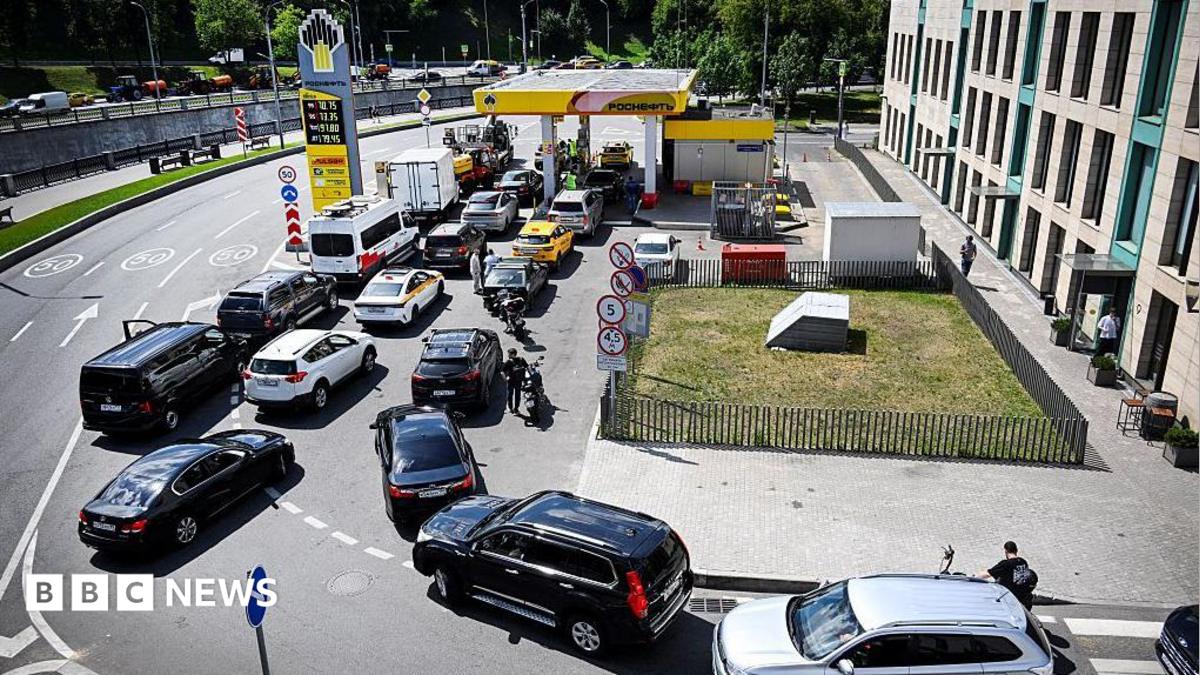
Russia fuel shortages are squeezing drivers and businesses, but they’re unlikely to make Vladimir Putin change course in the Ukraine war soon. According to the BBC, Putin has acknowledged the disruption and ordered mitigations, yet analysts say pressure could bring more repression and escalation—not a pivot. Russians are already adapting, including switching cars to LPG.
Key Takeaways
- Fuel queues and rationing are becoming a visible home-front cost of the war.
- Putin has publicly admitted the shortages “create problems,” while insisting they are “not critical.”
- The Kremlin is moving to cushion the hit via imports, subsidies, and other stopgap measures.
- Reuters reports a surge in car conversions to cheaper, more available LPG as gasoline runs short.
- BBC analysis suggests shortages alone won’t force a quick change in Ukraine strategy.
For the latest on how technology and economic shocks ripple into everyday life, see our Future Tech & AI Wonders hub: https://blasterpost.com/category/future-tech-ai-wonders/.
What’s driving Russia’s fuel shortages right now?
The BBC reports that Ukraine’s attacks are “obviously creating problems,” in Putin’s words, and the Kremlin is treating the disruption as serious enough to address publicly. Even so, Putin has tried to reassure viewers on state TV that the situation is “not critical.”
In response, the BBC says authorities have already begun steps to steady the domestic market: increasing fuel imports, subsidising fuel prices, and allowing the sale of lower-grade fuel—something critics fear could damage engines.
Reuters adds a street-level view of what “shortages” mean: longer lines at filling stations, higher prices, and households hunting for alternatives that can keep them moving.
Will Russia fuel shortages change Putin’s Ukraine war calculus?
The BBC’s answer is blunt: don’t assume economic pain automatically translates into political pressure strong enough to force a turn. Nina Khrushcheva, a professor of international affairs at The New School, told the BBC Putin is unlikely to bend, warning that the more pressure he feels, the more aggressively and repressively he may act.
The BBC also points to signals of doubling down. Putin has been shown meeting commanders, claiming momentum and promising to take more territory—framing events as continued initiative rather than grounds for compromise.
In other words, shortages may be a stress test for wartime logistics and public mood, but the BBC reporting suggests they are not—by themselves—a lever that guarantees a negotiated shift.
How are ordinary Russians adapting to running on empty?
Reuters reports a rush to convert cars to liquefied petroleum gas (LPG), a fuel that many drivers see as cheaper and easier to find during a gasoline squeeze. In Moscow, one conversion business told Reuters demand has multiplied, with a waiting list stretching to September.
Reuters also cites industry and official figures showing LPG’s existing role in Russia’s transport system. Russia used about 3.5 million metric tons of LPG as car fuel in 2024, according to the World Liquid Gas Association, and official data shows motor fuel accounted for 54% of Russia’s LPG consumption last year.
For consumers, Reuters says the appeal is practical: LPG can mean fewer queues and prices roughly 50% to two-thirds lower than gasoline at filling stations.
What should the rest of the world watch next?
Watch for whether the Kremlin’s fixes—imports, subsidies, and quality compromises—reduce queues, or whether shortages keep flaring up in ways that erode confidence. The BBC notes the government is already acting to prevent the problem from spiralling, which suggests it sees fuel availability as politically sensitive.
Also watch the adaptation wave Reuters describes: rapid LPG conversions are a kind of bottom-up “energy transition,” driven not by climate policy but by scarcity and price signals. It’s a reminder that when supply chains break, people will route around the damage—fast.
For the underlying reporting, read the BBC analysis here: https://www.bbc.co.uk/news/articles/cr7xk8j0j2do, and the Reuters report on LPG conversions here: https://www.reuters.com/business/energy/russians-race-adapt-cars-use-lpg-gasoline-runs-short-2026-07-07/.