Major wildfire on Paros forces village evacuations
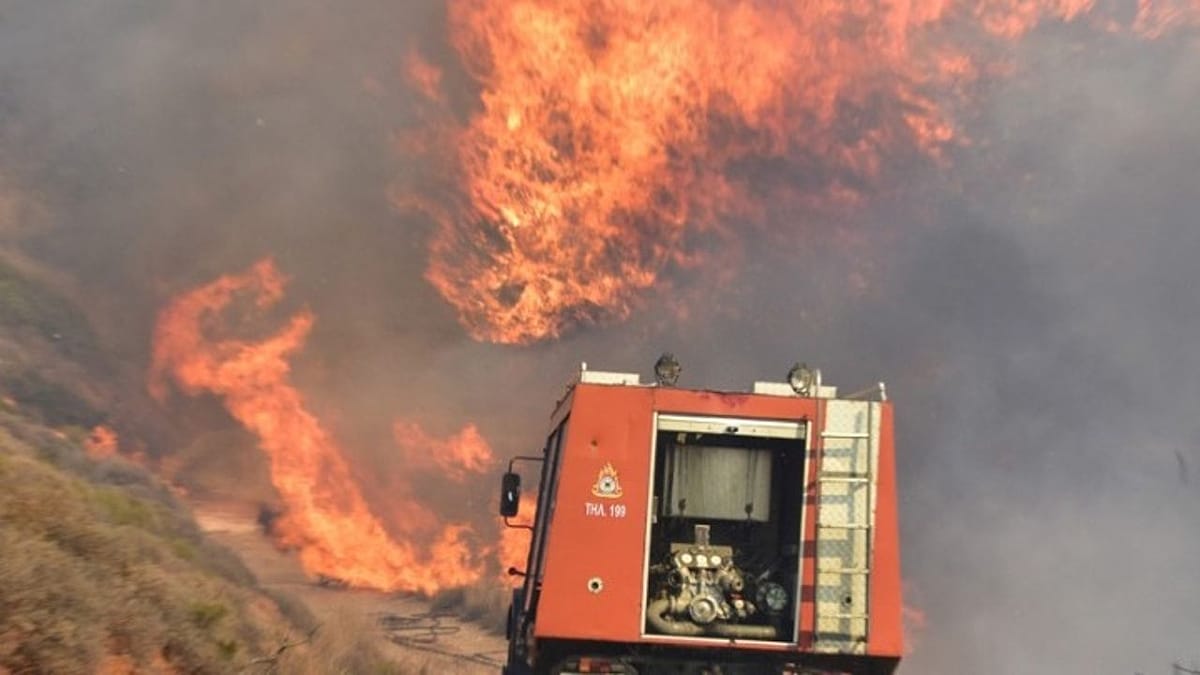
A major wildfire on Paros forced successive village evacuations after the blaze reignited overnight across the island's south. Dozens of firefighters and aircraft are battling remaining hotspots as strong northerly winds and rugged terrain complicate containment on one of Greece's busiest holiday islands. Authorities say the situation improved on Wednesday, but there is still no room for complacency.
Key Takeaways
- The Paros fire broke out Tuesday near the Kampi landfill, flared overnight, and prompted four 112 alerts covering about ten areas.
- As of Wednesday, firefighters reported improvement and no settlements under immediate threat, though hotspots remained.
- About 66 firefighters, special forest teams, engines and aircraft were engaged, with more crews arriving by ferry.
- Northerly winds of 6–7 Beaufort, expected to strengthen, and ravine terrain have kept the blaze hard to finish.
- Greece is also expanding nanosatellite, AI and drone tools to detect and fight wildfires nationwide.
What happened on Paros and which areas were evacuated?
According to Euronews, a large wildfire on Paros has been burning for a second day on the southern and southeastern side of the Cyclades island. The fire started at midday on Tuesday in the Kampi area near the island's landfill, first consuming rubbish and low vegetation before racing through dry grass, farmland and rough ground.
Local reporting cited by Euronews said the blaze was largely contained by late Tuesday afternoon, then reignited after aerial operations stopped for the night. Overnight, the front moved through the wider Agkairia area toward Trypiti, while a second front was reported advancing toward Faragas beach. Apianes hill and land along the road to the Monastery of Agioi Theodoroi were also reported burned, and power cuts hit much of southern Paros.
Authorities issued four successive 112 emergency alerts from Tuesday afternoon into early Wednesday. People in Agios Charalampos, Kampi, Bougados and Aneratza were first told to move toward Aliki, followed by an order for Kamari. At 01:31 a.m., Agkairia residents were instructed to leave for Aliki beach. About 40 minutes later, people in Trypiti, Glyfa, Pyrgaki and Aspro Chorio were told to head toward Dryos.
Paros deputy mayor for civil protection Christos Giourtzidis told SKAI that some residents initially refused to leave because they did not want to abandon animals. He said at least two livestock facilities had been destroyed, though a full damage picture was not yet available. eKathimerini similarly reported that there was still no clear assessment of possible damage to homes in an area with scattered holiday residences.
How are firefighters responding to the Paros blaze?
Euronews reported that the Fire Service had 66 firefighters, four forest commando teams from the 1st Special Forest Operations Unit and 16 fire engines on the operation. From the air, two aircraft and five helicopters were working, one of them coordinating forces, with more aerial assets on standby if needed.
Ground crews were reinforced from Attica, Syros, Naxos and Piraeus. A further 20 firefighters with eight vehicles were due to arrive by ferry from Rafina. Volunteers, two water tankers and heavy machinery from the Municipality of Paros were also helping, under overall coordination by the deputy chief of the Fire Service.
eKathimerini said the picture improved on Wednesday. Fire service spokesperson Yiannis Artopios said no settlements were currently under threat, but crews were still working to stop the fire from spreading. “There is no room for complacency,” he said, noting smoldering areas and scattered active fronts. Deputy mayor Charalambos Giourtzidis told the outlet the fire had been largely contained to the Farangas and Trypiti areas, though flare-ups continued and low vegetation was still burning.
That operational update matters beyond emergency response alone. Paros is a major holiday destination, and disruptions to travel, lodging and seasonal work can ripple through local livelihoods. For readers following how shocks hit travel economies and income streams, see our Wealth Hacks & Passive Income coverage hub.
Why is the Paros wildfire still hard to contain?
Firefighters have been fighting in ravines and hard-to-reach ground where vehicles struggle to get in. Syros Civil Protection information, relayed by local media and cited by Euronews, pointed to an active front in a large ravine below Agioi Pantes.
Fire Service deputy spokesman Giannis Artopios called the blaze “difficult,” saying northerly winds of 6 to 7 Beaufort create spot fires and new fronts away from the main burn. Paros mayor Konstantinos Bizas warned winds could strengthen further, with gusts locally reaching 8 Beaufort. On Wednesday the island was in risk category 3, a high wildfire danger level.
eKathimerini likewise said authorities remained on high alert as strengthening winds threatened to complicate full containment. Crews were expected to stay on Paros until the fires are fully brought under control. The Cyclades Arson Crime Investigation Unit has been activated to probe the cause; so far, no information has been released on what started the fire.
How is Greece using technology against wildfires?
The Paros emergency sits inside a wider Greek wildfire challenge. LifeGate reports that Greece has become the first country to integrate a dedicated nanosatellite constellation into its national firefighting system, pairing thermal sensors with artificial intelligence and expanding drone surveillance.
Four OroraTech nanosatellites launched in May can detect hotspots smaller than four square metres. AI models help the Hellenic Space Center filter false alarms, prioritise events, predict spread and push alerts to responders. Drone numbers have climbed from 40 two years ago to more than 100 this year, giving commanders live video from roughly 120 metres up.
LifeGate also notes severe recent seasons, including more than 50,000 hectares burned in 2025 and recovery costs above €165 million after homes and infrastructure were destroyed. Arrests for fire-starting have doubled in two years as detection improves. Those tools do not erase overnight flare-ups on islands like Paros, but they show why Greek officials are racing to spot fires earlier and assign blame faster.
For now, the story on Paros remains local and urgent: villages emptied under 112 alerts, livestock losses already confirmed, and firefighters damping down hotspots while the wind stays a threat. Residents and visitors should follow official 112 guidance and local civil-protection updates until authorities declare the fronts fully contained.