Nikkei 225 slides as AI chip jitters hit Asia stocks
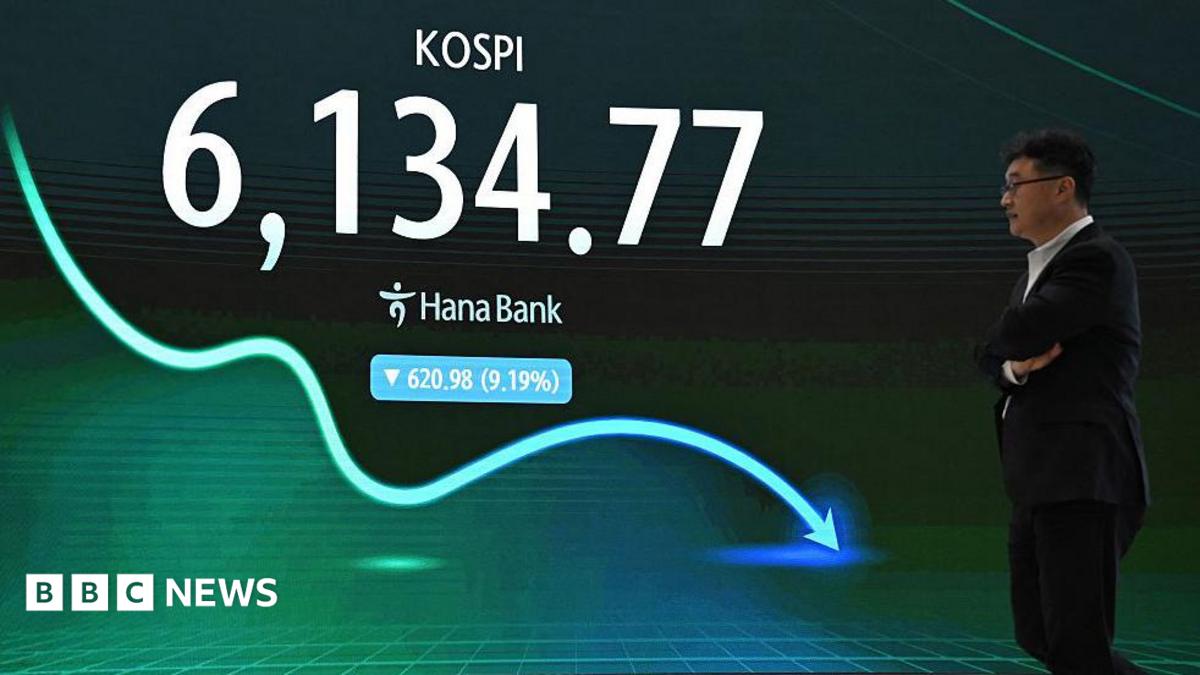
Japan's Nikkei 225 tumbled nearly 4.5% on Tuesday morning as AI-related chip stocks sold off across Asia and the US, deepening investor doubts about whether huge AI spending can deliver profits. South Korea's Kospi plunged about 10% after a circuit-breaker halt, while Nvidia's Monday drop helped Apple reclaim the top market-value crown.
Key Takeaways
- The Nikkei 225 was almost 4.5% lower as tech-heavy Asian markets tracked a fresh AI chip sell-off.
- South Korea's Kospi fell around 10% after an 8% slide triggered a temporary trading halt.
- Samsung Electronics and SK Hynix each dropped more than 10% amid circular-funding and China-competition worries.
- Nvidia fell 5% in New York, losing the world's most valuable listed-company spot to Apple.
- Analysts are questioning whether AI investments can become profitable enough to repay enormous capital outlays.
Major chipmakers slipped sharply from Wall Street to Asia as a sell-off in artificial intelligence-related stocks deepened. For readers tracking wealth-building strategies in Wealth Hacks & Passive Income, the move is a reminder that concentrated tech bets can reverse quickly when sentiment shifts.
According to BBC News, shares in major chip firms fell in both the US and Asia as AI jitters rattled investors. Bloomberg reported the same theme: mounting doubts over returns from billions of dollars of AI spending triggered another chipmaker sell-off, while bonds gained as oil retreated.
What happened to the Nikkei 225 and Asian chip stocks?
Japan's Nikkei 225, which is heavily weighted toward technology companies, was almost 4.5% lower on Tuesday morning. That decline followed overnight pressure on US semiconductor names and a broader rethink of AI-linked valuations across the region.
South Korea's benchmark Kospi index was paused temporarily after sliding by 8%. Once the 20-minute halt lifted, the index traded around 10% lower. Bloomberg also put the Kospi tumble at 10% as the chip rout deepened and Asian equities absorbed the latest wave of AI anxiety.
Technology firms led the slump. Samsung Electronics and SK Hynix both fell by more than 10%, with Bloomberg saying each slid more than 11% amid concerns over circular funding and rising competition from China. Those losses helped pull broader indexes lower because chipmakers sit at the center of the AI investment story.
MSCI's Asia Pacific equity gauge dropped as much as 3.6% to the lowest level since May, putting it on track for a technical correction, Bloomberg reported. The regional slide showed that AI anxiety was no longer limited to a handful of US megacaps and had become a market-wide pricing shock.
Why are investors suddenly dumping AI chipmakers?
The immediate spark came from Nvidia. The AI chip giant fell 5% in New York on Monday after the Wall Street Journal reported that it is in talks to provide around $250bn for OpenAI as part of a massive data-centre project. The BBC said it contacted Nvidia and OpenAI for comment.
That drop mattered beyond one stock. Nvidia lost its position as the world's most valuable listed company to Apple. Apple had risen by about 25% this year, and Nvidia's decline cleared the path for the iPhone maker to reclaim the top spot by market value.
The broader worry is simpler: governments and companies are spending hundreds of billions of dollars on AI capabilities, and some analysts question whether the technology can become profitable enough to recoup such huge investments. When capital commitments look open-ended, investors often demand clearer payback timelines before paying peak valuations.
Bloomberg framed the same concern as doubts over returns from AI spending. Those doubts helped explain why chipmakers from Wall Street to Asia were sold in tandem, even while other market factors—such as a slide in oil and a gain in bonds—were also shaping risk appetite.
The Financial Times similarly captured the mood with coverage of an AI stock sell-off deepening as investors dumped chipmakers. Together, the reports point to a common investor question: can today's spending boom produce durable earnings, or is too much optimism already priced in?
How did South Korea's market amplify the AI sell-off?
South Korea's tech-heavy Kospi has been especially volatile. The BBC noted that trading has attracted large numbers of retail investors in recent months, and the index had more than doubled from the start of the year to mid-June before losing around a third of its value.
Circuit breakers have become a recurring feature. The Kospi has been halted eight times so far this year under a mechanism designed to calm panic selling. Tuesday's pause after an 8% slide fit that pattern and underscored how quickly AI-linked names can move when fear spreads through a concentrated market.
US-listed shares in SK Hynix also showed the pressure. On Monday they fell by 7.5% to well below the $149 offer price from the company's record-breaking Nasdaq debut on 9 July. That underwater listing performance reinforced the message that AI memory and chip enthusiasm can cool as quickly as it heats up.
When a market that recently doubled gives back a large share of those gains, forced selling and sentiment shocks can feed on each other. That is why Tuesday's Kospi halt mattered for investors far beyond Seoul: it signaled that AI-related risk was being repriced at speed.
What should long-term investors watch next?
For passive investors and dividend-focused portfolios, the takeaway is not to chase every AI headline. Concentration risk in semiconductors and AI infrastructure has delivered outsized gains, but Tuesday's Nikkei 225 and Kospi moves show how correlated those bets can become when funding and profitability questions resurface.
Watch three signals. First, whether Nvidia and other chip leaders stabilize after reports of very large OpenAI-related financing talks. Second, whether Asian indexes such as the Nikkei 225 and Kospi recover without repeated circuit-breaker stress. Third, whether Apple's reclaiming of the top market-value rank marks a rotation toward less AI-levered mega-cap names.
None of those signals guarantees a bottom. They do, however, help separate short-term panic from a deeper reassessment of AI returns. Diversification across sectors, geographies, and income-producing assets remains the practical defense when a single theme drives both the rally and the reversal.
Markets can still reverse again if fresh data restores confidence in AI monetization. Until then, the chip sell-off from New York to Seoul and Tokyo is a live stress test of how much optimism investors are willing to price into the next wave of data-centre spending—and why the Nikkei 225's nearly 4.5% drop became an early warning for global wealth portfolios.