New metric for overall senescent cell burden predicts risk
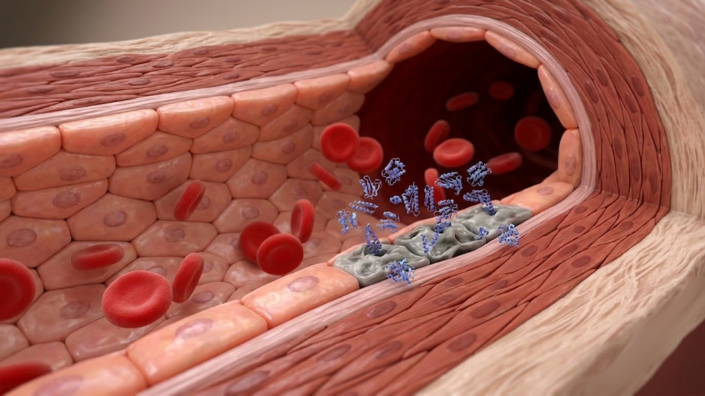
Researchers have developed a new metric for overall senescent cell burden called SASP Score. Built with deep learning on UK Biobank blood proteomics, it combines circulating senescence-associated secretory proteins into one biomarker. Higher scores track greater all-cause mortality risk and age-related disease, and may help gauge lifestyle interventions.
Key Takeaways
- SASP Score uses 38 blood proteins and a deep learning model to estimate systemic senescent cell burden from a simple blood draw.
- People with high scores were roughly 1.4 times as likely to die from any cause as those with low scores, after adjusting for major health factors.
- The metric correlates with frailty markers, dementia, stroke, and chronic kidney disease risk, but is not a general aging clock.
- In the MEDEX study, regular exercise largely flattened the 18-month rise in SASP Score seen in non-exercisers.
What is the SASP Score and how does it work?
As cells age into senescence, they stop dividing and release a mix of signaling molecules known as the senescence-associated secretory phenotype, or SASP. Those signals can drive inflammation, impair tissue function, and push neighboring cells toward the same state.
Measuring the full circulating SASP is difficult because many proteins interact in nonlinear ways. Researchers therefore trained a Guided AutoEncoder with Transformer (GAET) model on UK Biobank Pharma Proteomics Project data from 50,997 of 54,219 participants, selecting 38 literature-linked proteins such as CCL, CXCL, and IL family factors. About 85% of the data trained the model; 15% validated it.
According to coverage on Lifespan.io, the algorithm accounts for nonlinear protein relationships and works across proteomics platforms without extra data transformation.
How strongly does a higher score predict disease and death?
Chronological age guided model development but is not baked into the score itself. Authors stress SASP Score measures cellular senescence only and is not meant as a general biological aging clock, though it correlated with chronological age roughly as strongly as PhenoAge, BioAge, and proteomic clocks in UK Biobank data.
Higher scores aligned with frailty, high blood pressure, poorer lung and heart fitness, slower walking, and weaker grip strength. After controlling for age, smoking, drinking, blood pressure, and BMI, high-score individuals were about 1.4 times as likely to die for any reason. Dementia, stroke, and especially chronic kidney disease rose with the score, while some cancers showed weak or inverse links. The combined metric outperformed any single protein.
Can exercise slow the rise in SASP Score?
Validation in MEDEX data from healthy older adults showed a weaker age correlation. Non-exercisers' average SASP Score rose significantly over 18 months, while regular exercisers' scores stayed largely flat, suggesting a protective effect.
Creators say the blood-based metric is systemic: an elevated score signals likely long-term risk but cannot name which condition. They intend it as a supplement to aging clocks, useful for estimating overall senescent burden and tracking lifestyle or drug interventions. For more longevity research roundups, see BlasterPost's Longevity & Biohacking hub.