National Mall evacuated on July 4 as storms hit America 250 events
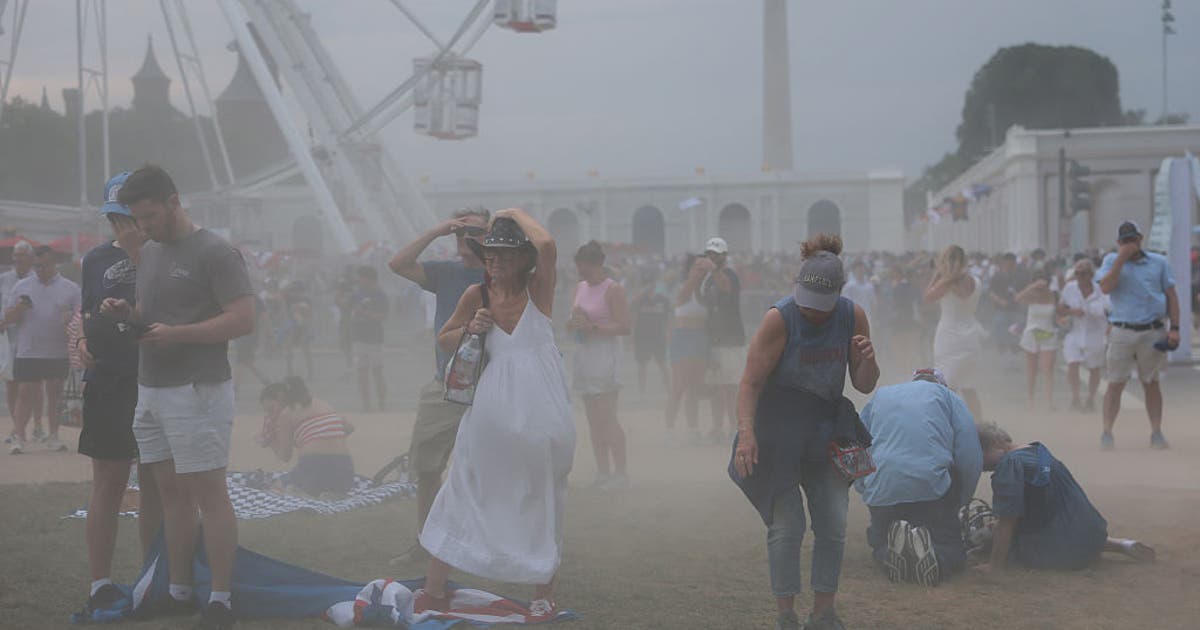
The National Mall was evacuated on the evening of July 4, 2026, as severe thunderstorms rolled toward Washington, D.C., forcing Freedom 250 organizers and federal safety partners to pause America's 250th birthday celebrations and send thousands of attendees into nearby museums and federal buildings for shelter ahead of President Donald Trump's scheduled Salute to America speech and fireworks.
Saturday's disruption capped a day already reshaped by record heat across the capital. Independence Day crowds arrived for flyovers, live music, and a fireworks display billed as one of the largest in U.S. history — only to hear overhead announcements ordering an immediate evacuation as lightning and damaging wind gusts threatened the Mall.
Key Takeaways
- Officials ordered a weather evacuation of the National Mall on July 4, 2026, as severe storms approached hours before President Trump's America 250 speech.
- DC Homeland Security and Freedom 250 directed guests to seek shelter in designated federal buildings and Smithsonian museums near the Mall.
- Extreme heat with index values of 110 to 115 degrees Fahrenheit had already canceled the city's parade and delayed other Independence Day programming.
- Organizers said the Salute to America program and fireworks would resume after the storm threat passed, though exact timing remained uncertain.
- Travelers who booked nonrefundable trips should treat weather delays as a budgeting lesson, not a surprise.
What happened at the National Mall on July 4?
Thousands of people packed the National Mall on Saturday evening for Freedom 250's Salute to America celebration, part of the nation's semiquincentennial marking 250 years since the Declaration of Independence. The evening program was set to include military flyovers, musical performances, remarks by President Donald Trump, and a roughly 40-minute fireworks show.
As thunderstorms built west of the city, public address systems carried an urgent message. Attendees were told that officials had ordered an evacuation and that everyone needed to leave the event grounds immediately. According to The Associated Press, the evacuation came just hours before Trump was scheduled to deliver a speech commemorating America's 250th anniversary.
DC Homeland Security and Emergency Management posted on social media that a severe thunderstorm was occurring near the National Mall and that people should seek shelter immediately without waiting. Freedom 250, the U.S. Secret Service, U.S. Park Police, National Park Service, and FEMA jointly asked all guests to evacuate outdoor areas and move into nearby buildings.
Freedom 250 spokeswoman Danielle Alvarez said the organization would share updates on programming and when doors would reopen once conditions improved. WUSA9 reported that the severe-weather evacuation alert disrupted the Freedom 250 Salute to America program on the Mall.
Where should National Mall visitors seek shelter?
Event planners had designated safe havens across downtown Washington long before the storms arrived. When the evacuation order went out, officials directed crowds away from open grass and fireworks viewing zones toward permanent structures that could shield people from lightning and high winds.
According to FOX 5 DC's live coverage, National Park Service and U.S. Park Police guidance listed these shelter locations near the National Mall:
- Andrew W. Mellon Auditorium — 1301 Constitution Avenue NW
- Department of Education Headquarters — 400 Maryland Avenue SW
- Department of the Interior Headquarters — 1849 C Street NW
- General Services Administration Headquarters — 1800 F Street NW
- Herbert C. Hoover Federal Building (Department of Commerce) — 1401 Constitution Avenue NW
- Internal Revenue Service Headquarters — 1111 Constitution Avenue NW
- Jamie L. Whitten Federal Building (Department of Agriculture) — 1400 Jefferson Drive SW
- National Museum of African American History and Culture — 1400 Madison Drive NW
- National Museum of American History — 1300 block Madison Drive NW
- Ronald Reagan Building — 1301 Pennsylvania Avenue NW
- Wilbur J. Cohen Federal Building — 330 Independence Avenue SW
AP reporting noted that those on the Mall were encouraged to go to federal buildings nearby or Smithsonian museums. Follow instructions from rangers, law enforcement, and Freedom 250 social channels rather than returning to open lawn space while warnings remain active.
Are the fireworks and Trump's speech still happening?
As of the evacuation, organizers had not canceled the evening's headline acts outright. Freedom 250's stated plan called for Trump to deliver remarks around 9:45 p.m. Eastern, followed by a fireworks display launching from multiple locations including barges on the Potomac River and West Potomac Park. The White House had promoted the show as historically enormous, with more than 850,000 fireworks planned across ten launch sites.
That timeline was always subject to weather. AP News reported that severe storms gathering near Washington complicated Trump's plans to commemorate the anniversary with a rally on the Mall. A severe thunderstorm watch remained in effect for the D.C. area until 10 p.m., with forecasters warning that storms could produce destructive wind gusts reaching 70 to 80 mph.
FOX 5 DC footage showed an Air Force One-led flyover above the National Mall even as ground-level evacuations were underway. Whether the full concert lineup, presidential address, and pyrotechnics resume on schedule depends on how quickly the squall line moves through and whether officials reopen secure perimeter gates.
How did extreme heat shape the day before the storms?
The evacuation was not Washington's first weather crisis of the holiday. An extreme heat warning covered the District, with heat index values expected to reach 110 to 115 degrees Fahrenheit. AP News noted that celebrations months in the making had to adjust or cancel activities as much of the East Coast sweltered under temperatures that approached or surpassed triple digits.
The city's Independence Day parade, originally scheduled for 10:30 a.m., was canceled because of the heat. The Great American State Fair on the National Mall opened two hours late as organizers tried to reduce prolonged exposure for visitors. Gates to the Washington Monument viewing zone opened at 5 p.m. instead of earlier times listed in pre-event schedules.
A Code Purple air quality alert also blanketed the region, marking air as very unhealthy. Combined with strict security rules — including bans on backpacks, coolers, and personal water bottles inside the secure perimeter — the day demanded careful planning for hydration, shade breaks, and realistic expectations about how long anyone could safely stand outside.
Why should travelers treat this as a planning lesson?
Major public events look free on paper, but the real cost shows up in hotels, transit, missed work, childcare, and nonrefundable reservations. When a headline celebration on the National Mall pauses for storms after heat already canceled a parade, visitors who flew in for a single night can lose the experience they paid thousands to witness. That is why seasoned travelers build buffer days, flexible lodging, and passive-income-style contingency funds into holiday budgets rather than betting everything on one weather-dependent hour.
Insurance for flights and hotels, refundable booking windows, and local backup activities are not glamorous wealth hacks — but they are the difference between an inconvenient delay and a financial wipeout. Saturday's evacuation also highlights why monitoring official channels beats chasing rumors on social media when safety orders go out.
America's 250th birthday was always going to be a high-stakes weekend in Washington. The storms did not erase the milestone; they reminded everyone watching that even the biggest patriotic spectacle on the National Mall still answers to the forecast.