NASA exoplanet discovery beta: faint planet finally found
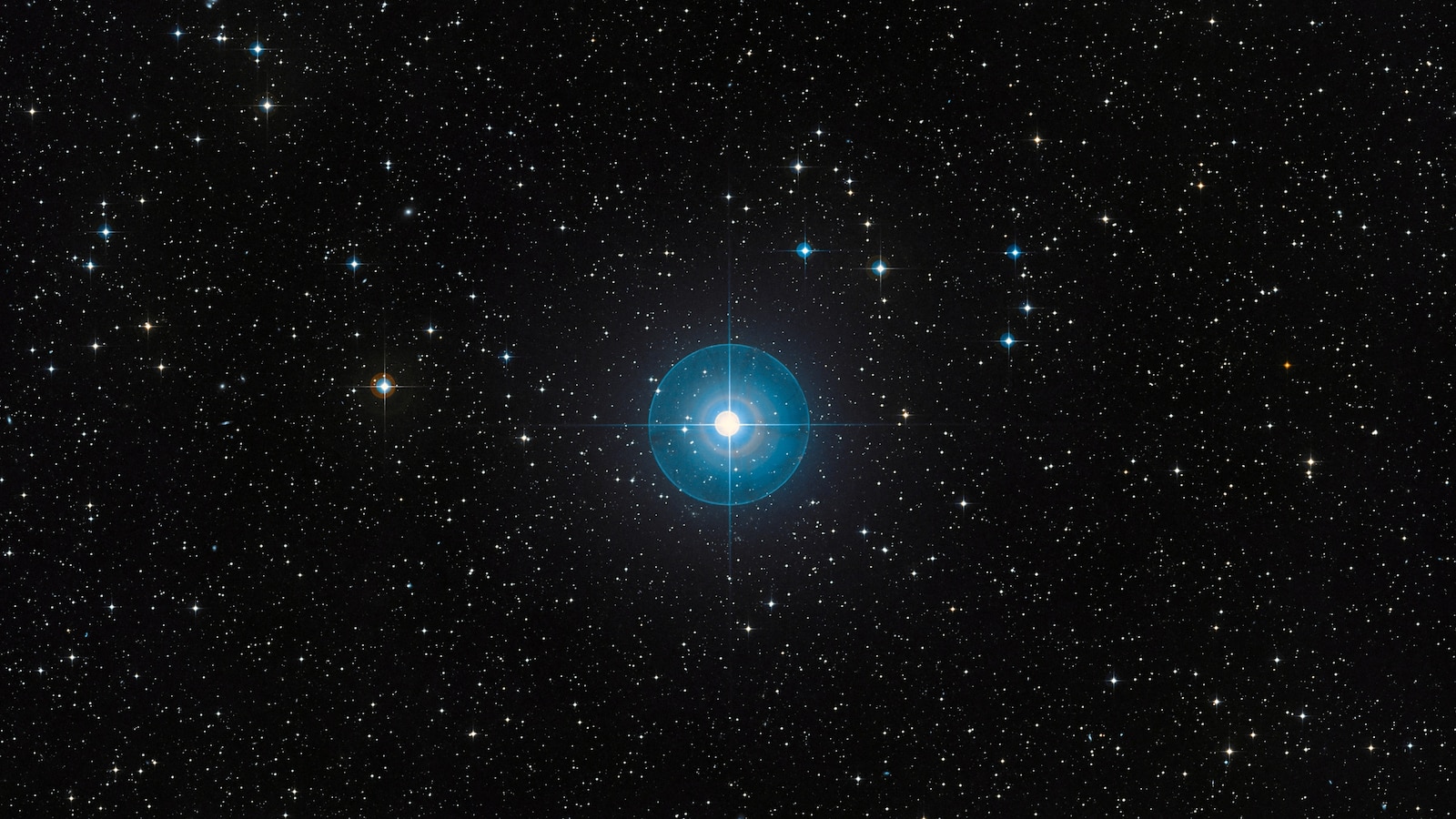
Astronomers have confirmed Beta Pictoris d, a cold gas giant tied to a landmark NASA exoplanet discovery beta Pictoris teams call a decade-long cosmic hide-and-seek win. Two groups independently found the faint world—the dimmest planet ever imaged from Earth—using NASA’s James Webb Space Telescope and Chile’s Very Large Telescope.
Key Takeaways
- Beta Pictoris d is a newly confirmed cold gas giant 63 light-years away in a young star system.
- Independent NASA Webb and ESO Very Large Telescope teams spotted it days apart late last year.
- It is the faintest exoplanet ever directly imaged from Earth—about 100 times dimmer than Beta Pictoris b.
- Webb found it via atmospheric chemical fingerprints; archival ground data traced an 11-year orbit.
- The find makes Beta Pictoris only the second system known to host at least three imaged planets.
Scientists reported the results Wednesday in The Astrophysical Journal Letters. For more viral science and culture coverage, follow BlasterPost Celebrity Breaking News.
What did astronomers find around Beta Pictoris?
Beta Pictoris already hosted two giant planets: Beta Pictoris b, among the first exoplanets ever directly imaged, and Beta Pictoris c. The new world, Beta Pictoris d, is a cooler gas giant farther from the star than its siblings.
According to NASA Science, the system sits about 63 light-years from Earth and is roughly 23 million years old—a youthful setting where planets still interact with leftover dust and debris.
NASA estimates Beta Pictoris d is likely at least twice Jupiter’s mass, the smallest of the three known giants there. Modeling puts its orbit near 30 astronomical units, comparable to Neptune’s region in our solar system, and AP reporting cites an orbital period of about 91 years.
How did a planet stay hidden for more than a decade?
A Scottish- and German-led team using ESO’s Very Large Telescope in Chile was not hunting a third world at first. Co-leader Ben Sutlieff said the group set out to watch known planet Beta Pictoris b over time, then noticed signs of another companion.
Digging through about 11 years of archival images, they recovered Beta Pictoris d again and again. European Southern Observatory researcher Markus Bonse said the new planet is 100 times fainter than famous sibling Beta Pictoris b, making it the faintest exoplanet ever imaged directly from Earth.
Space.com notes Beta Pictoris b and c are each about 10 times Jupiter’s mass, while d is around 2.4 Jupiter masses—among the lightest worlds ever directly imaged from the ground. The dusty debris disk also acted like fog, scattering starlight and masking the faint glow.
Why does this NASA exoplanet discovery matter?
A California-led Webb team led by Aidan Gibbs of UC San Diego made a parallel detection while studying Beta Pictoris b with Webb’s NIRSpec Integral Field Unit. Instead of relying only on a bright point of light, they caught carbon monoxide absorption lines—an atmospheric barcode—then confirmed water vapor and methane with Webb’s MIRI instrument.
NASA says this is the first directly imaged planet discovered primarily through moderate-resolution spectroscopy. Gibbs and colleagues note the planet’s mass and location help explain the debris disk’s sharp inner edge and odd structure, which theorists had already linked to a shepherding world like Beta Pictoris d.
With three imaged planets, Beta Pictoris joins HR 8799 as a rare multi-planet imaging laboratory. Researchers say future work—and facilities such as the Extremely Large Telescope—could reveal even fainter companions in similar systems.