NASA Curiosity finds honeycomb field scientists can't explain
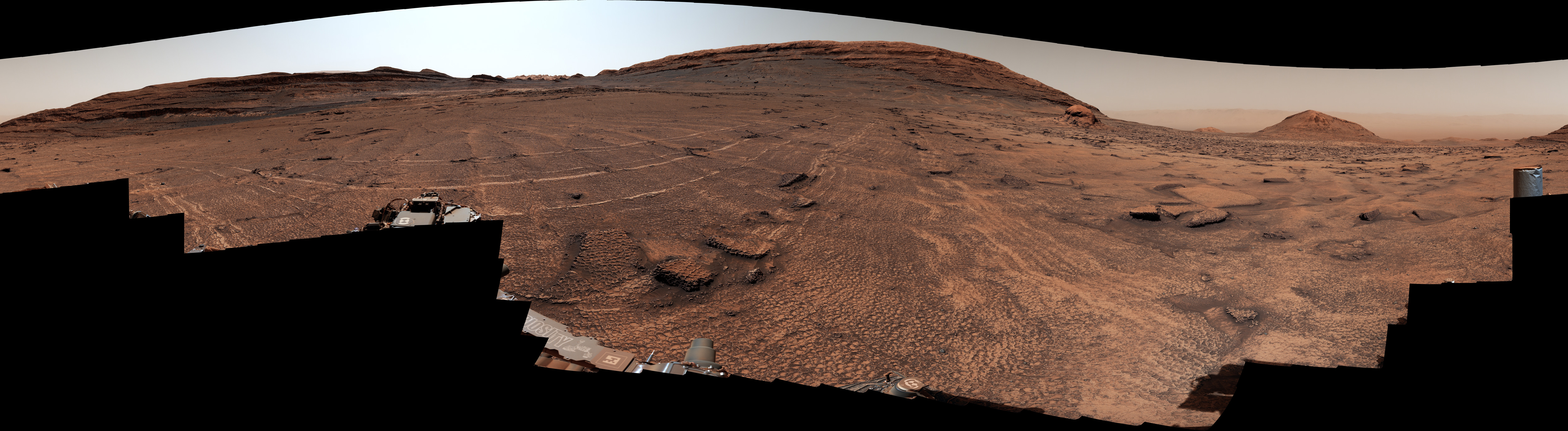
NASA Curiosity Mars honeycomb textures blanketed a valley nicknamed Valle Grande, and the rover's new panorama shows the fractures stretching as far as the camera can see. Mission scientists say this is the largest such field Curiosity has found, though they still don't know exactly how it formed.
Key Takeaways
- Curiosity imaged a sea of polygonal honeycomb fractures across Valle Grande on sols 4,930 and 4,931 (June 19-20, 2026).
- Each polygon measures about 1.5 to 3 inches (4 to 8 centimeters) across and wraps around the Miraflores butte.
- Past polygons were sometimes mud cracks; temperature cycles or compressed sediment can create similar textures.
- Project scientist Ashwin Vasavada said the team measured shapes and chemistry and hopes the data will reveal how the features formed.
What did NASA's Curiosity find on Mars?
As Curiosity began climbing Valle Grande, it sent back images of honeycomb-like polygonal fractures. The mission had spotted small patches before, but nothing at this scale.
In a 360-degree panorama from June 19 and 20, 2026 - the 4,930th and 4,931st sols of the mission - the shapes spread in every direction. They even wrap around a nearby 20-foot (6-meter) butte nicknamed Miraflores, topped with a thick cap of sand.
"We've seen a lot of fascinating landscapes through Curiosity's eyes, but this sea of polygons took our breath away," said Ashwin Vasavada of NASA's Jet Propulsion Laboratory.
Why can't scientists explain the honeycomb textures?
Some polygons Curiosity found earlier clearly formed as mud cracks. But NASA notes that several processes can create honeycomb textures, including warm-and-cold temperature cycles or compression that squeezed water out of sediment when the surface was buried.
Vasavada said the team carefully measured the shapes and chemistry and is hopeful there are clues in the data. For now, the exact origin of this Valle Grande field remains unsettled - a point that keeps the story in the bizarre news conversation.
What does this discovery say about ancient Mars?
The find joins a long list of surprises from Curiosity, which landed on Aug. 5, 2012, and has been ascending 3-mile-tall (5-kilometer-tall) Mount Sharp since 2014. Billions of years ago, lakes and streams dappled the mountain's lower foothills.
Curiosity has already shown ancient Mars had the water, chemistry, and nutrients to support microbial life. It has also uncovered sulfur crystals, shiny meteorites, and carbon-based molecules believed to be precursors to RNA and DNA - though scientists cannot tell whether those organics came from biologic or geologic processes.
Previous hexagonal mud-crack patterns were linked to regular wet-dry cycles that may help molecular evolution. Whether Valle Grande's honeycomb field records the same story is what the new measurements aim to test.