Moygashel bonfire mosque replica row sparks hate crime arrest
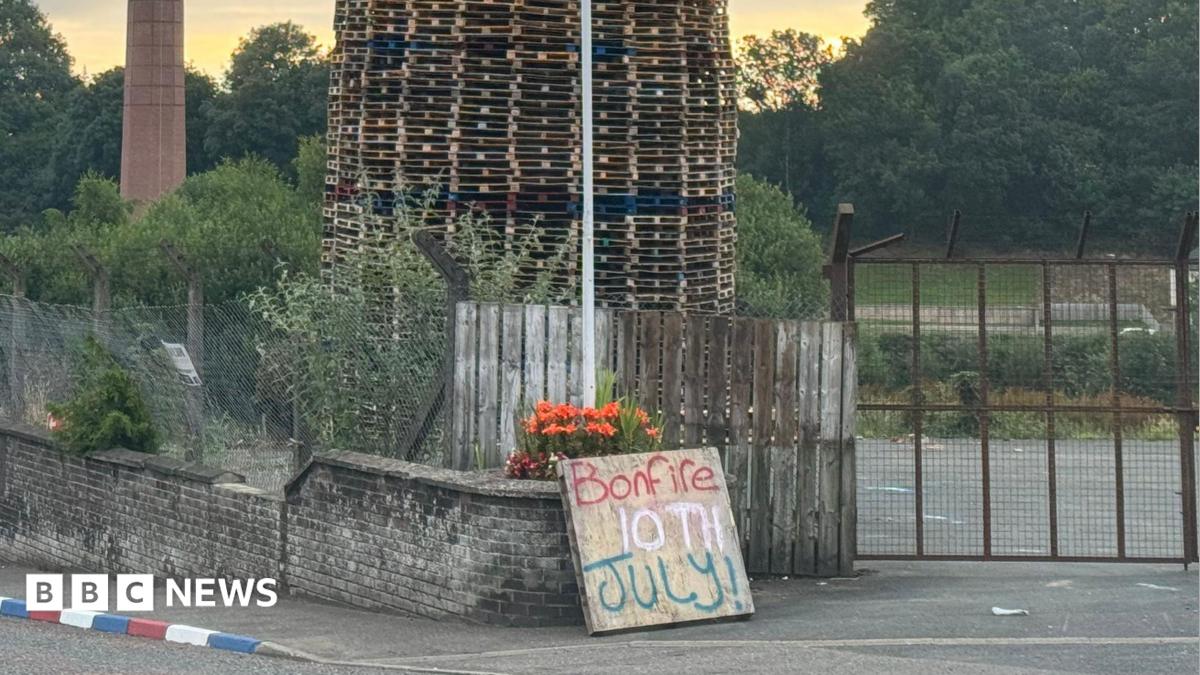
A replica of a mosque placed on a bonfire in Moygashel, County Tyrone, has been condemned as “anti-Muslim hatred”, with police confirming a 56-year-old man was arrested on suspicion of displaying threatening, abusive or insulting material intended to stir up hatred. The incident has triggered urgent calls for removal and action.
Key Takeaways
- What happened: A mosque-like replica was placed on top of a bonfire in Moygashel, prompting widespread condemnation.
- Police response: Police said a 56-year-old man was arrested on suspicion of an offence linked to stirring up hatred.
- Why it matters: Muslim residents and human rights advocates say such displays intimidate real families and inflame community tensions.
- What’s being demanded: Politicians and campaigners called for the material to be taken down and treated with seriousness.
What happened in Moygashel, and what did police say?
Images of a structure resembling a mosque placed on top of a bonfire in Moygashel, County Tyrone, drew immediate backlash. The BBC reported that the bonfire site has featured other controversial displays in the past, adding to public concern about what the latest display signals.
Police said a 56-year-old man had been arrested on suspicion of displaying threatening, abusive or insulting material which is intended to stir up hatred. Police also said the arrest was on suspicion of contravention of Article 9 of the Public Order (NI) Order 1987, and that the man was in custody at the time of reporting.
For the fullest source detail, see the BBC report: “Replica of mosque on bonfire condemned as 'anti-Muslim hatred'”.
Why are people calling it “anti-Muslim hatred”?
The criticism isn’t just about offence. It’s about who is being targeted and what message is being sent to people trying to live ordinary lives.
On BBC’s Nolan Show, a Muslim representative said seeing the replica of a mosque placed on top of a bonfire was “deeply upsetting” for Muslims across Northern Ireland.
Amnesty International’s Patrick Corrigan described the display as “a blatant attempt to stir up anti-Muslim hatred and intimidate local families”. He said that placing an effigy of a mosque on top of a bonfire amounts to incitement to hatred directed at real people who live, work and raise families in Northern Ireland.
What are politicians and groups demanding happens next?
Multiple political figures quoted by the BBC condemned the display and urged a swift, serious response.
Sinn Féin condemned it as “racist”. Its Fermanagh and South Tyrone assembly member Colm Gildernew described it as a “deplorable act” and said the PSNI must investigate as a matter of urgency to remove the display.
The SDLP’s Karol McQuade called it “vile, dangerous and deeply irresponsible,” saying there is no place for anti-Muslim hate, racism, or demonisation of an entire community. He added that people should be able to live, worship, work and raise families without fear or intimidation, and said those responsible need to take it down immediately.
How does this connect to “wealth hacks” and passive income?
BlasterPost’s Wealth Hacks & Passive Income category is usually about building stability, protecting opportunities, and reducing avoidable risk. This story sits in that frame in a different way: communities don’t build prosperity in a vacuum.
When a place becomes associated with intimidation or hate, the immediate damage is human and social. But there are also practical downstream pressures that can hit everyday life: the sense of safety people feel in shared spaces, whether families feel welcome, and whether the wider area is seen as stable and open. None of that is a “get rich quick” trick, but it is the environment in which jobs, small businesses, and long-term plans either grow or shrink.
That’s why the calls highlighted in the reporting focus on removal and seriousness: because the target is not a symbol in isolation, but “real people” and local families, as Amnesty’s Patrick Corrigan put it.
What’s the top question people are asking?
The top question is simple: will it be treated as a crime, or dismissed as “just a bonfire display”?
Based on the BBC report, police involvement is already real and formal: an arrest was made on suspicion of an offence involving material intended to stir up hatred, under Article 9 of the Public Order (NI) Order 1987. That does not determine an outcome by itself, but it signals that authorities are not ignoring the issue.
In parallel, the strongest public demands in the reporting are also straightforward: remove the material, investigate it properly, and stop normalising intimidation as cultural expression.
What should readers watch for next?
From the sources provided, the next developments to watch are the police process following the arrest, and whether the controversial material is removed as called for by elected representatives and human rights voices.
For a second authoritative account of the same developing story, RTÉ reported on the condemnation as well: “Replica mosque on loyalist bonfire condemned as 'vile'”.
Whatever your politics, the core issue raised by the reporting is about basic security and belonging: whether Muslim residents can live and worship without being singled out and made to feel unsafe. That question is bigger than one night’s bonfire—and it’s why Moygashel is drawing attention far beyond County Tyrone.