More autophagy reduces toxin-induced kidney failure in mice
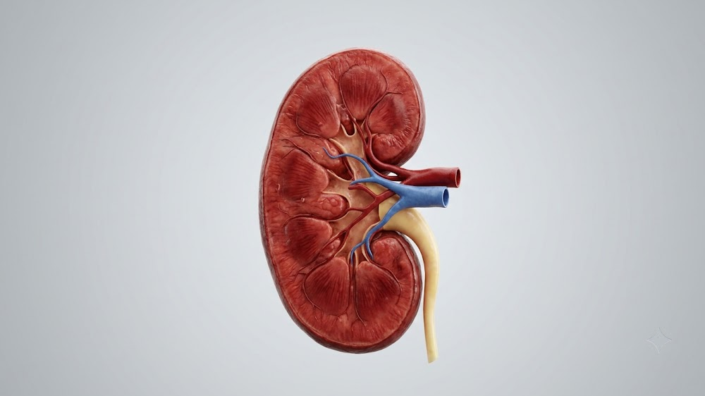
More autophagy reduces toxininduced kidney failure in aging mice. Younger animals raise cellular cleanup under toxic stress; older ones do not and suffer worse acute kidney injury. Boosting TFEB-driven autophagy with curcumin analog C1 partially protected older mice after a kidney-damaging poison. The findings are promising but remain preclinical.
Key Takeaways
- Young mice ramped up autophagy after a kidney toxin; older mice largely failed to, and showed worse acute kidney injury (AKI).
- Senescence linked kidney cells to weaker autophagic flux under toxic stress.
- Forcing more TFEB activity and giving curcumin analog C1 partially cut damage markers in older mice.
- Results are mouse-only so far and may not match real human kidney patients.
For readers tracking cellular cleanup and healthy aging, this sits squarely in Longevity & Biohacking: age-related drops in autophagy may help explain why older kidneys fail harder under stress.
Why does aging worsen toxin-driven kidney failure?
Acute kidney injury can strip kidney function within days—or even hours. Aging raises both the chance and severity of AKI, and in older people it often feeds systemic inflammation and death. In intensive care, sepsis is a frequent trigger, yet there is still no direct way to treat AKI itself.
As Lifespan.io reports, researchers compared 2-month-old and 18-month-old mice given lipopolysaccharide (LPS), a poison known to induce AKI. Older mice showed higher creatinine, blood urea nitrogen (BUN), tubular damage, and other kidney-injury markers than younger mice.
How does more autophagy reduce toxininduced damage?
After LPS, LC3—an autophagy marker—rose clearly in young mice but not significantly in older ones. Autophagic flux was about twice as high in the younger animals. Cell work tied the gap to senescence: ordinary kidney cells upregulated LC3 under toxin stress, while senescent cells did not keep flux moving.
Directly inducing autophagy with Tat-Beclin 1 eased LPS damage in kidney cells. Blocking autophagy with chloroquine worsened injury, senescence markers, and apoptotic cell death. Gene analysis found autophagy-related genes lower in older mice, with transcription factor EB (TFEB)—a key autophagy activator—falling further in older animals after LPS.
Pushing senescent cells to express more TFEB partially restored autophagy and lowered inflammatory cytokines. Curcumin analog C1, which increases nuclear translocation of TFEB, improved autophagy in older kidney cells and, in older LPS-exposed mice, partially but significantly reduced creatinine, BUN, and NGAL, a kidney-injury biomarker.
Could this help people with acute kidney injury?
Not yet. The work used toxically injured mice and may not reflect conditions for real kidney patients. Still, TFEB and autophagy enhancers such as C1 look like promising research targets for sepsis-linked or other AKI—pending proof they can safely help humans.
Bottom line for the biohacking beat: when more autophagy reduces toxininduced stress responses in aged kidneys, outcomes improve in mice. Whether C1 or another enhancer can translate beyond the lab remains an open question.