Moonshot AI says Kimi K3 can rival OpenAI and Anthropic
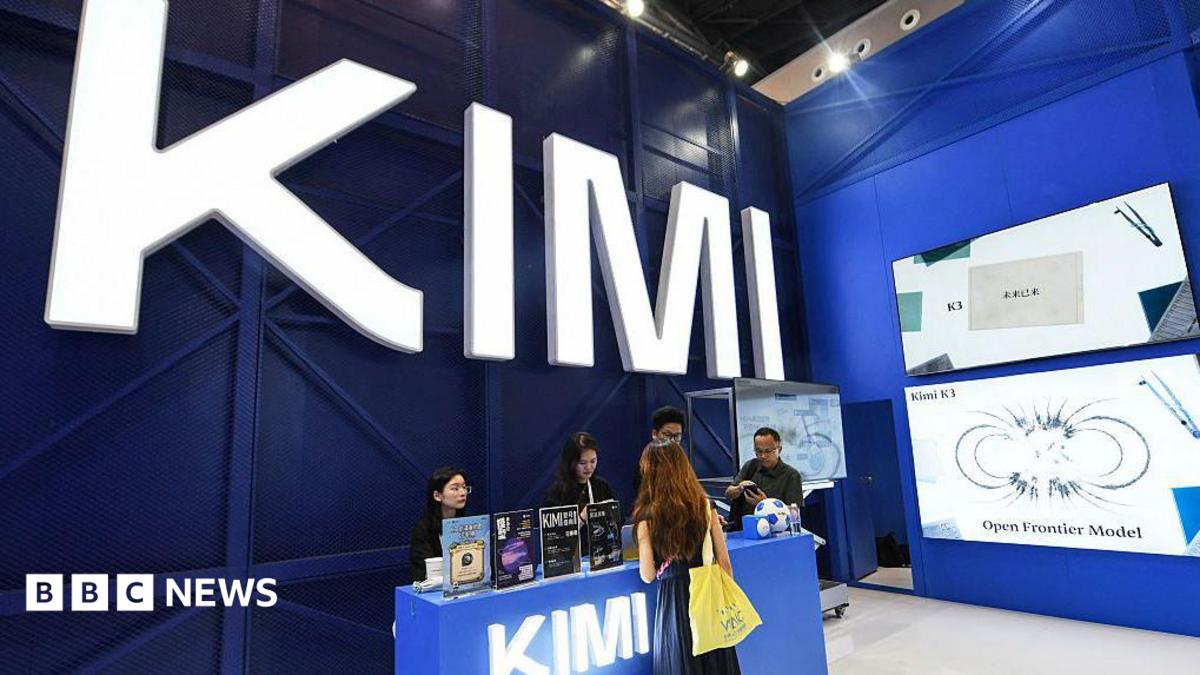
Chinese startup Moonshot AI has unveiled Kimi K3, a 2.8-trillion-parameter model it says can rival OpenAI and Anthropic. Early third-party benchmarks put it near the US frontier, and an open-weight release is set for 27 July, shaking assumptions about America's lasting AI lead.
Key Takeaways
- Moonshot's Kimi K3 has 2.8 trillion parameters and is billed as the firm's most capable flagship yet.
- Independent Arena and Artificial Analysis tests place it on a par with leading US models, including wins in web and front-end coding.
- Weights are due as open source on 27 July, potentially the first freely downloadable model in the three-trillion-parameter class.
- Shares in Chinese rivals Zhipu and MiniMax fell about 27% and 16% in Hong Kong after the news.
- US labs still dispute how China closed the gap, citing distillation claims even as open weights pressure pricing and policy.
What did Moonshot announce with Kimi K3?
Beijing-based Moonshot AI, backed by Alibaba and Tencent, showed Kimi K3 at Shanghai's World Artificial Intelligence Conference. The company calls it its "most capable flagship model to date," aimed at coding, knowledge work, and reasoning with "minimal human supervision."
Unlike closed systems from OpenAI or Anthropic, Moonshot plans to let outside developers download, run, and customise K3. Full open-source availability is scheduled for 27 July. Local use will still need heavy computing gear because of the model's size.
How do independent benchmarks stack Kimi K3 against US labs?
Third-party evaluations from Artificial Analysis and Arena.ai show Kimi K3 performing on a par with leading US systems such as OpenAI's GPT line and Anthropic's Claude. In blind human-preference tests, it ranked first in web interface engineering and beat Anthropic's Fable.
Axios reports Arena front-end coding results also preferred Kimi over Anthropic's Fable 5 and OpenAI's GPT-5.6 Sol. In Arena's broader text ranking, Kimi finished ahead of Anthropic's Opus 4.8 while costing about 40% less. Forbes notes early reactions call the model solid, if more jagged than Fable or OpenAI's Sol in some uses.
Why does the open-weight release matter for the AI race?
For years, US policymakers and labs assumed China trailed the frontier by roughly six to twelve months. Axios says that cushion may have collapsed far faster. A near-frontier model that is cheaper and self-hostable could undercut Silicon Valley pricing power and valuations built on exclusive edge.
Anthropic has accused Chinese labs of industrial-scale "distillation" from US model outputs; Chinese firms have also faced claims of obtaining restricted Nvidia chips. Still, as covered across Future Tech & AI Wonders, open weights redistribute capability to companies and governments that want in-house control. Forbes argues America's lead is now measured in months or weeks—and that answering with more US open models, not only regulatory FUD, is the competitive path.
Markets felt the jolt immediately: Hong Kong-listed peers Zhipu and MiniMax tumbled about 27% and 16%. Whether Kimi K3 becomes the single best model matters less than the signal that China can close gaps quickly and ship them into the open ecosystem.