Michigan Senate primary: El-Sayed leads amid ideology clash
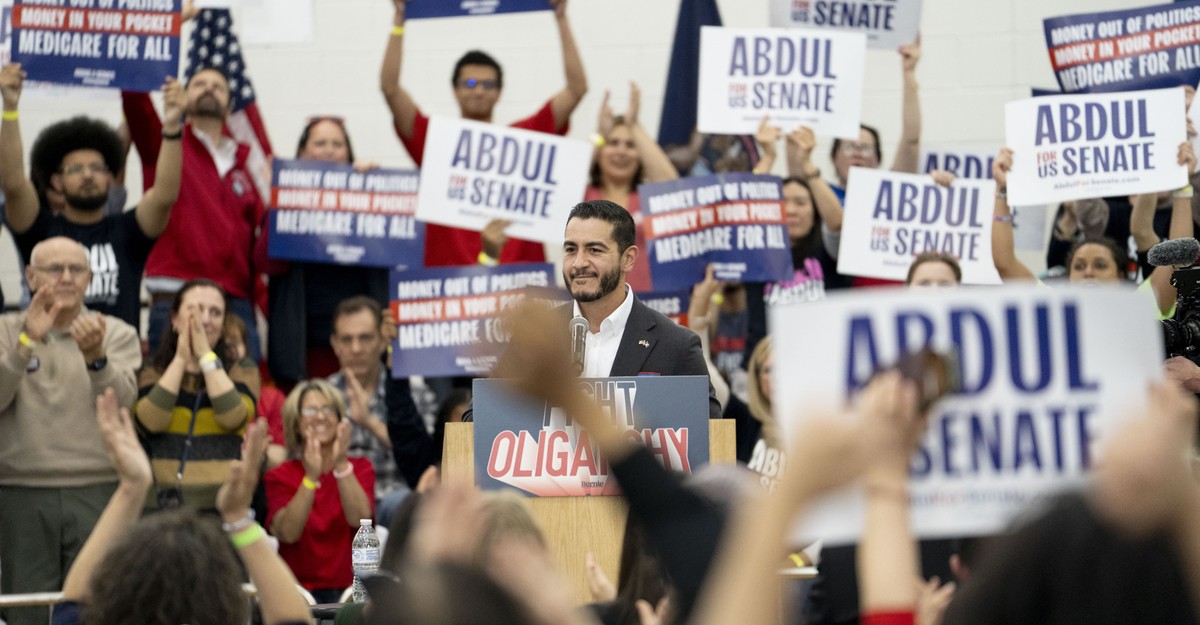
Abdul El-Sayed leads Haley Stevens in Michigan's Democratic U.S. Senate primary as the contest enters its final stretch, according to a late July Emerson College poll. An Atlantic analysis argues his campaign merges economic populism with fervent anti-Zionism—a blend that could reshape the state's Senate outlook if he wins Tuesday.
Key Takeaways
- An Emerson College Polling survey of likely Michigan Democratic primary voters (July 26–27, 2026) finds El-Sayed ahead of Rep. Haley Stevens, 54% to 39%, with 6% undecided; including leaners, the race is 57%–41%.
- The Atlantic's Jonathan Chait frames El-Sayed's pitch as fusing left populism with obsessive anti-Zionism, arguing that mix could open the door for similar candidates if he prevails in purple Michigan.
- Governor Gretchen Whitmer endorsed Stevens; El-Sayed cast the endorsement as corporate donors sticking together.
- Younger Democratic primary voters break heavily for El-Sayed, while voters over 60 favor Stevens, per Emerson.
Who is leading the Michigan Democratic Senate primary?
Michigan Democrats are choosing a nominee in a bitter race between Abdul El-Sayed and U.S. Rep. Haley Stevens, with the primary set for Tuesday, The Atlantic reports.
Emerson College Polling, with WLNS and WOODTV, surveyed 700 likely Democratic primary voters July 26–27, 2026 (credibility interval ±3.7%). El-Sayed led 54%–39%, and 57%–41% with leaners.
“There is a clear age divide,” Emerson director Spencer Kimball said: voters under 50 favor El-Sayed 67%–25%; those over 60 favor Stevens 53%–39%. Independents break for El-Sayed 60%–33%; Democrats 50%–41%.
What two ideologies does El-Sayed fuse, according to critics?
Chait argues El-Sayed pairs Bernie Sanders– and Elizabeth Warren–style populism—Medicare for All, ending Citizens United, targeted tariffs, attacks on monopolies—with hardline anti-Zionism.
El-Sayed has said he is not the candidate for voters who want politics “dictated” by AIPAC or Chuck Schumer. He has cast U.S. aid to Israel as diverting money from health care and education “to buy bombs and tanks” used for “apartheid and genocide,” and called Stevens “a suit with a large AIPAC bank account.”
On CNN, he said a progressive cannot also be a Zionist because “every definition of a Jewish state ends up in some articulation of illiberal values.” Chait says applying populist cabal rhetoric to Israel-Palestine turns paranoid, treating the Israel lobby as a near-supernatural force behind opposition.
Why does the Michigan race matter beyond one primary?
If El-Sayed won the nomination and then beat presumed Republican Mike Rogers, The Atlantic says he would become the Senate's most fervently anti-Zionist member. Michigan has voted twice for Donald Trump, so a win would be held up as proof such politics can travel outside deep-blue enclaves.
Whitmer endorsed Stevens last week. El-Sayed replied that people “who have taken corporate money for most of their careers tend to stick together.” Emerson found Whitmer's approval among Democratic primary voters at 62%, down from 79% in April; her approvers lean Stevens, while disapprovers heavily back El-Sayed.
For more market and campaign-money context across races, see BlasterPost's Fintech & Crypto Alerts hub. Full crosstabs are on the Emerson College Polling release.
How firm is El-Sayed's Michigan lead right now?
Emerson shows a clear edge, not a lock: 6% remain undecided, and older Democrats prefer Stevens. The Atlantic notes El-Sayed dismissed another poll that had Stevens up one point as seemingly “funded by AIPAC,” which Chait says is not true—illustrating how money-and-lobby framing shapes the Michigan fight through Election Day.