New methanol hybrid brings axial-flux supercar tech to mass EVs
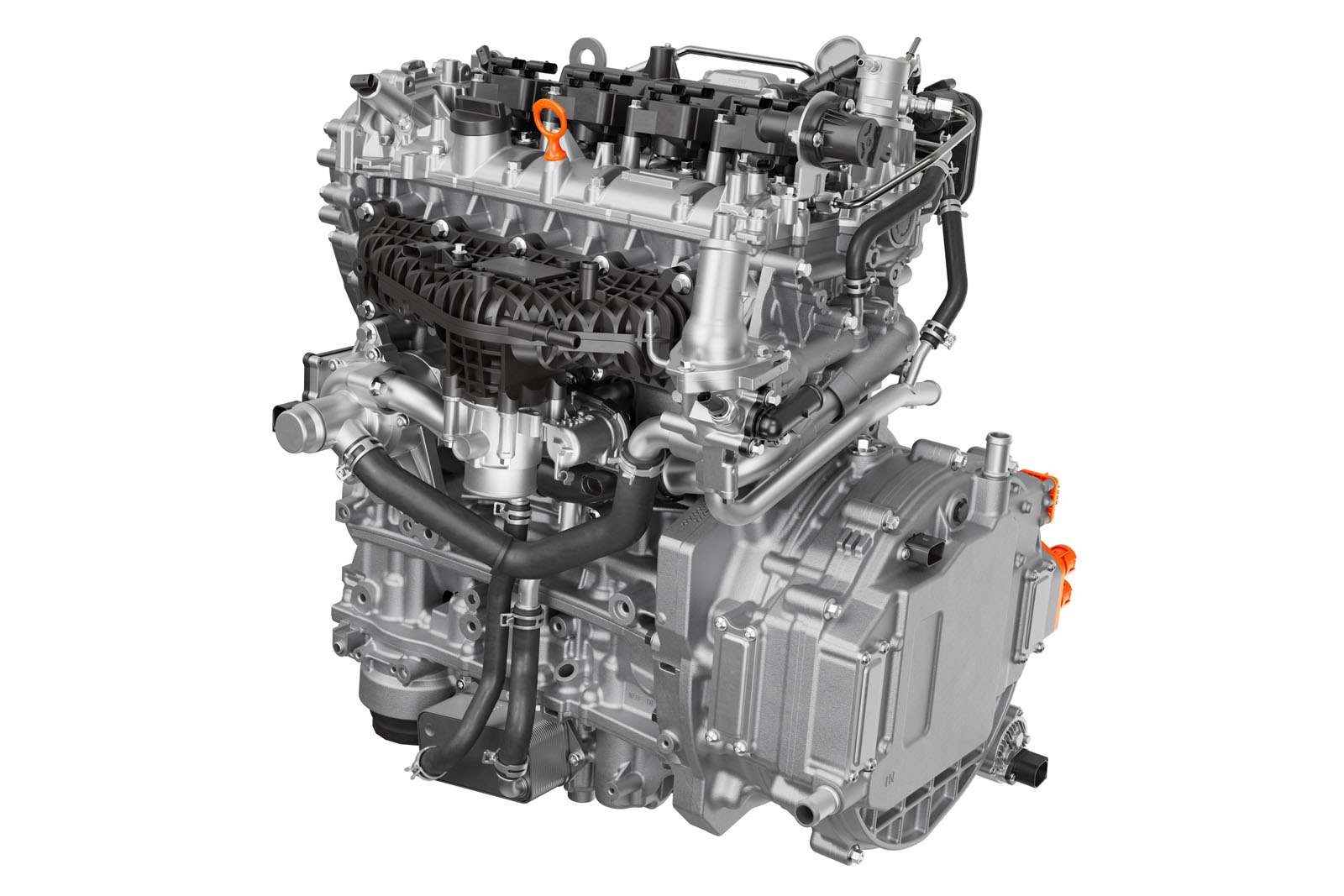
Horse Powertrain has unveiled the D20 Methanol, a range-extended EV powertrain that burns 100% methanol in a compact 2.0-litre generator and uses an axial-flux electric motor—supercar technology borrowed from hypercars—to recharge a 40 kWh battery from just 19.6 litres of fuel, targeting mass-market REEVs. The Renault–Geely joint venture says the setup marks one of automotive's first mainstream uses of axial-flux architecture.
The July 2026 reveal matters because range-extended hybrids remain a practical bridge while full battery-electric adoption ramps up globally. Horse positions methanol as a lower-carbon liquid fuel that Geely already promotes in China, where taxi fleets and racing programs have tested methanol at scale.
Key Takeaways
- Horse's D20 Methanol REEV uses a methanol-burning 2.0-litre engine purely as a generator, not to drive the wheels.
- An axial-flux motor mounted on the crankshaft is 46% shorter and 63% more power-dense than a comparable radial-flux unit, producing up to 105 kW.
- The powertrain claims a 47% fuel-to-energy conversion ratio and can recharge a 40 kWh pack using 19.6 litres of methanol.
- Electrical efficiency reaches 96.4%, aided by silicon carbide power electronics, with cold-start capability down to about -35°C.
- The design meets Euro 7 and China's CN6b emissions standards, though no production vehicle has been named yet.
Why is methanol central to Horse's new range extender?
Methanol is the fuel Horse designed the D20 around. Unlike conventional gasoline range extenders, the four-cylinder engine is calibrated to run on pure methanol, including cold starts at temperatures as low as -35°C, enabled by a high-energy ignition system that supports ultra-lean combustion.
According to Autocar, Geely has been a significant backer of methanol in China, supporting large taxi fleets and a one-make racing version of its Xingyao 6 saloon. That commercial groundwork makes methanol a credible bridge fuel for markets prioritising rapid decarbonisation without full EV infrastructure.
For readers tracking energy-transition bets in our Fintech & Crypto Alerts coverage, alternative-fuel powertrains like this highlight how automakers are diversifying beyond lithium-ion economics alone.
How does axial-flux motor tech differ from ordinary EV motors?
Most hybrids and EVs use radial-flux motors, where a cylindrical rotor sits inside a stator. Axial-flux designs stack rotor and stator as discs—creating a pancake form factor. Horse's yokeless unit places two rotors around a single stator and bolts directly to the engine crankshaft.
This architecture appears today in high-performance hybrids such as the Ferrari 296 GTB, SF90, and Lamborghini Revuelto. Horse Powertrain CTO Fortune Zhao said the D20 Methanol is a staging ground for compact, efficient tech, calling its axial-flux motor one of the first mass-market automotive applications of the design.
Horse claims the motor is 46% shorter than a similarly specified radial-flux motor while delivering 63% more kilowatts per unit of volume, contributing to a total system output of about 141 hp in a package weighing roughly 375 lb (170 kg).
What efficiency and range figures does Horse claim?
Lab tests cited by Horse show a 47% fuel-to-energy conversion ratio—roughly 2.1 kWh of methanol burned to deliver 1 kWh of electrical energy. In practical terms, that means 19.6 litres (about 5.2 gallons) of methanol could fully recharge a 40 kWh battery pack.
The generator reaches 96.4% electrical efficiency, with an embedded silicon carbide power module to cut losses. Horse first previewed the D20 alongside other powertrain technologies at the 2026 Beijing Auto Show; the company has not yet named which brand will adopt it first or when series production might begin.
CEO Matias Giannini told Autocar earlier in 2026 that widespread EV adoption remains distant enough that hybrid-focused suppliers have a duty to cut emissions in the interim—a strategy this methanol REEV directly supports.