Scientists uncover how SIRT1 stabilizes the aging genome
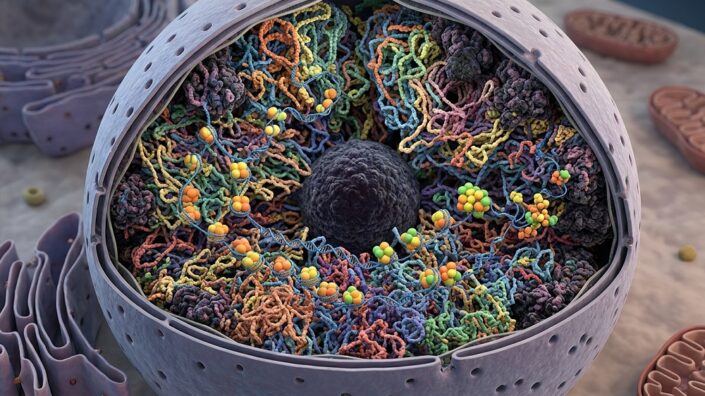
New research offers a mechanistic explanation for SIRT1's effects on aging: the sirtuin enzyme stabilizes the human genome by suppressing LINE-1 retrotransposition, when mobile DNA elements copy themselves onto other genomic sites. The August 31 findings connect a heavily studied longevity factor to genomic instability, senescence, and age-related disease.
Researchers have long linked sirtuins to healthier aging, but the precise pathway behind SIRT1's benefits remained unclear. This cell-based study points to a replicator inside our DNA that must be kept under control—and shows SIRT1 may be one of the brakes.
Key Takeaways
- SIRT1 suppresses LINE-1 retrotransposition by dampening an internal promoter, cutting ORF2 production and DNA damage.
- Overexpressing SIRT1 reduced radiation-driven senescence and SASP factors; silencing SIRT1 worsened both.
- SIRT1 strengthened Lamin B1–KAP1 interactions and H3K9me3 heterochromatin marks that restrain LINE-1.
- Effects were strongest in quiescent reserve cells, where SIRT1 enriched at LINE-1 loci.
- Work was done in cultured cells only; in vivo confirmation is still needed.
What did researchers discover about SIRT1?
Scientists found that SIRT1 stabilizes the human genome by suppressing retrotransposition. In HeLa cancer cells, fluorescent reporters showed that SIRT1 overexpression minimized LINE-1 activity, while silencing SIRT1 increased it. Similar patterns appeared in IMR90 human cells and mouse embryonic fibroblasts.
The effect traced to a LINE-1 internal promoter. Less SIRT1 meant more promoter activity, more ORF2 protein, and more DNA damage—confirmed with the γH2AX damage marker. More SIRT1 did the opposite. Before this work, SIRT6 was known to suppress LINE-1, but SIRT1 had not been tested the same way.
How does LINE-1 retrotransposition drive aging?
Long interspersed elements-1 (LINE-1) have lived in genomes for over a billion years and occupy roughly one-sixth of the human genome. Their ORF1 and ORF2 proteins helped shape evolution and brain complexity, but the same mobility fuels genomic instability tied to longevity and biohacking research on senescence and cancer.
Age-related loss of heterochromatin—packed non-coding DNA marked by H3K9me3—lets LINE-1 proliferate. LINE-1 also triggers the cGAS-STING inflammatory pathway, often pushing cells into senescence. That makes keeping these elements quiet a plausible anti-aging strategy.
Why does SIRT1 matter for cellular senescence?
After high-dose radiation, about 30% of control HeLa cells became senescent versus 13% with SIRT1 overexpression. In HCA2-hTERT cells, senescence fell from 38% to 20%. SIRT1 overexpression also cut senescence-associated secretory phenotype (SASP) factors; silencing SIRT1 raised them.
SIRT1 had especially strong LINE-1 control in quiescent cells—reserve cells that are not dividing but can re-enter the cycle. The enzyme enriched at LINE-1 loci there. SIRT1 did not change Lamin B1 or KAP1 levels but improved how those genomic stability regulators interact, supporting heterochromatin. It also correlated with more H3K9me3 on chromatin.
What are the limits of this SIRT1 research?
The study involved cells, not mice or people. Researchers say the results establish a new mechanistic framework for SIRT1-mediated senescence intervention, with implications for delaying aging and mitigating age-related diseases—but further in vivo work must confirm the model.
The broader longevity field is also pushing proactive health measurement; Stanford's Michael Snyder argues wearables and longitudinal data can shift medicine from treating sickness to tracking health before disease appears. Mechanistic cell findings like SIRT1's role may eventually pair with such monitoring in personalized aging science.