Max Verstappen reveals 'double whammy' behind Silverstone P7
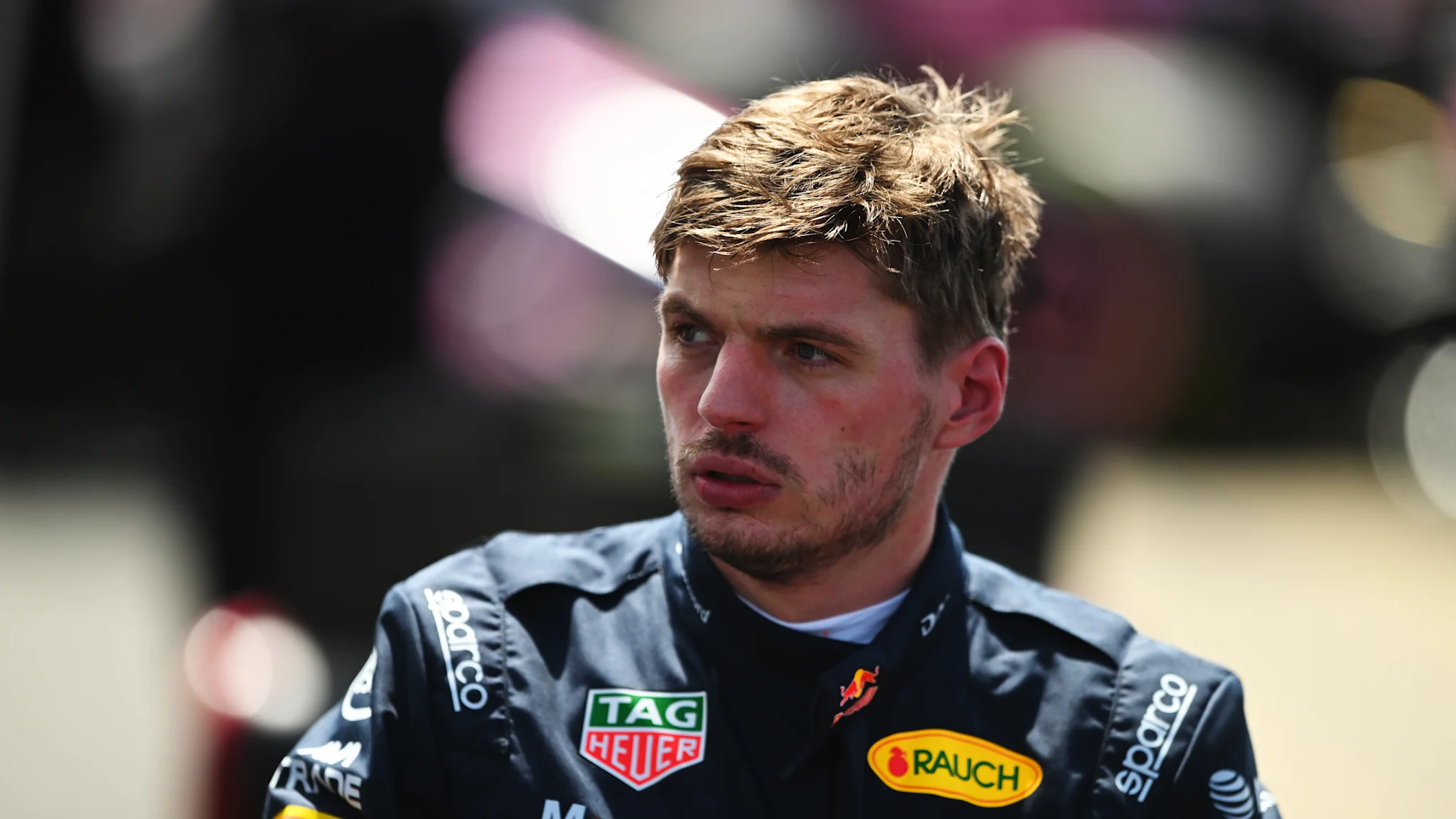
Max Verstappen traced his P7 British Grand Prix qualifying result to a "double whammy": unstable car balance plus a sudden straight-line speed deficit that Red Bull could not fix. That combination drained his battery through Silverstone's long laps, leaving the four-time champion seventh on the grid behind teammate Isack Hadjar in fifth.
After starting qualifying in third, Verstappen's session unraveled as problems mounted. Formula 1 reported that his engine was "not responding as normal" in Q2, and by Q3 he had slipped to seventh while Hadjar secured fifth.
Key Takeaways
- Verstappen described poor balance and missing top speed as a spiraling "double whammy" that worsened through each qualifying lap.
- He qualified seventh, nearly eight tenths off pole—his biggest gap to the front since he was knocked out in Q2 at Suzuka.
- Teammate Isack Hadjar outpaced Verstappen by 0.147 seconds in fifth place.
- Silverstone followed a strong Austrian GP upgrade that helped Verstappen fight for victory last week.
- Verstappen said Red Bull must fix its own problems before chasing Mercedes and Ferrari.
What happened during Verstappen's qualifying session?
Verstappen entered qualifying after falling back to P6 in the Sprint, when Mercedes' Kimi Antonelli won the Saturday race and later took pole for Sunday's Grand Prix.
Verstappen ended Q1 in third while Hadjar topped the segment. But Red Bull's issues soon emerged. Verstappen explained: "[There were] two things. The whole session, like of course not a good balance, but at the same time terribly slow on the straight for whatever reason, even compared to the other car."
He added that the team "couldn't fix it from the first run until the end," calling the outcome "extra painful." The Race noted Hadjar was 0.635 seconds off pole, while Verstappen's deficit was nearly eight tenths.
Why did the straight-line speed issue create a vicious cycle?
Silverstone magnifies any power shortfall. Verstappen told Formula 1 that when a car is slow on the straights, it stays at full throttle longer, burning more hybrid battery along the way.
That created a spiral: "when you're slow on the straight here, you're more full-throttle, you burn more battery… so it just gets worse and worse throughout to the end of the lap." By the final sector, energy reserves were depleted, costing more time when acceleration mattered most.
Hadjar qualified 0.147 seconds ahead in fifth and later said that position was likely the maximum for Red Bull this weekend.
What does this mean for Red Bull at Silverstone?
After contending for victory in Austria, Silverstone served as a harsh reality check. The Race quoted Verstappen calling his qualifying "very, very poor" and noting that in the Sprint he was "getting destroyed in the very high speed," with George Russell catching him even in dirty air.
Verstappen also flagged low-speed handling problems, describing "a clear disconnect" across the weekend. The British Grand Prix exposed pace gaps Mercedes and Ferrari had already converted into front-row results.
As the Future Tech & AI Wonders desk tracks data-heavy motorsport weekends, Red Bull's slump stands out because balance and straight-line speed failures hit at once.
Can Verstappen recover on race day?
Verstappen's priority is understanding whether the straight-line problem persists. He told Formula 1 that missing top speed at Silverstone is "a major problem around here," and the team must diagnose it before Sunday.
Asked whether Red Bull could chase Mercedes and Ferrari, he answered: "We first have to fix our own problems." With Antonelli on pole, the leaders look out of reach unless strategy, weather, or a rapid fix intervenes.
Verstappen starts seventh. Hadjar's fifth place shows the deficit was not garage-wide—but Verstappen's spiraling battery drain makes his race path far narrower at a track where straight-line speed decides everything.