Spain's famous wolf boy Marcos Rodriguez Pantoja dies at 80
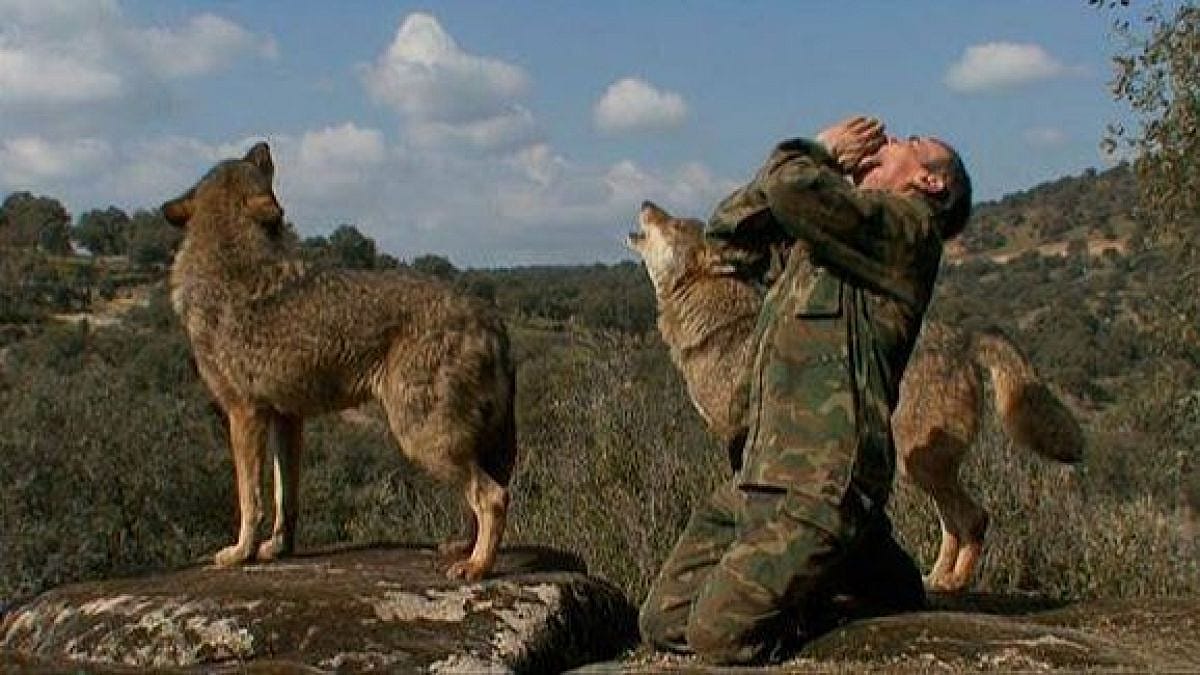
Marcos Rodríguez Pantoja — the man behind the marcos rodrguez pantoja wolf story — has died at 80 in Rante, a hamlet in San Cibrao das Viñas, Ourense. Spain's famous "wolf boy" spent roughly 11–12 childhood years alone in the Sierra Morena after being sold to a goatherd, living alongside wolves until the Civil Guard found him in 1965.
Key Takeaways
- Marcos Rodríguez Pantoja died at 80 in mid-August 2026 in Rante, Ourense, where he had lived since 2001.
- Born in 1946 in Añora, Córdoba, he was sold or sent as a young child to a goatherd in the Sierra Morena and left alone after the herder died.
- He spent about 11–12 years largely without human contact, describing a close companionship with wolves before being found in 1965 at age 19.
- Reintegration was hard; he later worked in hospitality and rural life, and his story inspired anthropology, books, and the 2010 film Entrelobos (Among Wolves).
- He said his happiest memories were in the mountains and urged people—especially children—to show more affection to animals and nature.
For readers who follow long-running human-interest stories in our Nostalgia: Then & Now coverage, his death closes one of Spain's most striking modern folk legends—told for decades, still debated, and newly rediscovered online.
Who was Marcos Rodríguez Pantoja and how did he end up in the mountains?
Rodríguez Pantoja was born on 7 June 1946 in Añora, in Andalusia's Córdoba province, in a Spain still recovering from civil war and world war. Sources describe a childhood marked by poverty, hunger, and mistreatment. His mother died when he was three. His father remarried, and accounts say his stepmother treated him brutally while the family struggled to eat.
Around 1953, when he was about six or seven, his father sold or sent him to a landowner who placed him with a goatherd in the Sierra Morena. The older herder taught him to tend livestock, make traps, and survive on what the mountains offered. When that shepherd died soon afterward, the boy was left to fend for himself in a remote valley.
Over the following years he stayed far from civilisation. Euronews reports he hid or fled whenever he heard human voices, mastered animal calls, and believed he could communicate with foxes, wolves, and even snakes. He later told interviewers he fed wolf cubs, howled when he sensed danger, and won a pack's trust—remembering them as companions, even as "parents," in an otherwise solitary life.
Did wolves really raise Spain's "wolf boy"?
The nickname stuck, but reporting since his death has stressed nuance. My Modern Met notes there is no evidence that wolves literally adopted and raised him as one of their own. What is documented is that he lived alongside animals for years and recalled them as vital company during extreme isolation.
Anthropologist Gabriel Janer Manila interviewed him for months from November 1975 to April 1976 for a University of Palma de Mallorca study, later published in Spain as He jugado con lobos. Janer described how Rodríguez gradually learned the rules and language of his surroundings and treated animals as equals. In those interviews, Rodríguez recalled cubs leaping onto him and guiding him toward a wolves' den, and explained hunting with the pack: howling so wolves drove game toward him while he hid by the river.
"I was very well. I didn't know what money was, but I always had enough to eat," he told Spanish television decades later, visiting Añora for the first time in 60 years. Online discussion after his death, summarised by Yahoo, echoed the same tension: some listeners treat his words as childhood interpretation; others refuse to dismiss them simply because they sound unbelievable. A recurring detail in that rediscovery: he reportedly later tried to return to the mountains, but wolves no longer accepted him.
What happened when he returned to human society?
In 1965, at 19, Spain's Civil Guard found him and brought him back. Adaptation was long and painful. He had lost much spoken Spanish and used sounds others described as animal-like. Nuns and a priest helped him relearn speech, dress himself, walk upright, and eat with utensils. He also received care at a hospital in Madrid.
People who knew him said he kept a childlike naivety about society and never spoke completely fluent Spanish. He lived in Jaén with a priest, later in Madrid with nuns, did military service, and eventually worked in hotels and restaurants in Mallorca. He also worked as a shepherd and preferred rural Spain. Euronews notes he repeatedly stressed he had been happy in the mountains—and that his real suffering began only after he was forced to integrate.
In a 2018 El País interview cited via Yahoo, he said his happiest memories were with the animals, wished he could return to the mountains, and believed he had been exploited and struggled to understand modern life.
How is his story remembered after his death?
Reports differ slightly on the exact day—Euronews says Saturday 15 August 2026; other outlets cite 16 August—but agree he died at 80 in Rante during the local patron-saint festival. The municipality of San Cibrao das Viñas said goodbye to its long-standing resident on social media: "Marcos came to Rante with a story the whole world knew. He leaves behind a story that has become ours too."
His life reached screens as Entrelobos (released in Spain on 26 November 2010; known in English as Among Wolves, and in German as Wolfsbrüder). Beyond the legend, he wanted his experience to protect nature and reconnect people with it. His message to children was simple: show more affection to pets, "because devices only need to be plugged in, but pets need love."
That is why the marcos rodrguez pantoja wolf tale still travels—less as a fairy tale of being raised by beasts than as a rare, documented story of abandonment, survival, and how hard it can be to come home to humanity.