Magnitude 6.7 earthquake strikes Kamchatka near Yelizovo
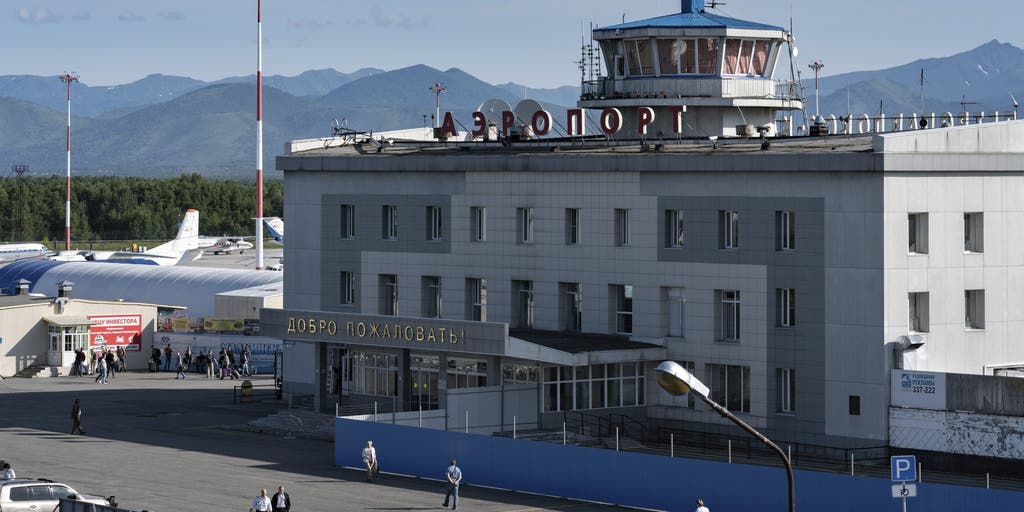
A magnitude 6.7 earthquake struck far-eastern Russia near Yelizovo on the Kamchatka Peninsula, along the active Pacific Ring of Fire. The quake hit about 38 miles north-northwest of the town at deep depth, and the U.S. Geological Survey expected little-to-no ground effect, with no immediate reports of injury or damage.
Key Takeaways
- A magnitude 6.7 earthquake struck near Yelizovo in Russia’s Kamchatka Krai along the Pacific Ring of Fire.
- Timing was reported as 1:15 a.m. local time Sunday, matching 1315 GMT Saturday.
- USGS depth figures cited by outlets put the quake roughly 116 miles (about 188.4 km) below the surface.
- Little-to-no ground effect was expected, and there were no immediate reports of injury or damage.
- The Pacific Ring of Fire is a 25,000-mile belt where about 90% of the world’s earthquakes occur.
Where and when did the earthquake strike?
According to FOX Weather, a strong magnitude 6.7 earthquake rattled far-eastern Russia near the Aleutian Islands and Alaska. The outlet said the event happened at 1:15 a.m. local time on Sunday about 38 miles north-northwest of Yelizovo, Russia.
The Egyptian Gazette separately reported that a magnitude-6.7 earthquake struck near Yelizovo in Russia’s Kamchatka Krai at 1315 GMT on Saturday, citing the U.S. Geological Survey. Those clock readings describe the same moment from different time references: 1315 GMT Saturday aligns with early Sunday morning in Kamchatka.
Initial USGS coordinates published by The Egyptian Gazette placed the epicenter at 53.72 degrees north latitude and 158.08 degrees east longitude. That location sits in eastern Russia’s Kamchatka region, within the Pacific Ring of Fire highlighted by FOX Weather.
FOX Weather framed the shock as the latest earthquake along the Pacific Ring of Fire, noting that the zone has been extremely active as numerous regions were rocked by powerful quakes. The outlet also described this as a developing story.
How deep was the earthquake, and why did that matter?
Depth is central to understanding why a magnitude 6.7 event did not immediately translate into reported harm on the ground. FOX Weather said the USGS put the earthquake roughly 116 miles beneath the surface. The Egyptian Gazette reported a depth of 188.4 km for the same USGS-sourced event.
Those figures are closely aligned. About 116 miles converts to roughly 187 kilometers, near the 188.4 km depth cited by The Egyptian Gazette. In practical terms, both accounts describe a deep source rather than a shallow rupture close to the surface.
FOX Weather reported that the USGS said little-to-no effect on the ground was expected from the quake. That assessment helps explain the early situation report: there were no immediate reports of injury or damage.
Magnitude still matters. A 6.7 reading is a strong earthquake. In this case, the available reporting emphasizes depth and an expected limited ground effect near Yelizovo, rather than confirmed destruction.
Readers who track global risk for travel, insurance, or long-term planning often follow events like this alongside broader economic resilience topics in our Wealth Hacks & Passive Income hub. The sources for this quake do not report market or insurance losses; they simply establish that no injuries or damage had been reported at the time of writing.
Why does the Pacific Ring of Fire keep producing strong earthquakes?
FOX Weather explained that the Pacific Ring of Fire is a 25,000-mile belt of volcanoes and earthquake zones surrounding much of the Pacific Ocean. About 90% of the world’s earthquakes occur there, according to that report.
The same outlet noted that Ring of Fire activity can be typical for the area. The belt is known for frequent seismic and volcanic events during periods of heightened activity. A strong earthquake near Yelizovo fits that well-documented pattern on the Russian side of the Pacific.
FOX Weather also placed the Russian event in a wider geographic frame, saying the quake rattled far-eastern Russia near the Aleutian Islands and Alaska. That wording underscores how connected the northern Pacific seismic zone is, even when the epicenter itself is on the Russian side.
Because the Ring of Fire hosts so much of Earth’s seismicity, strong earthquakes there regularly draw international attention. Coverage of this Kamchatka event leaned on USGS measurements for magnitude, timing, depth, and coordinates while stressing that early impact reports were quiet.
What do we know so far about damage and next steps?
At the time of the FOX Weather report, there were no immediate reports of injury or damage. The USGS expectation of little-to-no ground effect, as relayed by FOX Weather, matches that early silence from the ground.
Neither FOX Weather nor The Egyptian Gazette listed confirmed casualties, destroyed buildings, or tsunami warnings in the material available for this article. The Egyptian Gazette focused on USGS basics: magnitude, time, depth, and epicenter coordinates near Yelizovo in Kamchatka Krai.
FOX Weather labeled the report a developing story and advised readers to check back for updates. That is an important caveat. Initial earthquake bulletins often arrive before local assessments are complete.
For now, the verified picture is limited but clear. A magnitude 6.7 earthquake struck near Yelizovo on the Kamchatka Peninsula along the Pacific Ring of Fire. It was deep, timed around 1315 GMT Saturday / 1:15 a.m. local Sunday, and early guidance pointed to little expected ground effect with no immediate injury or damage reports.
Anyone monitoring Pacific seismic news should continue to rely on primary scientific updates from agencies such as the USGS and on verified local reporting as more information, if any, emerges. Based solely on the sources above, the Kamchatka earthquake of November 28, 2026, stands as a strong but deep event in one of Earth’s most active earthquake belts.