Madrid sierra fires force Spain's first Level 3 emergency
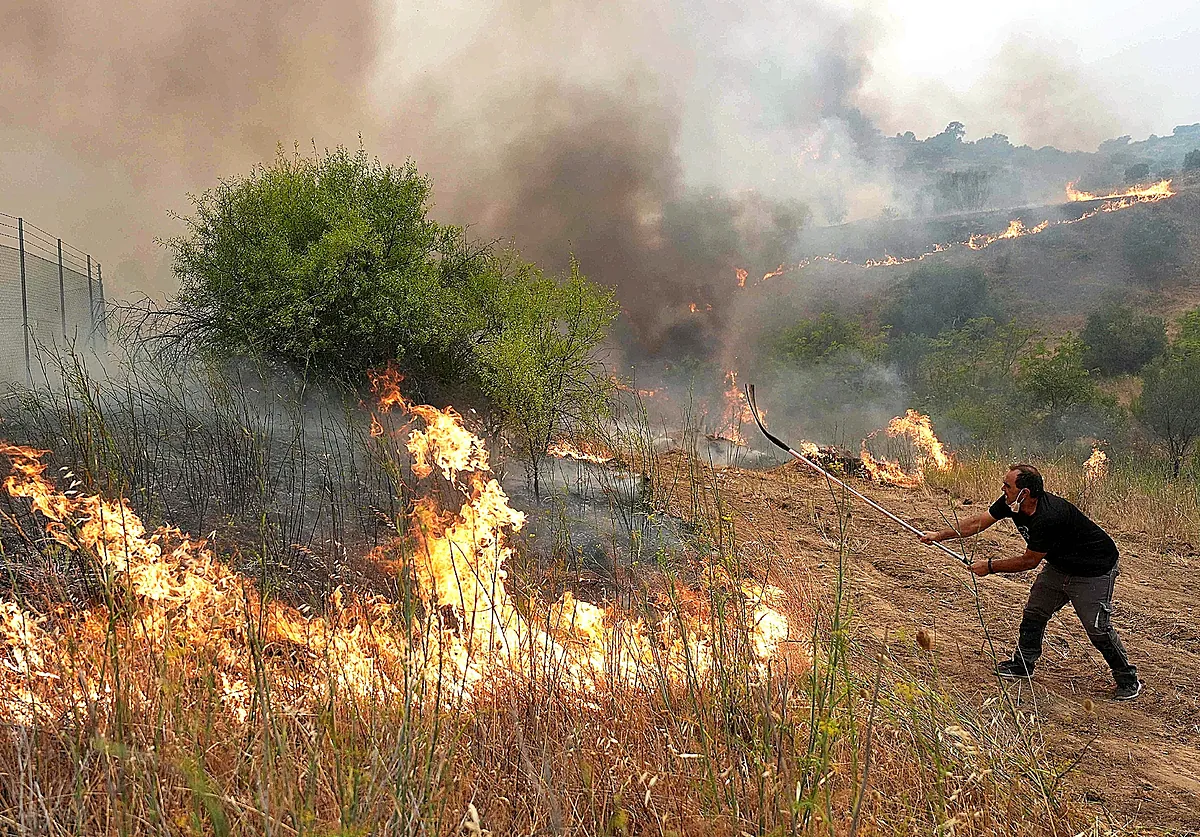
Uncontrollable wildfires in Madrid's western sierra and eastern Ávila have forced Spain to declare a Level 3 national emergency for the first time, after roughly 20,000 hectares burned, more than 40,000 people were evacuated, and about 20,000 confined as flames remained beyond firefighters' capacity.
Key Takeaways
- Spain activated Level 3 national emergency for the first time over fires hitting Madrid, Ávila and nearby provinces.
- Four major blazes threatened to merge across Madrid's western sierra, Ávila and the Toledo border.
- More than 60,000 people were evacuated or confined as EU aircraft and military units joined the fight.
- Officials say weekend wind shifts will decide whether crews can regain control.
Four forest fires that started in Burgohondo (Ávila), Villa del Prado (Madrid), San Martín de Valdeiglesias (Madrid) and Almorox (Toledo) tore through dry woodland under winds of up to 60 km/h and temperatures above 40°C, according to El Mundo.
Madrid regional president Isabel Díaz Ayuso called it the worst fire in the region's history. Interior Minister Fernando Grande-Marlaska said crews were focused on saving lives as the blazes were deemed beyond extinction capacity.
For more coverage of climate-driven emergencies and emerging response tech, see our Future Tech & AI Wonders hub.
Why did Spain declare a national emergency over the sierra fires?
Regional services in Madrid and Castilla y León could not contain the fronts. For the first time, Spain declared Emergencia Nivel 3 for wildfires and placed crisis management under the central government after Madrid requested national support.
Spain also activated the EU civil protection mechanism. At least two aircraft arrived from Italy and two from Greece. About a thousand military personnel were deployed, including Unidad Militar de Emergencias units that built overnight defense lines to keep flames from reaching El Escorial and San Lorenzo de El Escorial.
King Felipe VI joined the State Emergency Coordination Committee remotely from the Balearic Islands. On Saturday, Prime Minister Pedro Sánchez visited the advanced command post in Cenicientos.
How bad are conditions across Madrid's western sierra?
El Mundo reported nearly 20,000 hectares burned across 15 municipalities, with roughly 50,000 of those affected living in Madrid's western sierra and about 13,000 in Ávila. Later updates put total evacuated and confined above 60,000.
Witnesses described flames 10 to 15 meters high. Smoke reached towns such as Tres Cantos, more than 90 km away. Sports halls in Villamanta and Cebreros sheltered thousands of evacuees.
Ten Madrid localities were emptied, including Chapinería, Navas del Rey, Robledo de Chavela and Zarzalejo. Confinements continued in San Martín de Valdeiglesias, Pelayos de la Presa and Villa del Prado. Roads M-501, M-507, M-512 and M-533 stayed closed except for emergency traffic.
Friday afternoon, Spain's Guardia Civil evacuated more than 90 staff from NASA's Deep Space Communications Complex in Robledo de Chavela as fire approached the sierra facility.
In Burgohondo, authorities linked the ignition to heavy machinery used despite a Castilla y León ban under extreme fire weather. One person was arrested and two were charged.
What happens next as winds reshape the fire fight?
Madrid and Ávila fires remained active Saturday and had not merged overnight—a key relief for responders. Overnight intensity eased with less wind, higher humidity and lower temperatures, but officials warned of a complex day as winds strengthen and shift direction.
Experts warned extreme fires can generate their own weather, sustaining advance even if broader conditions improve. Spain has recorded dozens of forest fires in recent weeks, with a large share of the country under extreme risk.
An El País editorial argues traditional firefighting is no longer enough and calls for modernized prevention, alert systems and forest management once the last embers die—alongside faster aid for those still unsure when they can go home.