M6.9 solar flare may nudge northern lights odds this week
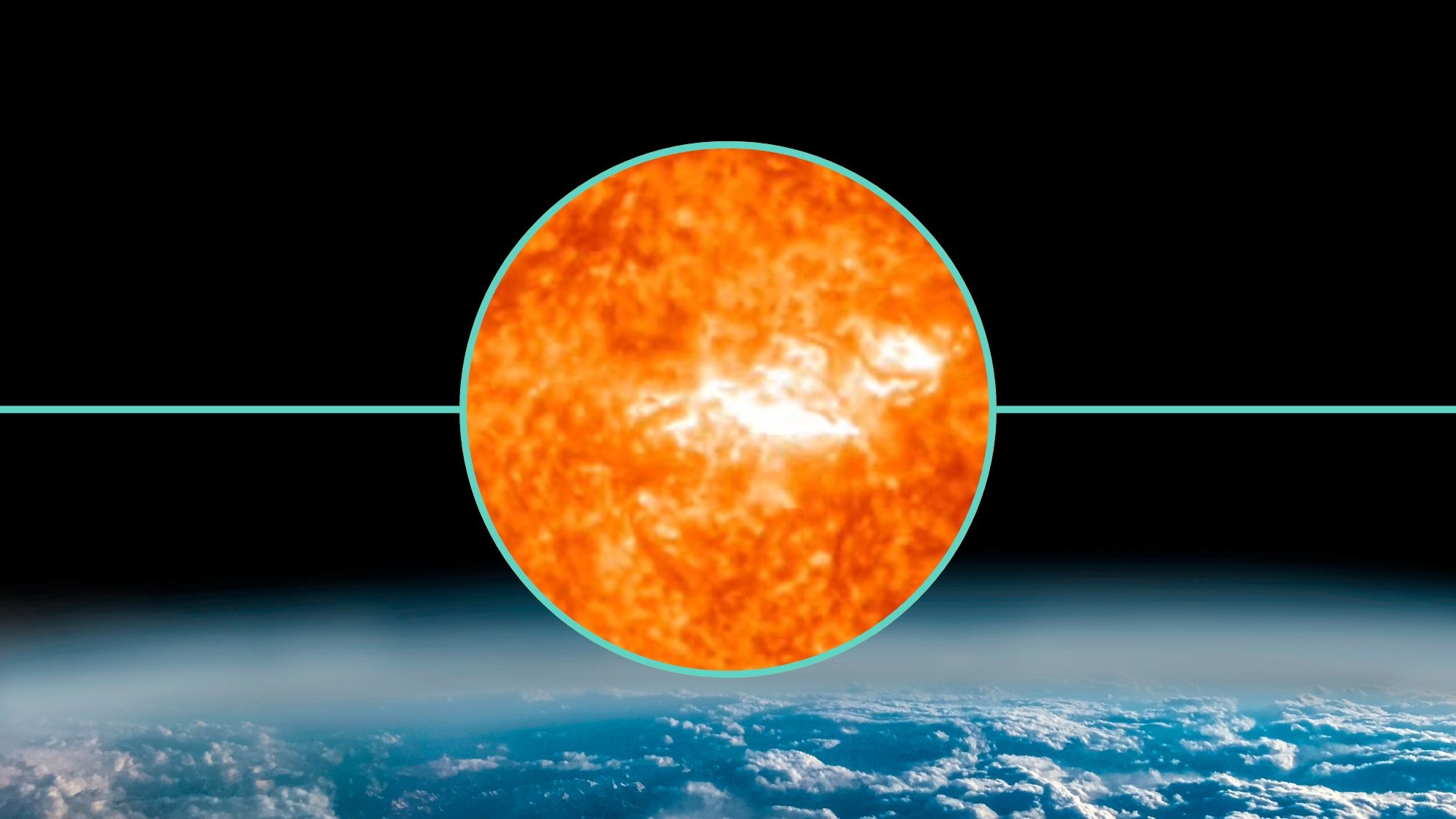
A powerful M6.9 solar flare on August 25 launched a coronal mass ejection that models say may deliver a glancing blow to Earth around Friday, August 28. On its own the impact looks modest, but overlapping high-speed solar wind could still lift northern lights chances at higher latitudes.
Key Takeaways
- An Earth-facing sunspot region fired an M6.9 solar flare peaking at 6 a.m. EDT (1000 GMT) on August 25.
- The blast triggered a moderate R2 radio blackout that briefly disrupted high-frequency communications over parts of Africa, Europe, and the Arctic.
- NASA modeling points to a slow, glancing CME arrival near 10–11 UTC on August 28, with roughly a seven-hour uncertainty window.
- A high-speed solar wind stream from a coronal hole is expected from August 27 and could amplify geomagnetic activity if it overlaps the CME.
- Aurora odds depend heavily on timing and whether the CME’s magnetic field points southward when it arrives.
Space weather rarely makes mainstream headlines unless satellites glitch or skies light up. This week’s M6.9 solar flare sits in that middle zone: strong enough to matter for radio operators and aurora hunters, yet not the kind of X-class blast that routinely knocks out grids. For readers who track free sky shows, travel timing, or night-sky photography side projects, the practical question is simple—will Friday’s glancing blow actually help?
According to reporting from Space.com, the eruption came from active sunspot region 4513 and was paired with a coronal mass ejection (CME) aimed loosely toward Earth. That same region had already been restless earlier in August, when Caliber.Az noted an M8.1 flare that briefly ranked as the month’s strongest event.
What happened with this week’s solar flare?
On August 25, region 4513 unleashed a powerful M-class burst. SpaceWeatherLive data cited in coverage of the event put the peak at 6 a.m. EDT, or 1000 GMT. M-class flares are the second-strongest category after X-class, with each letter tier roughly ten times more energetic than the one below.
Region 4513 did not act alone in a vacuum of quiet. Coverage citing Space.com said the Earth-facing spot complex produced another five powerful M-class flares over the previous 24 hours. That barrage helps explain why forecasters were already watching the disk closely before the M6.9 peak.
The flare’s X-ray and extreme ultraviolet pulse ionized Earth’s dayside upper atmosphere enough to cause a moderate R2 radio blackout. High-frequency radio links over sunlit portions of Africa, Europe, and the Arctic felt the disruption—an immediate effect that arrives at light speed, long before any CME plasma does.
Could the CME boost northern lights chances this week?
Yes, but only modestly—and mainly if other space-weather pieces line up. Early runs of NASA’s M2M WSA-ENLIL+Cone model suggest Earth may take a glancing hit on Friday, August 28. Aurora chaser Jure Atanackov noted an expected arrival around 10–11 UTC (about 6–7 a.m. EDT), plus or minus roughly seven hours.
Lopsided extreme ultraviolet dimming is why analysts call this a glancing blow rather than a bullseye. Atanackov described the CME as slow and said he is not expecting much from that impact alone. In other words, do not plan a road trip solely on the CME headline.
The wild card is solar wind. The Solar Influences Data Analysis Center (SIDC) forecasts a high-speed stream from a positive-polarity coronal hole beginning to influence Earth from August 27. SIDC expects unsettled to active geomagnetic conditions and allows for a weak or minor geomagnetic storm.
If that fast wind stream and the CME arrive in overlapping windows, the combined punch can raise geomagnetic activity more than either feature would alone. That is the realistic path to brighter auroras at higher latitudes later this week—not a guaranteed continent-wide light show.
Orientation still decides the finale. A strong southward magnetic field couples more efficiently with Earth’s magnetosphere and can intensify storms. A less favorable orientation can leave even a well-timed arrival muted.
Why does sunspot region 4513 keep making news?
Region 4513 has been a repeat offender. On August 20, the Solar Astronomy Laboratory of the Russian Academy of Sciences’ Space Research Institute reported an M1.88 flare—typically logged internationally as M1.8—from the newly Earth-facing region, according to Caliber.Az. Later that Thursday, an M8.1 flare overtook it and set a new August high at the time.
Scientists initially expected the region’s activity to ease within a day or two after it rotated into view. Instead, it stayed productive, culminating in this week’s M6.9 solar flare and Earth-directed CME watch. That continuity is why aurora forecasts and radio-blackout alerts have stacked up across late August.
For anyone who treats clear-sky opportunities as free entertainment—or as content for photography and travel niches covered across Wealth Hacks & Passive Income—the takeaway is operational, not mystical: watch the geomagnetic indices Thursday into Friday, then decide whether a late-night look north is worth the coffee.
What should skywatchers and radio users do next?
Radio users on the dayside already felt the flare’s R2 blackout. That phase is over for this eruption, though fresh flares from the same region remain possible while 4513 stays Earth-facing.
Skywatchers should treat August 27–28 as a monitoring window, not a confirmed aurora festival. Track real-time geomagnetic indices and localized space-weather alerts as the coronal-hole wind ramps up and the CME’s arrival window opens Friday morning UTC.
Higher latitudes remain the best bet if conditions turn active. Mid-latitude sightings would require a stronger storm than the “slow glancing blow” baseline currently implies. Timing, darkness, and clear skies still matter as much as the satellite plots.
Bottom line: the M6.9 solar flare was real, the CME is inbound on a glancing path, and northern lights chances can tick up if solar wind and magnetic orientation cooperate. Keep expectations measured, refresh forecasts close to arrival, and let the data—not the hype—decide whether you stay up.