July's double meteor shower could bring brilliant fireballs
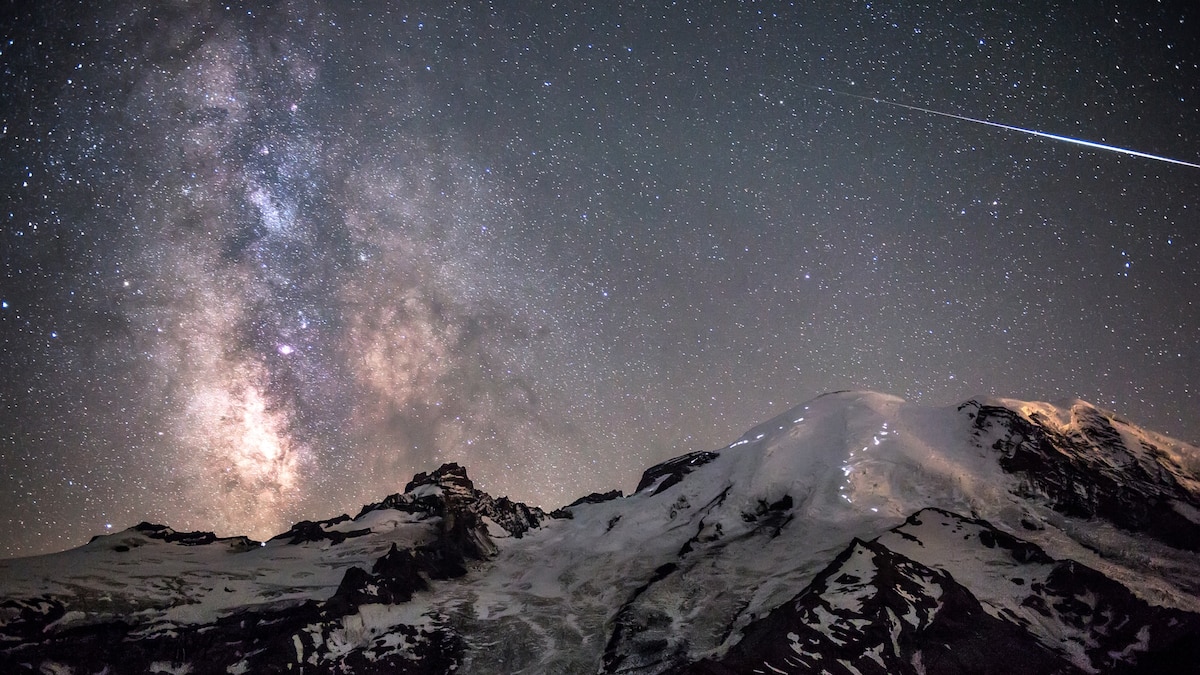
Two overlapping peaks mean a double meteor shower on the night of July 30 into July 31, 2026: the Southern Delta Aquariids and Alpha Capricornids. A nearly full Moon will wash out many faint streaks, but Alpha Capricornid fireballs may still punch through. Watch dark mornings the week before for better views.
Skywatchers across the US and UK get a rare late-July double feature when two showers crest at roughly the same time. The catch is moonlight. July's full Moon arrives on July 29, leaving the Moon about 98 percent illuminated during the official peak—so planning matters more than the calendar date alone.
For readers who treat free outdoor hobbies as smart lifestyle spending, this is a zero-cost night out. More low-cost ideas live in our Wealth Hacks & Passive Income hub.
Key Takeaways
- The Southern Delta Aquariids and Alpha Capricornids both peak on the night of July 30 into early July 31, 2026.
- A nearly full Moon will drown most faint meteors; Alpha Capricornid fireballs are the likeliest bright sightings.
- Dark mornings the week before the peak offer better Southern Delta Aquariids viewing than the moonlit maximum.
- No telescope is needed—find dark skies, let your eyes adjust, and watch after midnight with a wide view overhead.
- August's Perseids follow soon after, peaking the night of August 12 into the morning of August 13 under darker skies.
When does the double meteor shower peak?
According to National Geographic, the Southern Delta Aquariids and Alpha Capricornids reach their peaks at roughly the same time on the night of July 30 into the early hours of July 31.
The Southern Delta Aquariids stay active from mid-July into late August. The Alpha Capricornids run from early July into mid-August. That long window means meteors from both showers can appear well before and after the official crest.
Space Daily notes the American Meteor Society lists the 2026 Southern Delta Aquariids maximum on the night of July 30 to 31. The same nights host the sparse but flashy Alpha Capricornids.
Devon Salasin, head astronomer at Stargazing Moab, told National Geographic the overlap is happenstance: debris trails from two different comets intersect where Earth passes through, creating the twin peaks.
Will the Moon ruin the meteor shower?
Mostly for faint streaks—yes. The full Moon falls on July 29. By peak night it is still a waning gibbous roughly 97 to 98 percent lit, brightening the sky and hiding dimmer meteors.
The Southern Delta Aquariids are modest to begin with. They enter the atmosphere at about 41 kilometers per second and tend to be dim, with few fireballs. Under ideal dark skies their zenithal hourly rate is about 25, but NASA estimates a real observer closer to 7 or 8 an hour. Moonlight cuts that further.
Space Daily advises treating the peak date as the wrong night to circle. The shower rambles near full strength for a week or more on either side of maximum, so earlier dark mornings are the smarter play.
In the days leading up to July 29, the Moon rises later and sets earlier in the small hours, leaving a dark window before dawn. The radiant climbs highest around 2 a.m. local time, so the stretch from roughly 2 a.m. to first light is prime.
Alpha Capricornids are the moonlight wildcard. They usually produce only about five meteors per hour under ideal conditions, but they are famous for slower, dazzling fireballs that can stand out even under challenging skies.
How do you tell the two showers apart?
Alex Gianninas, an astronomy professor at Connecticut College, told National Geographic the showers differ by radiant and style. Southern Delta Aquariids offer more frequent, faint streaks. Alpha Capricornids are known for slower, brilliant fireballs.
A fireball is an unusually bright meteor. Most meteors come from dust-sized particles; fireballs come from larger chunks, from pebble to boulder size. They may travel more slowly and leave glowing trails that linger after the streak fades. Colors from ionizing elements can also show more clearly.
For northern observers, the Southern Delta Aquariids radiant sits near the star Skat in Aquarius, low in the southern sky. That geometry favors the Southern Hemisphere and southern latitudes of the Northern Hemisphere, where Aquarius climbs higher.
The parent of the Delta Aquariids is still debated. NASA lists comet 96P/Machholz as a suspected source; other catalogs point to related bodies in the same complex. The Alpha Capricornids, meanwhile, are simply the shower most likely to deliver a memorable flash through moonlight.
How can you see the meteor shower this week?
Find the darkest spot you can reach and give your eyes at least 20 to 30 minutes to adjust. No telescope is required. Meteors can appear anywhere overhead, so recline with a wide view of the sky.
Both showers are best after midnight, when their radiant points rise higher. For faint Southern Delta Aquariids, NASA-style guidance echoed by Space Daily is to look about halfway up from the horizon and around 45 degrees away from Aquarius rather than staring straight at the radiant.
Stay patient. Under this year's Moon, the honest peak-night expectation is a handful of the brightest streaks, not a downpour. An Alpha Capricornid fireball can still make the vigil worthwhile.
If July disappoints, August is already lining up. The Perseids—one of the year's most prolific showers—peak the night of August 12 into the morning of August 13. National Geographic notes that timing pairs with a total solar eclipse visible only in a narrow path across Greenland, Iceland, and Spain, while the Perseids remain visible across most of the Northern Hemisphere and into Southern Hemisphere mid-latitudes. Space Daily adds the Perseids peak under a new Moon this year, in skies as dark as they get, with a stray Delta Aquariid or two still mixed in.
Bottom line: chase the double peak if you can, but prioritize dark pre-dawn hours before July 29 for the Southern Delta Aquariids, and keep watching for those slow Alpha Capricornid fireballs when the Moon is bright.