Jim Cramer says investors are wrong on trillion-dollar tech giants
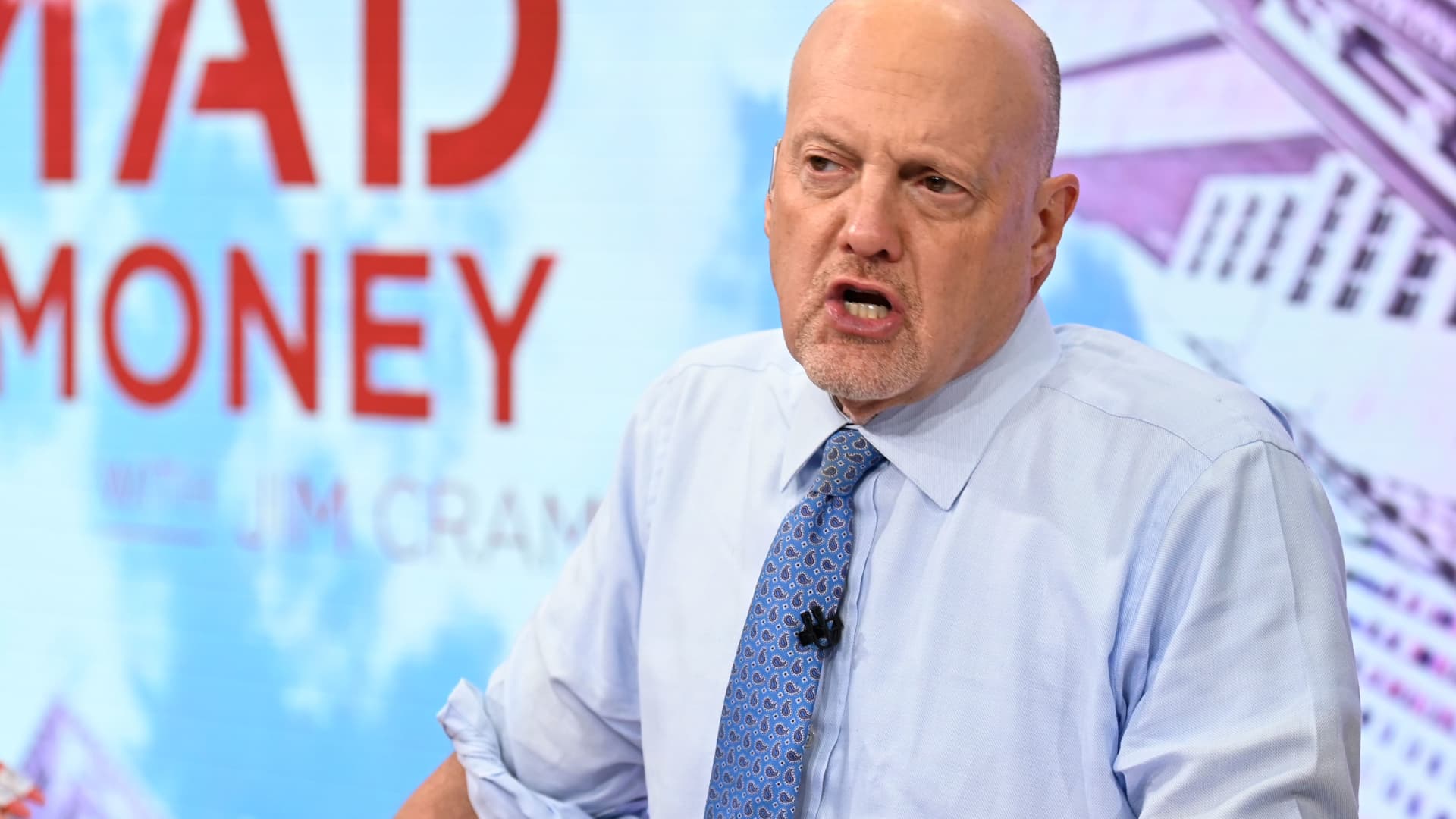
Jim Cramer told CNBC viewers on July 9, 2026, that investors are making a mistake by lumping the Magnificent Seven together and abandoning trillion-dollar tech giants while chip stocks run parabolic. The Mad Money host says hold the megacaps, stop comparing them as one trade, and wait for one hyperscaler to prove AI profits can trigger a broad rally.
The call landed as Wall Street wrestles with a split market: semiconductor names have surged while Alphabet, Amazon, Apple, Meta, Microsoft, Nvidia, and Tesla have largely struggled in 2026 after leading the generative AI boom.
Key Takeaways
- Jim Cramer says investors err by treating all Magnificent Seven stocks as the same trade despite different businesses and AI strategies.
- He expects a powerful rally across megacap tech once one company raises forecasts because AI products are driving real profit.
- Separately, Cramer warns chip stocks have gone parabolic and is trimming winners in his own portfolio while staying disciplined.
- Seeking Alpha analysis flags an unwinding AI trade and a fragile disconnect between chip gains and lagging hyperscalers.
- Cramer's Charitable Trust still owns six of the seven megacap names; Tesla is the only Mag 7 stock it does not hold.
What mistake does Jim Cramer say investors are making?
On Thursday's Mad Money broadcast, Cramer argued that traders are unfairly comparing every member of the Magnificent Seven as if they share one fate. The group powered the market during the early generative AI boom but has delivered lackluster returns through much of 2026.
Cramer's fix is simple: "Stop comparing and start thinking." Each company carries a different mix of cloud, hardware, advertising, and consumer businesses, plus its own AI spending plan. Treating weakness in one name as a reason to sell them all, he said, misses the point.
He pointed to Meta as an example. Reuters reported Thursday that Meta plans to begin manufacturing its own AI chip later this year. The stock initially slipped because it signaled capital expenditures are unlikely to slow soon. Meta is also reportedly exploring a business to sell compute capacity — territory dominated by Amazon, Alphabet, and Microsoft.
Cramer pushed back on skeptics, telling viewers that CEO Mark Zuckerberg "knows more about his company's prospects than we do." He made a similar case for Alphabet, saying investors fixate on AI spending and chatbot competition while overlooking YouTube and Waymo.
Why is Jim Cramer still holding trillion-dollar tech giants?
Cramer said he is sticking with the market's largest tech companies. His Charitable Trust owns six Magnificent Seven constituents; Tesla is the lone exception.
His bullish case rests on a single catalyst. "One day, one of these companies is going to announce on its conference call that it is raising forecast because of its AI products, and you are going to see a rally in all of them, a rally that will be so powerful that you kick yourself for missing out on it," he said.
He acknowledged megacap tech stocks will likely keep trading together — weakness in one name often drags down the rest. But that linkage could eventually work in investors' favor. "We get one, just one, of these heavy hitters saying its AI business is now profitable, then you can forget about owning a commodity semiconductor stock," Cramer said. "Instead, you'll go for the hyperscaler that's spewing so much cash flow it won't even know what to do with the money."
If you are weighing tech exposure in a diversified portfolio, our Wealth Hacks & Passive Income hub covers strategies for riding megacap volatility without overconcentrating risk.
Are chip stocks too hot for Jim Cramer's comfort?
Cramer's megacap defense does not mean he is bullish on every AI-linked stock. In a separate Mad Money segment covered by Yahoo Finance, he warned semiconductor names have gone "parabolic" and could set up a nasty pullback.
He highlighted the Philadelphia Semiconductor Index's historic run, including 18 consecutive winning sessions in April and a climb of roughly 30% that month. Cramer told viewers that "parabolic moves all over the market" are "worrisome."
CNBC analysis found 94 U.S.-listed chip or AI data center companies that posted gains of 50% or more since March 30, including AMD, Marvell Technology, and Intel. Cramer cited POET Technologies as a cautionary tale: the stock plunged after a key potential customer canceled orders, showing how quickly sentiment can reverse.
He is not calling a full bear market. Cramer is eyeing pullbacks in names such as Arm Holdings and has started selling portions of winners like Qnity Electronics. "When you see these kinds of moves, you don't need to freak out. But you've got to be disciplined," he said — take profits and avoid chasing speculative parabolic names.
Does Wall Street agree that the AI trade is turning?
Broader commentary aligns with Cramer's split view. A July 7 Seeking Alpha analysis noted markets were shifting sentiment toward the AI trade as Q3 began, with semiconductors cooling after a historic Q2 rally.
The piece cited growing profit-taking, valuation concerns, and skepticism about whether AI-driven capital spending can stay elevated. Its central tension matches Cramer's thesis: the disconnect between surging chip stocks and underperforming hyperscalers looks difficult to sustain. Semiconductor price increases, especially in memory, appear fragile, with a broader correction possible by Q4.
What should investors do with Jim Cramer's advice?
Cramer's guidance boils down to two moves. Do not abandon trillion-dollar tech giants because the group moves in lockstep or because chip suppliers steal the spotlight. Stay disciplined in semiconductors — take profits, avoid vertical chases, and wait for a pullback before adding exposure.
"Keep your cool," Cramer said of the chip rally. For the Magnificent Seven, analyze each company individually and stay positioned for the earnings call that proves AI is moving the needle. Neither path guarantees short-term gains, but his July 9 message offers a clear framework: hold the giants, respect the parabolic moves, and let proof of AI profitability drive the next rotation. Read the full CNBC coverage for details.