Jean Hanlon's sons win justice 17 years after Crete murder
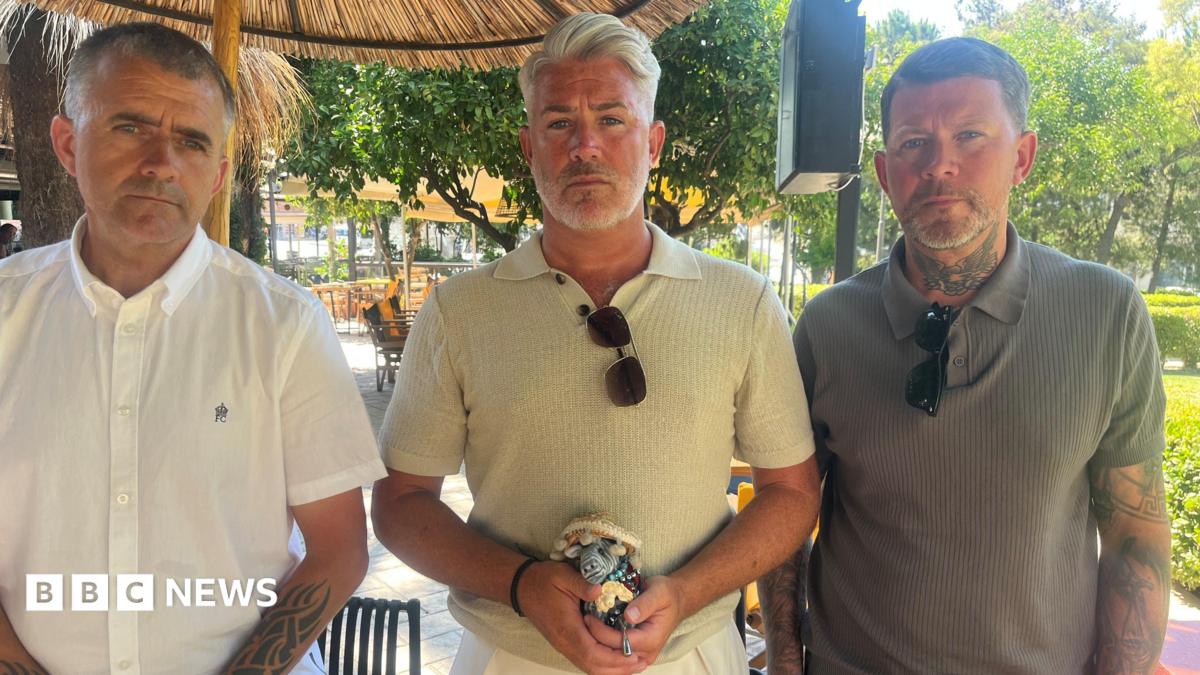
A Greek man has been found guilty of murdering Scottish expatriate Jean Hanlon in Crete in 2009, ending a 17-year fight by her sons Michael, Robert and David after Greek authorities initially ruled her death an accidental drowning at Heraklion harbour. A mixed jury unanimously convicted the 54-year-old former boyfriend who had stalked Jean after she ended their brief relationship, sentencing him to 10 years with diminished responsibility.
Key Takeaways
- Jean Hanlon, 53, from Dumfries, was found dead off Heraklion harbour on 13 March 2009; Greek authorities initially ruled accidental drowning.
- Her sons spent 17 years campaigning, hiring investigators in 2023 whose work on Jean's diary led to a suspect described as a rejected stalker.
- A four-day trial at Lasithi Law Courts in Neapoli ended with a unanimous murder conviction and a 10-year sentence on 3 July 2026.
- The court recognised diminished responsibility due to mental health conditions; the defendant remains free pending appeal and cannot be named under Greek law.
- Two other men were falsely accused during the long investigation before the case was reopened in 2024.
What happened to Jean Hanlon in Crete?
Jean Hanlon had lived in Kato Gouves, about 12 miles from Heraklion, for several years when she vanished in March 2009. She was last seen with a man at the Marina Cafe in Heraklion. Her body was recovered from the water four days after she was reported missing.
Greek officials first treated the death as an accident. Jean's parents received word from Interpol that their daughter was missing, but her sons were immediately suspicious. Reports placed her with a man the night she disappeared, and they did not believe injuries including a blow to the back of the head matched a simple drowning.
Why did Jean Hanlon's family fight for 17 years?
Michael, Robert and David Hanlon refused to accept the official narrative. Greek authorities closed and reopened the investigation four times. Two men were wrongly implicated before the trail went cold again.
The turning point came in late 2023 when the brothers hired private investigators Haris Veramon and Nikos Arkoulis. Working from Jean Hanlon's diary, they identified a man she had briefly dated at the start of 2009. She had ended the relationship, but investigators said he became a rejected stalker who wrongly believed she was seeing someone else. That evidence helped persuade authorities to reopen the case in 2024; a man in his 50s was arrested the following year.
Cases like this show why families keep pushing when official rulings feel wrong. See our True Crime & Unsolved Mysteries coverage.
What did the trial reveal about how Jean Hanlon died?
The defendant went on trial from 30 June 2026 at the Lasithi Law Courts in Neapoli, charged with murder with intent. He denied causing her death. The prosecution argued he was with Jean the night she died and killed her, though no physical evidence directly linked the pair that evening.
Forensic pathologist Krantoni told the court Jean died from an incomplete tear of the brain stem, likely caused by a blunt blow to the back of the neck. She also said Jean was placed into the sea rather than thrown, and was probably still alive when she entered the water. The trial heard the suspect had schizophrenia and bipolar disorder; the court recognised diminished responsibility under Article 36 of the Greek criminal code.
What does the guilty verdict mean for Jean Hanlon's sons?
After roughly three hours of deliberation, a mixed panel of judges and members of the public unanimously declared the man guilty on 3 July 2026. Michael, Robert and David were in tears in the courtroom. Michael told BBC News his mother can finally be free, though he found it frustrating the convicted man will not enter prison until his appeal is heard.
Under Greek law, the 54-year-old cannot be named until appeals conclude. He received a 10-year sentence reflecting diminished responsibility, but remains at liberty for now. For a family that began with a phone call from Interpol in 2009, the verdict closes a chapter they spent nearly two decades writing themselves.