Jared Kushner Ukraine Russia envoys meet Putin today
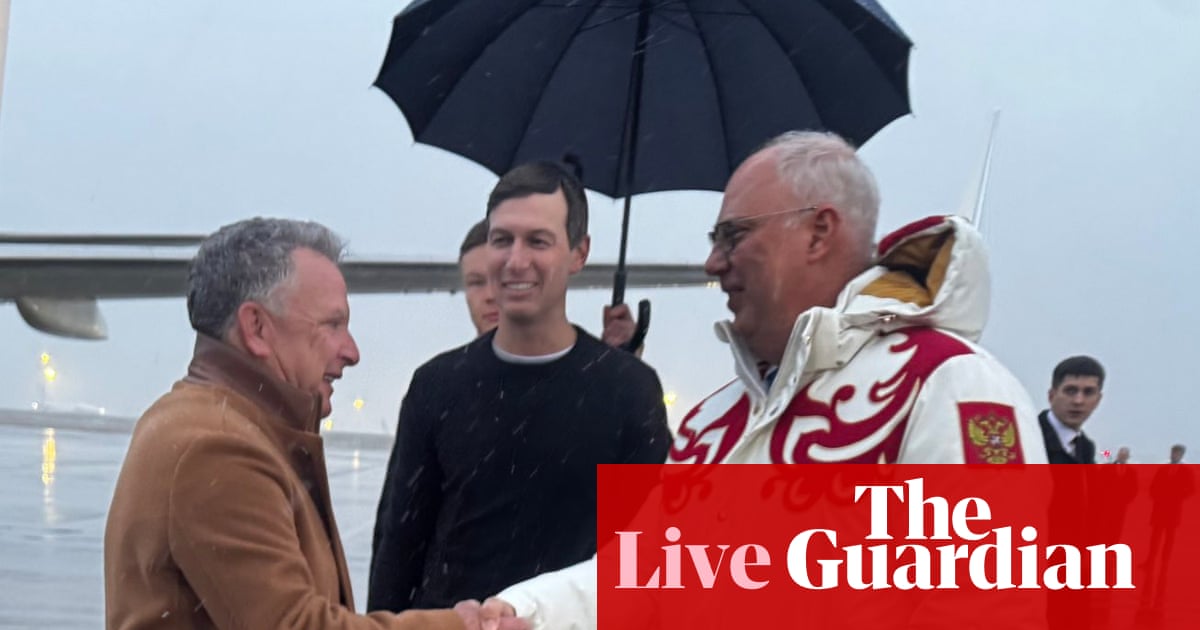
US envoys Jared Kushner and Steve Witkoff are expected to meet Vladimir Putin in Moscow on Thursday, keeping Jared Kushner Ukraine Russia ceasefire diplomacy in focus after Abu Dhabi talks ended without a breakthrough. They aim to advance a large prisoner swap, seek European inclusion next round, then brief Zelenskyy in Dublin.
Key Takeaways
- Steve Witkoff and Jared Kushner arrived in Moscow for talks with Vladimir Putin after two days of US-mediated trilateral negotiations in Abu Dhabi.
- Those Abu Dhabi sessions produced no ceasefire breakthrough, but Moscow and Kyiv confirmed a large-scale prisoner exchange is in the works.
- Kushner said a key Moscow goal is securing Putin’s blessing for Europeans to join the next negotiating format.
- The US envoys are then expected in Dublin to debrief Volodymyr Zelenskyy on the margins of the European Political Community summit.
- Territory—especially Donetsk—and sequencing of a ceasefire versus a wider security deal remain the hardest gaps.
Thursday’s Moscow stop is the next turn in a stop-start peace track that restarted this week for the first time since February. According to The Guardian’s Europe live coverage, Witkoff and Kushner were welcomed in Moscow and were expected to meet Putin around 9am GMT to press issues raised in Abu Dhabi.
Russia’s deputy foreign minister Sergei Rybakov cautioned that it was too early to say necessary trust had been restored between Russia and Ukraine. That warning matches what Kushner himself told reporters after the Gulf talks: there is still no trust between the sides after nearly five years of war.
Readers tracking how global shocks ripple into money decisions can also browse BlasterPost’s Wealth Hacks & Passive Income hub for separate explainers on resilience and cash-flow planning.
What did the Abu Dhabi talks actually achieve?
The BBC reported that trilateral talks in Abu Dhabi between Russia, Ukraine and the United States concluded after a second day with “some openings” claimed by the American side, but no hint of a breakthrough to end the war sparked by Russia’s invasion.
Both Moscow and Kyiv confirmed that a large-scale prisoner of war exchange was being prepared and could be carried out soon. POLITICO.eu quoted Kushner saying the sides agreed on what would be the biggest humanitarian release of prisoners so far, with final numbers to be finalized around the Moscow visit and contingent on Putin’s approval.
Ukraine’s Davyd Arakhamia called the round “one of the hardest,” saying Russians arrived with “very strict directives,” yet he still sensed “good momentum” and urged a second round soon. Kremlin negotiator Vladimir Medinsky was cooler, saying much depends on Ukraine, the US position, and “whether Europe comes to its senses.”
On the ground, the mood cooled between days. Officials familiar with the talks described Tuesday’s roughly four-and-a-half-hour session as “constructive,” while Wednesday’s shorter exchange was only “neutral,” POLITICO reported.
Why are Jared Kushner and Steve Witkoff going to Moscow and Dublin?
The Moscow meeting is meant to review what was discussed with Putin, lock in more progress where possible, and specifically try to get his approval for a European seat at the next table. Kushner told POLITICO he and Witkoff hoped Putin would “give the blessing” for that format change, arguing it is “the only way to get this done.”
After Moscow, the envoys are expected to fly to Dublin to meet Zelenskyy during the European Political Community summit attended by more than 40 leaders from Ukraine’s allied countries. Ireland’s Micheál Martin said the objective of that Dublin engagement is to debrief Zelenskyy on the Witkoff-Kushner meeting with Putin, calling the situation “moving.”
Martin also stressed that Europe wants a “clear, coherent” voice in Ukraine talks because of economic, security, and EU-membership stakes. He welcomed work on a potential prisoner swap as significant in its own right, while noting Europe’s view that Russia has not yet shown genuine interest in a peaceful resolution—and that it remains to be seen whether that has changed.
What still blocks a ceasefire and lasting security deal?
The hardest political question remains territory. Since talks began last year, a core obstacle has been Ukraine’s eastern Donetsk region, which is mostly occupied by Russia. Kyiv wants to freeze the contact line to keep areas it still holds; Moscow demands Ukraine relinquish the rest of Donetsk. Medinsky said “every inch” would be “returned to Russia one way or another.”
Kushner acknowledged territory as the hardest issue and said any peacetime security framework cannot be implemented until there is agreement on territory and other bilateral issues. Europeans and Kyiv generally want a ceasefire before deeper security redesign; the Kremlin has insisted fighting stops only after an agreement is reached.
Abu Dhabi was framed around Europe’s postwar “security architecture.” For Kyiv, that can mean guarantees of allied help if Ukraine is attacked again despite not being a Nato member. For Moscow, a reworked framework likely means limiting Nato influence in eastern Europe. Medinsky even cast the goal as a “new Yalta and Potsdam.”
Britain, Nato and various EU countries were present in Abu Dhabi and met US and Ukrainian negotiators, but the Kremlin said its delegation had no contact with them. Kushner said bringing Europeans “added to the format” would be on the agenda with Putin, while also noting that if Europe could identify one person to speak on its behalf, that would be a bigger achievement than simply getting Russia to include them.
Zelenskyy, for his part, wants to be consulted on who speaks for Europe and prefers a single representative, with a decision by the end of the month. Ireland’s Martin said Europe’s voice “is not necessarily one person,” but must be a coherent leadership stance agreed by the EU27.
Even as diplomacy moves, the war’s pressure continues. Zelenskyy said Ukraine faces significant Starshield connectivity disruptions and “systematic speed restrictions” that complicate intercepting Russian jet-powered drones—claims he said Ukraine is raising with the American side. France’s Europe minister Benjamin Haddad said the EU plans to approve new Russia sanctions on Monday covering additional entities and banks.
German officials involved around Abu Dhabi remain wary, with one describing the process as a potential “Russian trap” that creates a false impression Moscow is ready for peace. Kushner’s bottom line after the Gulf round still stands: the deals are hard, complex and emotional, and trust is missing—exactly why the Jared Kushner Ukraine Russia shuttle to Moscow, then Dublin, matters for whether talks widen or stall again.