Iran launches Gulf missile attacks after US strikes hit Doha
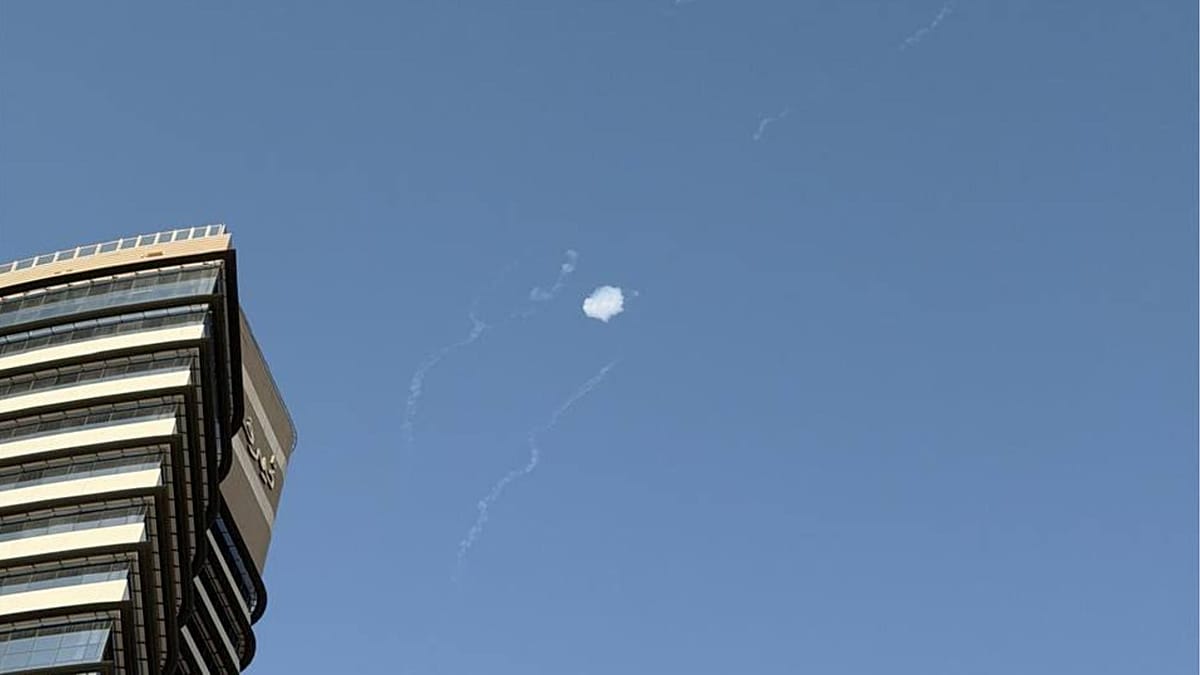
DIRECT ANSWER: Iran fired waves of missiles and drones at Qatar, the UAE, Bahrain, Kuwait, Jordan and Oman on Sunday, 12 July 2026, after the US struck roughly 140 Iranian military sites overnight. Loud explosions shook Doha as Qatar's air defences intercepted ballistic missiles; three people were hurt by shrapnel despite interceptions.
Key Takeaways
- Iran launched simultaneous missile and drone salvos across multiple Gulf and allied states hours after a new US bombing campaign in southern Iran.
- Qatar intercepted attacks above Doha in two waves, but falling debris injured three people, including one child, according to the Interior Ministry.
- The UAE, Kuwait, Bahrain and Jordan activated air defences; Oman reported drone strikes in Musandam, outside the Strait of Hormuz.
- Iran's IRGC claimed hits on US bases in Jordan, Kuwait and Qatar, while Tehran again declared the Strait of Hormuz closed to shipping.
- Investors tracking energy and regional stability should treat Gulf security as a direct risk to shipping lanes and passive-income portfolios tied to global trade.
What triggered Iran's attacks on Gulf states?
The escalation followed a rapid cycle of maritime and military strikes. US Central Command said it conducted a third night of airstrikes on Iran early Sunday, hitting about 140 military targets in southern Iran out of more than 300 struck across the campaign. Washington said the raids responded to a fresh Iranian attack on a Cyprus-flagged container ship in the Strait of Hormuz on Saturday night, which set the vessel ablaze and forced the crew to abandon ship; one sailor was reported missing.
Iran answered with what Euronews described as major, simultaneous missile and drone attacks across the Gulf. Al Jazeera reported that air-defence systems in Gulf states and Jordan shot down Iranian projectiles after the US bombing run. The sequence marks a sharp widening of a conflict that had already seen Tehran retaliate against countries hosting US forces.
Which Gulf countries were targeted on Sunday?
Reporting from multiple outlets converged on a broad target list. Euronews journalists in Qatar described two waves of Iranian attacks and large explosions above Doha, with Qatar's air defence intercepting multiple ballistic missiles above the capital. At the same time, the UAE announced its air-defence systems were engaging Iranian missiles and drones and urged residents to shelter.
Kuwait's army command said it was engaging hostile aerial targets and called on civilians to take cover. Bahrain activated air defences and sounded warning sirens three times on Sunday morning, according to Al Jazeera. Jordanian authorities said three missiles from Iran fell inside the country without causing casualties. Oman reported that the Musandam enclave was targeted with drones, while Iran said it also struck a US aircraft-carrier support and refuelling platform in the Omani port of Duqm.
Anadolu Ajansı reported that the UAE intercepted incoming Iranian missiles and drones, while Bahrain's Interior Ministry activated air-raid sirens and urged the public to remain calm. Qatar's Interior Ministry raised the security threat level to high, telling residents to stay inside homes or other safe places and to avoid unnecessary movement.
What did Iran claim it destroyed?
Iran's Islamic Revolutionary Guard Corps issued detailed claims about US facilities it said it hit. According to Al Jazeera and Anadolu Ajansı, the IRGC said it destroyed a command-and-control centre and MQ-9 drone hangars at Prince Hassan Air Base in Jordan, used by US forces. It also claimed strikes on a Patriot air-defence system, an ammunition depot and a radar site belonging to the US military in Kuwait.
The IRGC further said a fighter-jet maintenance facility at a Qatar military base used by the US was destroyed, and that the US Al Udeid Air Base in Qatar was targeted in a second round of retaliatory ballistic missile strikes. Qatar's government said all projectiles were intercepted, and the Qatari Armed Forces reported a successful interception of a missile attack. Iran also claimed a second US vessel was struck and disabled in the Strait of Hormuz, though that claim was not independently verified in the sources reviewed.
How did Doha respond as explosions shook the capital?
Doha became one of the most visible flashpoints because residents could hear and see the intercepts overhead. Euronews staff reported multiple loud booms during two waves of attacks, with ballistic missile interceptions visible above the city in what journalists described among the most intense days of the Iran war for Qatar.
Despite successful interceptions, Qatar's Ministry of Interior said three people, including one child, were injured by falling shrapnel after warnings were sent to residents. The ministry urged the public to follow official safety instructions. Qatar's Defence Ministry confirmed the armed forces intercepted incoming fire, aligning with government statements that no missiles reached their intended ground targets.
For anyone with business, family or investment exposure to the Gulf, Doha's experience underscores a hard reality: even advanced air defences cannot fully eliminate collateral risk when a regional power launches saturation attacks across multiple countries at once.
Why does this conflict matter for wealth and passive income?
The immediate humanitarian and security impact is clear, but the economic channel runs through energy and trade routes. Iran declared the Strait of Hormuz closed amid the fighting, and the US strikes were explicitly framed as an effort to degrade Iran's ability to attack civilian mariners and commercial vessels transiting the strait. Disruption there affects shipping costs, insurance premiums and the global oil and gas supply chain that underpins many dividend and index strategies.
Gulf states such as Qatar and the UAE are major energy exporters and financial hubs. When missile alerts force shelter-in-place orders in Doha, Dubai and Manama, the knock-on effects can ripple through markets far from the Middle East. Investors who rely on passive income from energy ETFs, international dividend funds or emerging-market exposure may see volatility rise even if their portfolios look geographically diversified on paper.
If you are rebalancing or building income streams, this is a moment to stress-test how much regional geopolitical risk your portfolio can absorb without forcing you to sell at the wrong time. Practical steps include reviewing exposure to shipping, energy and defence sectors, checking whether your emergency cash buffer covers near-term needs, and avoiding reactive trades based on unverified social-media claims during fast-moving news cycles.
For broader strategies on protecting income when macro shocks hit, see our Wealth Hacks & Passive Income hub. Primary reporting on the attacks is available from Euronews, with additional detail from Al Jazeera.
What should readers watch next?
Several variables could determine whether Sunday's exchanges remain contained or spiral further. Watch whether Iran maintains or enforces its Hormuz closure claim, how many additional US strike packages CENTCOM announces, and whether Gulf capitals keep hosting large US military footprints that Iran identifies as legitimate targets.
Official statements from Qatar, the UAE and Kuwait will also matter for civilian safety and for market confidence. Verified casualty reports, confirmed damage at US bases, and any new attacks on commercial shipping would likely move oil prices and risk assets quickly. Until clearer diplomatic off-ramps appear, treat headlines from the region as actionable intelligence for portfolio risk management rather than background noise.