Ida Wobker disqualified at Wimbledon as Eigelsbach rallies
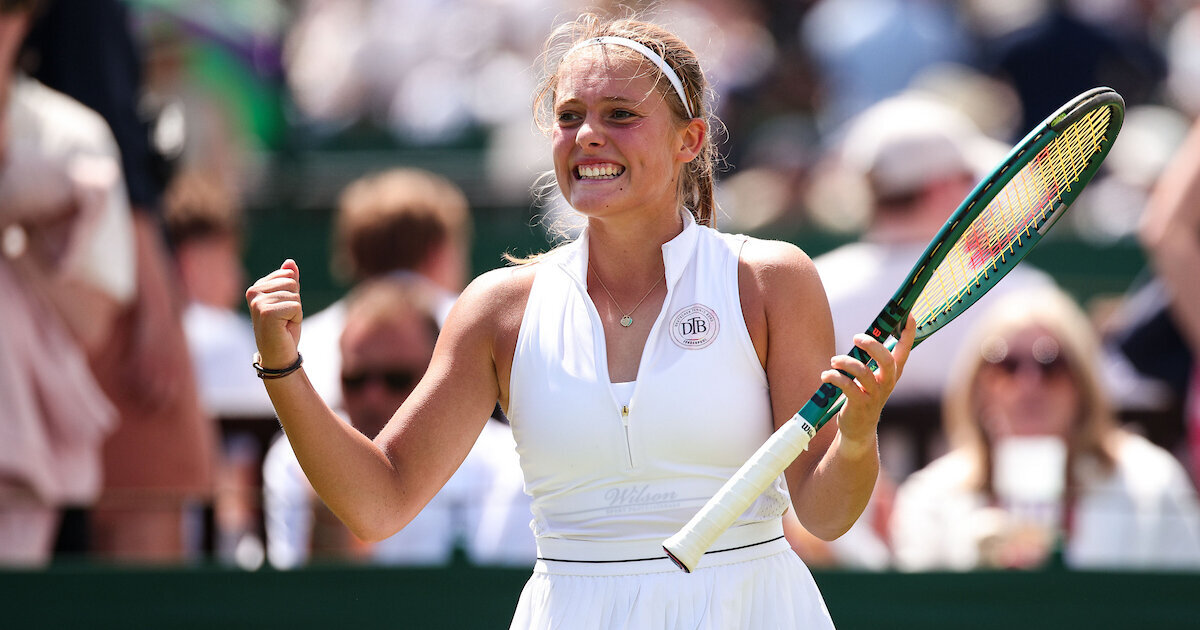
DIRECT ANSWER: German junior Ida Wobker was disqualified from Wimbledon 2026 girls' singles on Saturday after throwing her racket in frustration; it bounced into the stands on Court 11. Fellow German Emily Eigelsbach delivered the opposite headline, beating 16th seed Maaya Rajeshwaran Revathi 7-5, 6-2 to avenge a recent ITF loss.
Key Takeaways
- Ida Wobker, 15, was defaulted in the first round after her racket left the court and landed in the spectator area on Court 11.
- Emily Eigelsbach, 17, upset No. 16 seed Maaya Rajeshwaran Revathi 7-5, 6-2 in one hour and 40 minutes.
- Wobker remains eligible for the junior doubles draw alongside Denisa Zoldakova.
- Mentor Barbara Rittner said Wobker was devastated but not aggressive by nature.
- German juniors arrived at Wimbledon with mixed results: one rising star advanced, another exited in controversy.
The opening days of the 2026 Wimbledon junior championships delivered a stark split screen for German tennis. On one court, Emily Eigelsbach turned a recent defeat into a statement win. On another, Ida Wobker's temper cost her a place in the draw. Together, the two storylines captured how quickly fortunes can shift at a Grand Slam.
Why was Ida Wobker disqualified at Wimbledon?
Wobker was playing Maria Valentina Pop of Romania in a first-round girls' singles match on Court 11. Pop had taken the opening set 6-0, and the second was level at 5-5 when Wobker missed a backhand long. Frustrated after what reports described as her 44th unforced error of the match, the 15-year-old slammed her racket onto the grass.
The racket bounced off the turf and flew into the small spectator area beside the court. According to BILD, juniors had been warned before the tournament that a racket leaving the court in that manner would trigger an immediate disqualification. Chair umpire, referee, and supervisor consulted before the default was announced for unsportsmanlike conduct.
No injuries were reported. Wobker's mentor, former German national coach Barbara Rittner, was in the stands and caught the racket. Rittner later accompanied Wobker to the referee's office, where the teenager was said to be in tears. She remains eligible to compete in doubles with Czech partner Denisa Zoldakova.
Who is Ida Wobker and why does this matter?
From Glandorf near Osnabrück in Lower Saxony, Wobker is widely regarded as one of Germany's most promising young players. BILD describes her as the country's biggest tennis talent. She entered the WTA rankings at age 14, sits at No. 689 on the women's tour, and ranks 17th in the ITF junior standings despite not being seeded at Wimbledon.
Her résumé already includes German U14 and U16 titles and a first ITF tournament win in Dublin in 2024. She also reached the French Open junior event earlier in 2026. That pedigree is why her disqualification resonated beyond a single match. A player billed as the future of German tennis exited her Wimbledon singles campaign before many expected her to.
Rittner told BILD the incident was deeply unfortunate: "Eigentlich ist sie null aggressiv" — she is not aggressive at all. The coach added that Wobker was ashamed but would learn from the moment. For a 15-year-old carrying national expectations, the episode is as much a mental test as a competitive setback.
How did Emily Eigelsbach pull off her Wimbledon win?
While Wobker's afternoon unraveled, Eigelsbach authored a very different German headline. The 17-year-old from Bad Kreuznach faced Maaya Rajeshwaran Revathi, the No. 16 seed from India, in her opening match. Revathi had beaten Eigelsbach en route to winning the ITF German Juniors title in Bamberg just weeks earlier.
On Wimbledon's faster grass, Eigelsbach flipped the script. She kept the first set tight, held her nerve in the closing games, and took it 7-5. The second set was more one-sided as her varied game took over; she closed out a 7-5, 6-2 victory after one hour and 40 minutes. Per tennisnet.com, her next opponent would be either Latvia's Adelina Lacinova or American qualifier Emery Combs.
The win marked a sharp turnaround after Eigelsbach's disappointment at the German Juniors. For German tennis officials hoping for positive news after Wobker's exit, Eigelsbach's performance offered a timely counterweight. More coverage of rising sports figures is available in our Celebrity Breaking News section.
What happens next for German juniors at Wimbledon?
Wobker's singles run is over, but her tournament is not. She and Zoldakova can still pursue a doubles result. Eigelsbach advances to the second round with momentum and a revenge narrative behind her. The contrast underscores the unpredictable nature of junior Grand Slam tennis, where reputation and ranking do not guarantee survival.
For Wobker, the priority will be processing a high-profile default on one of tennis's biggest stages. For Eigelsbach, the focus shifts to extending a grass-court run that already carries extra meaning. Both players, in very different ways, have put German junior tennis on the Wimbledon map this week.