Horses evacuated as wildfire nears riding centre south of Paris
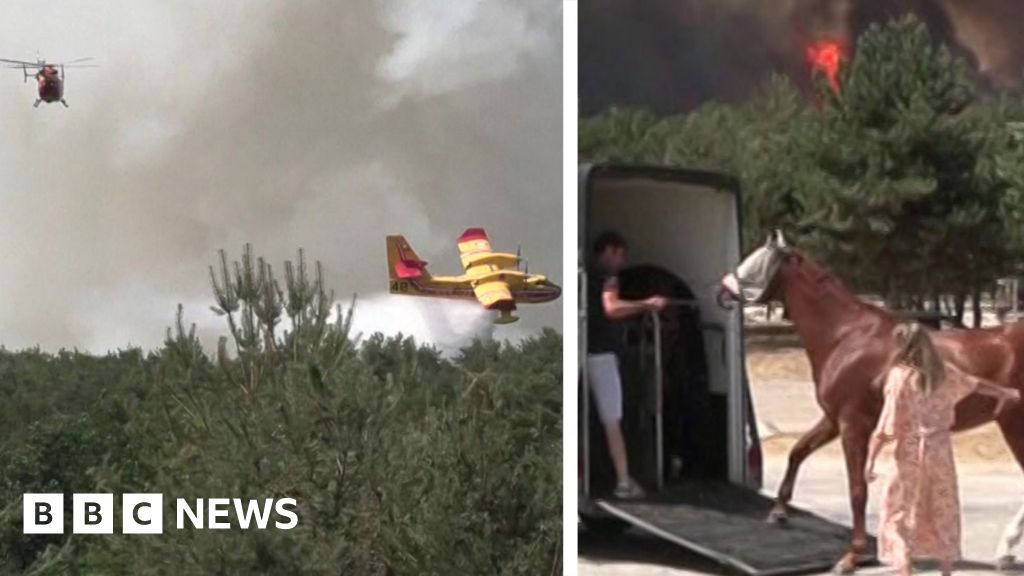
Horses have been evacuated from an equestrian centre near Paris as the Fontainebleau wildfire continues to rage, forcing about 1,000 people to flee and prompting two arrests as investigators probe whether the blaze was deliberately set during the capital region's third heatwave of 2026. BBC footage captured the urgent relocation as hundreds of firefighters battled two fires roughly 40 miles south-east of Paris.
The evacuation video matters because wildfires are now pressing against one of Europe's most densely populated corridors. ABC News reported that while larger fires have burned across southern France, the Fontainebleau blaze is exceptionally close to the suburbs surrounding Paris — a zone where property values, tourism revenue, and daily commuter routes converge.
For readers tracking wealth hacks and passive income strategies tied to real assets, the story is a reminder that climate-driven disruption can hit prized land and livelihoods without warning. Officials described the fire as "virulent" and of "exceptional scale," language that signals more than a routine summer brush fire.
Key Takeaways
- Horses were evacuated from a riding centre near Paris as the Fontainebleau wildfire spread through forest about 40 miles (60km) south-east of the capital.
- Local authorities said two blazes consumed nearly 2,000 hectares and forced roughly 1,000 people to evacuate, with no deaths or injuries reported in the Paris-area fire.
- Two people were arrested in connection with the Fontainebleau fire, including a volunteer firefighter who confessed to starting flames, according to Reuters.
- Interior Minister Laurent Nunez said the blaze may have been deliberately set and noted about ten ignition points within a 1,000-metre radius.
- The Paris region is enduring its third heatwave of 2026 as European temperature records fall and separate Spanish wildfires claim identified foreign-national victims.
What happened to the horses near Paris?
BBC News published video showing horses being evacuated from an equestrian centre as flames approached the Fontainebleau forest south of Paris. The footage documents a secondary crisis inside a wider emergency: animals that cannot be left behind when smoke and heat close in on stables and riding schools.
Firefighters have spent two days trying to bring the blaze under control. French officials called the fire "virulent" and of "exceptional scale," underscoring how quickly conditions deteriorated in a forest that sits within commuting distance of the French capital.
Interior Minister Laurent Nunez indicated the fire may have been deliberately set. Early assessments cited by BBC said the blaze had raced across 800 hectares in forest about 40 miles (60km) south-east of Paris — a footprint that grew as a second fire erupted nearby.
How large is the Fontainebleau fire near Paris?
By Tuesday, hundreds of firefighters were battling two blazes in the Fontainebleau forest that had consumed nearly 2,000 hectares (about 4,900 acres), according to ABC News. Local authorities said the fires forced the evacuation of 1,000 people.
Reuters reported that Prefect Pierre Ory said the two blazes were "contained" but still active, with the main fire scorching about 1,600 hectares and a second nearby blaze covering roughly 450 hectares. Nunez said the flames came within a few kilometres of the Palace of Fontainebleau, explaining the heavy aerial and ground response.
ABC News noted that bigger fires have ravaged parts of southern France, but the Fontainebleau emergency is unusual for its proximity to the densely populated region around Paris. That closeness raises the stakes for residents, commuters, and businesses that depend on roads and rail links threading through the forest.
Why were two people arrested?
Reuters reported that two people were arrested in connection with the Fontainebleau forest fire. One was a volunteer firefighter who confessed to "setting fire to twigs with a lighter and gasoline," according to prosecutor Diane Ngomsik. A second suspect admitted to "accidentally starting a fire by throwing away his cigarette."
Both men were born in 2007 and had no prior criminal record, the prosecutor told French media cited by Reuters. Nunez said on Monday that around ten points where the fire started were identified within a 1,000-metre radius, which he said suggested the blaze may have been started deliberately.
Separately, Nunez said 59 people have been arrested across France on suspicion of starting fires during a brutal heatwave season. Around half were adults and half minors, with some repeat offenders, he added. The scale of enforcement highlights how authorities are treating ignition risk as a national security and property-protection issue, not a local accident.
How is the Paris region being disrupted?
The fire sits about 70km (40 miles) from Paris. Reuters said it forced the closure of the A6 highway linking the capital with Lyon and the south, while smaller fires in the area also disrupted high-speed train services. ABC News reported that water from the Seine was deployed to fight the flames near the capital.
For residents and investors with exposure to Paris-adjacent real estate, transport corridors, or hospitality businesses, those closures translate into immediate revenue loss and longer-term insurance scrutiny. No deaths or injuries have been reported in the Fontainebleau fire, ABC News said, but the evacuation count shows how many households were displaced within hours.
The Paris region is suffering through its third heatwave this year, BBC reported, during a summer in which temperature records have been broken in several countries across Europe. Dry timber, wind, and extreme heat created the backdrop that allowed a forest fire to threaten both a royal landmark and a working equestrian economy in the same week.
What does the Spanish fire victims update mean?
The ABC News wire story paired the Paris-area evacuation with an update from Spain, where judicial authorities identified 10 of 13 fatalities from a separate wildfire using biological samples. Most of the deceased were foreign nationals, including five British citizens, three Belgian nationals, a French woman, and a Spanish national, authorities said.
Ten people remained unaccounted for in that southern Spain fire, which affected about 70 square kilometres of forest and farmland. The juxtaposition is stark: near Paris, fast evacuations and horse relocations appear to have prevented casualties so far, while communities farther south are still counting losses.
Together, the stories sketch a European summer where heat, fire, and human error are reshaping risk calculations from riding centres outside Paris to expat enclaves on the Iberian coast. For anyone building wealth through property or regional tourism plays, the lesson is operational: proximity to a global city does not insulate assets from climate volatility.