Headon Warren blaze grows as 65 firefighters battle fire
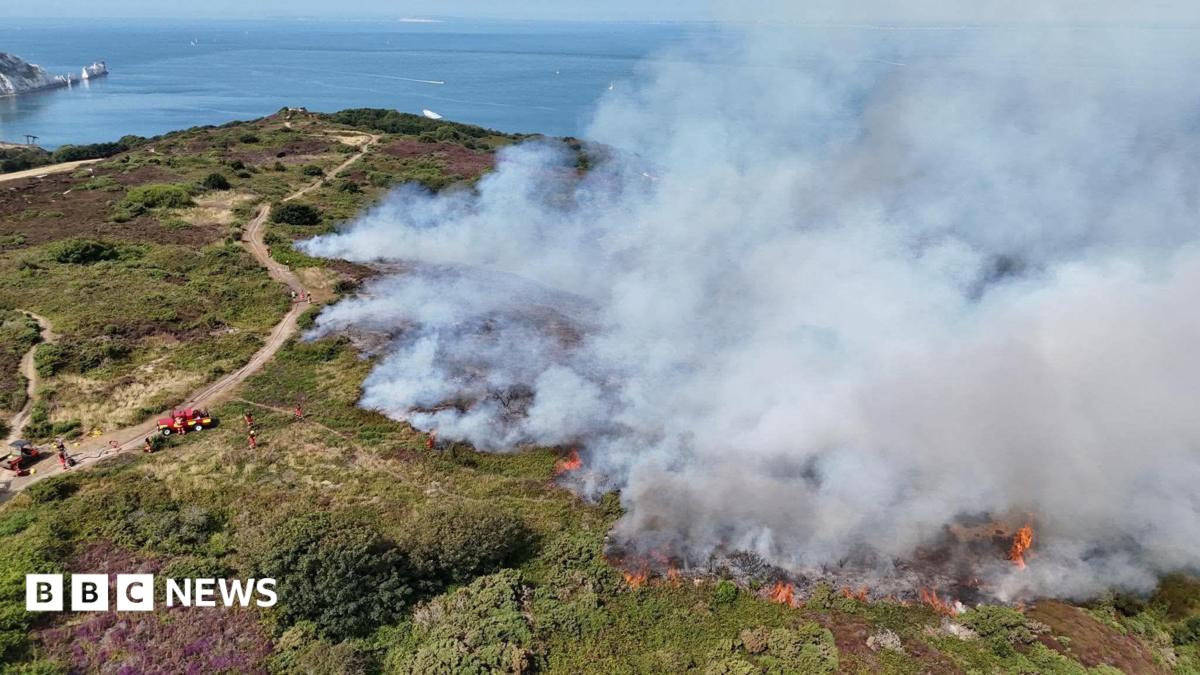
More than 65 firefighters are tackling a large gorse fire at Headon Warren on the Isle of Wight after it nearly quadrupled in size. By mid-afternoon on 23 July 2026 the heathland blaze spanned about 1,000m by 800m, with 14 engines and mainland support on scene. The public must stay away.
Key Takeaways
- A gorse fire at Headon Warren in the West Wight was first reported just after 09:00 BST on 23 July 2026.
- Hampshire and Isle of Wight Fire and Rescue Service said the blaze had almost quadrupled and covered roughly 1,000m by 800m by about 15:30.
- More than 65 firefighters and 14 fire engines were on scene, including mainland crews ferried across by Wightlink.
- Local farmers used tractors to cut fire breaks while the public was told to avoid the area and close windows if smoke drifted in.
- A separate field fire near Rookley was later extinguished, leaving a large area of farmland charred.
The emergency call that started the Headon Warren response came at 9:12am, according to Hampshire and Isle of Wight Fire and Rescue Service. Crews initially faced a gorse fire affecting about 200 metres by 250 metres of heathland in the West Wight.
Within hours the picture had changed sharply. By 1pm the service said the fire covered approximately 800 metres by 400 metres. Later updates put the affected ground at around 1,000m by 800m — roughly 3,300 ft by 2,600 ft — showing how quickly the heathland blaze expanded.
That growth is why the story matters beyond one coastal hillside. Island fire cover was already heavily committed, mainland engines were crossing the Solent, and ferry passengers faced delays while emergency vehicles took priority.
How big is the Headon Warren fire and how fast did it grow?
Official updates chart a clear escalation. The first footprint was roughly 200m by 250m. By early afternoon it was about 800m by 400m. By mid-afternoon Hampshire and Isle of Wight Fire and Rescue Service described a 1,000m by 800m fire on challenging terrain.
BBC News reported that the fire service said the blaze had almost quadrupled since crews began fighting it. That pace matches the service’s own timeline from the morning call through successive incident updates.
Smoke reports also widened the impact. Control Room staff received calls about smoke spreading to areas on both sides of the Solent. Residents who could smell smoke were told to close doors and windows, and to check whether a separate fire nearby was the cause before calling 999 if needed.
For the fullest official running account, see the Hampshire and Isle of Wight Fire and Rescue Service incident update.
Who is fighting the Headon Warren blaze?
More than 65 firefighters were on scene with fourteen fire engines, backed by specialist vehicles including water carriers, Land Rovers and command units. Island teams came from Newport, Cowes, Ventnor, Freshwater, Shanklin, East Cowes, Ryde and Sandown.
Mainland support arrived from Southsea, Lymington, Emsworth, Portchester, St Mary’s, Hardley, Havant and Hightown. Extra engines were also brought from Hampshire to stand ready for further island incidents while Headon Warren absorbed so many local appliances.
Wightlink said it transported nine fire engines via its Portsmouth route and one via Lymington. The operator said services had at times been held so emergency vehicles could move as fast as possible, though it described passenger delays as minimal at the time of its statement and thanked travellers for patience.
Crews used water jets, hose lines and specialist vehicles. Partner agencies and local farmers joined the effort, with tractors cutting fire breaks to help contain the spread across rough heathland.
What should the public do while Headon Warren remains alight?
The fire service’s message has been consistent since the morning call: stay away from Headon Warren and keep access routes clear for emergency vehicles. Approaching the scene risks blocking the routes crews need.
If smoke drifts into homes or workplaces, close windows and doors. The fire service also asked people to check whether a smell of smoke might come from a different local fire before dialling 999.
BBC reporting likewise urged the public to avoid the area while extinguishing work continued. That advice sits alongside the wider ask not to hinder mainland engines still moving onto the island to protect cover elsewhere.
Readers following disruption stories and practical money planning can also browse BlasterPost’s Wealth Hacks & Passive Income category hub for related coverage beyond today’s breaking incident.
Has the Headon Warren fire affected other blazes on the Isle of Wight?
Yes. Island Echo reported that firefighters were later called to a field fire on the outskirts of Rookley, at Pidford Manor between Rookley and Blackwater. An appliance from the mainland — already standing by on the island because of Headon Warren — attended that second scene.
The field fire was believed to be linked to hay cutting. Hampshire and Isle of Wight Fire and Rescue Service was already stretched by the West Wight wildfire, but crews moved to bring the Rookley incident under control quickly.
An Island Echo update at 15:21 said the Rookley field fire had been extinguished, though a large area of field was left charred. That second call underlines how one major heathland blaze can tighten cover across the island.
Countryside fire advice from local reporting remains simple: call 999 if you see a fire you cannot put out with a bucket of water; do not discard cigarettes in open country; clear glass that can magnify sunlight; and never leave campfires or barbecues unattended.
As of the latest mid-afternoon updates on 23 July 2026, Headon Warren remained the main draw on island and mainland fire resources. The fire service asked the public to stay clear, keep routes open, and close windows and doors if smoke drifts in while crews work to bring the gorse fire under control.