Gus T. rex fossil could become the priciest dinosaur ever sold
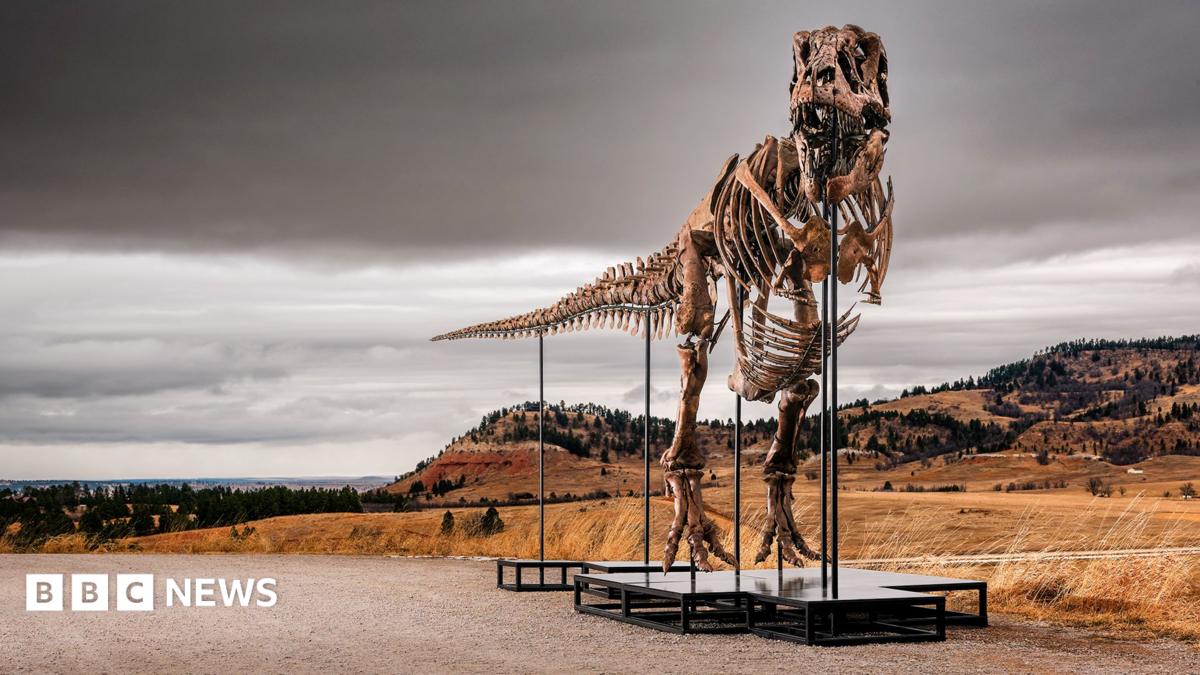
A 67-million-year-old Tyrannosaurus rex fossil nicknamed Gus heads to Sotheby's in New York on 14 July 2026 with a $20–30 million estimate—the highest ever placed on a dinosaur. Scientists warn that prestige auctions price museums out and lock specimens away from peer-reviewed research.
Key Takeaways
- Gus, one of the largest and most complete T. rex skeletons ever found, carries Sotheby's highest-ever dinosaur estimate at $20–30 million, with online bidding already at $19 million.
- The current auction record is the stegosaurus Apex, sold for $44.6 million in 2024; Gus could challenge that figure given T. rex popularity among collectors.
- Paleontologists say fossils in private hands are increasingly treated as luxury trophies rather than scientific assets, and top journals often refuse studies on them.
- Sotheby's argues high sale prices reflect years of dangerous excavation work that might otherwise leave fossils undiscovered underground.
- The sale fits a growing trend of ultra-wealthy buyers collecting dinosaurs alongside superyachts, supercars, and trophy real estate.
Why is Gus the T. rex fossil going up for auction?
Gus was discovered in 2021 on a cattle ranch in South Dakota's Badlands, where rancher Gary "Gus" Licking had found teeth and bone fragments for years. He recruited fossil hunter Thomas Heitkamp and Theropoda Expeditions to dig on a parcel he suggested—and that is exactly where the skeleton emerged.
It took three years to excavate Gus and another three years to document and reconstruct the find. Licking died in 2022 before the work finished; his widow Dana Licking and Heitkamp are selling the specimen. Sotheby's will display Gus at its Breuer gallery in New York from 1 July before the Natural History auction on 14 July.
How much could this rex fossil sell for?
Sotheby's has valued Gus at $20 million to $30 million—the highest pre-sale estimate ever placed on a dinosaur fossil. Online bidding had already reached $19 million ahead of the live sale. The BBC reports the final price could climb well beyond the estimate.
The current record belongs to Apex, a stegosaurus that sold for $44.6 million in 2024. All five of the most expensive dinosaurs sold at auction have changed hands since 2020, including Stan, a T. rex that fetched $31.8 million in 2020 and now anchors the Natural History Museum Abu Dhabi. Last year a juvenile Ceratosaurus sold for $30.5 million to a private buyer.
Why are scientists alarmed by luxury dinosaur sales?
For researchers, the problem is access. Prof Susannah Maidment told the BBC there is no substitute for studying the real fossil when mapping anatomy and verifying findings over decades. Yet the most respected scientific journals will not accept studies conducted on specimens held in private collections—as if they barely exist to science.
She says dinosaur skeletons are increasingly valued like fine art by wealthy collectors, driving prices beyond what public museums can match. The Observer notes that for some billionaires, a museum-quality rex fossil has become the ultimate status symbol—more exclusive than a Ferrari or superyacht. That trophy-market logic worries paleontologists who want unique finds preserved for public study, not locked behind mansion doors.
What does Sotheby's say in defence of the sale?
Sotheby's global head of science and natural history, Cassandra Hatton, argues the price reflects Gus's scientific importance: roughly 61–63% of bones identified, among the largest and most complete T. rex specimens ever catalogued. She told outlets the level of preservation is exceptional thanks to meticulous excavation standards.
Hatton also stresses that commercial fossil hunting demands skill, expense, and physical risk—and that auction proceeds reward teams who might otherwise never recover specimens buried on private land. It is a debate with no easy resolution, but one that will define who ultimately owns a piece of deep time. For more on how trophy assets reshape luxury collecting, see our Luxury Real Estate & Dream Homes coverage.