French wildfires flare as south-west braces for 40C heat
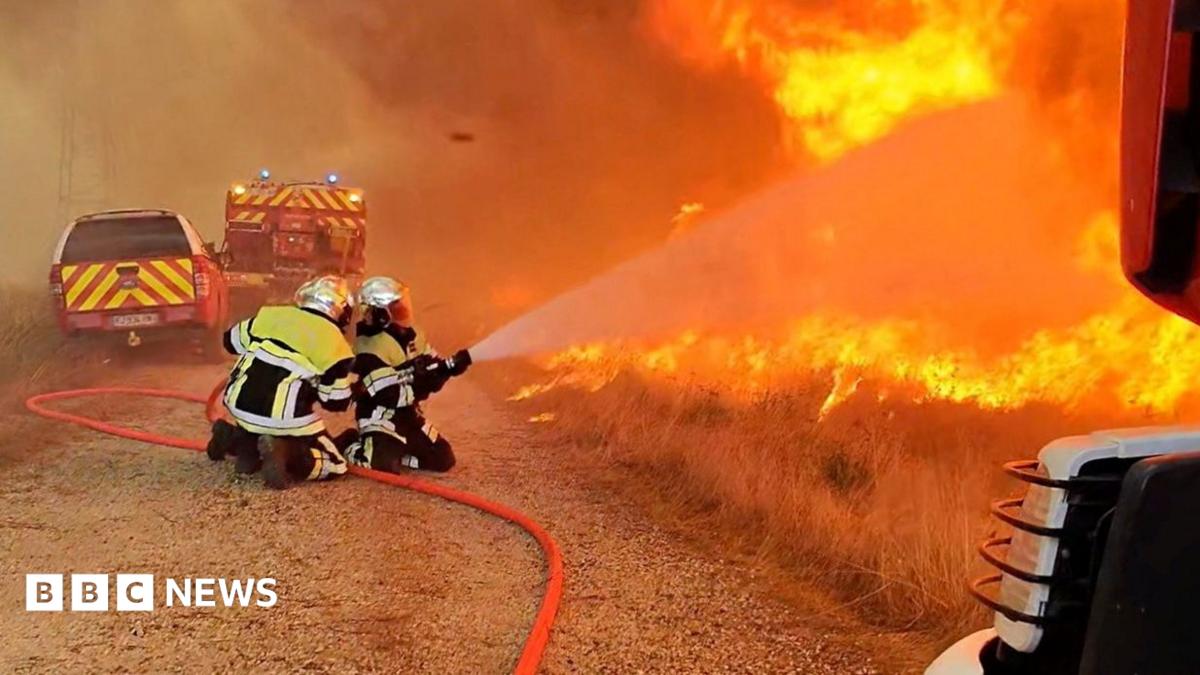
French wildfires in the Gironde near Bordeaux have flared again as about 4,000 tourists leave Lacanau campsites and the region braces for a new 40C heatwave. Roughly 220,000 people have been evacuated across France, some 240 homes destroyed, and hospitality businesses face a sharp summer hit.
Key Takeaways
- Fresh flare-ups hit the Gironde as France's fourth summer heatwave pushes temperatures toward 40C.
- About 4,000 tourists were ordered out of Lacanau coastal campsites; some 220,000 people have been evacuated nationwide in recent days.
- Officials say Bordeaux itself is not under immediate threat, though fires came within about 15km and air quality collapsed.
- Wine tourism and hospitality are already feeling the pinch as visitors desert smoke-hit areas.
- Spain and Portugal face parallel crises, with hundreds of thousands evacuated across southern Europe.
Wildfires tearing through south-west France have surged again just as the Atlantic coast prepares for another blast of extreme heat. Firefighters in the Gironde have been working around the clock while regional officials warn the emergency is far from over.
According to BBC News, 14 places already scarred by the blazes saw new flare-ups on Tuesday. Prefect Sophie Brocas put it bluntly: "We are not in the clear."
What is happening with the French wildfires right now?
The main front has ravaged countryside between the Atlantic coastline and Bordeaux. Commander Rémi Lassoureille, leading the Gironde response, said the blaze that has destroyed about 42,000 hectares (104,000 acres) of forest was "relatively under control," yet crews still feared a north-west flare toward Lacanau.
That risk drove Tuesday's precautionary order clearing campsites, holiday villages and other tourist lodgings around Lacanau. Residents in the nearby town could stay but were told to be ready for sudden evacuation.
Those nearly 4,000 departures come on top of vast earlier displacements. French officials say about 220,000 people have been evacuated in recent days, with an estimated 240 homes destroyed. The Guardian reports wildfires in France, Spain and Italy have forced roughly 330,000 people from their homes over the past week.
Eric Brocardi of France's national firefighters' federation compared the fight to "David against Goliath." About 2,000 firefighters have been deployed in the Gironde alone, and he said four colleagues had died in recent weeks across France.
President Emmanuel Macron, visiting a Bordeaux crisis centre, called the emergency the "toughest" France has faced since the Second World War and warned that "the coming weeks will be tough and we have to hold out."
Why does another 40C heatwave matter for containment?
Forecasters expect this summer's fourth heatwave to begin by Wednesday, with local temperatures climbing toward 40C. Similar extremes are forecast across Spain, where fire weather is already extreme.
Returning winds and heat threaten hard-won gains. By midday Tuesday, crews were again intervening as fires picked up across parts of the Gironde. Other French blazes have been contained in the Landes—where thousands of evacuees were allowed home—and in the Écrins massif in the Alps, though a fire in the Var's Gros Bessillon massif was not yet fully controlled.
Air quality in Bordeaux deteriorated sharply even though officials say the city itself is not currently under threat. One fire approached within about 15km (9 miles) of the metropolitan edge. Health Minister Stéphanie Rist urged people in affected zones to stay indoors as smoke blanketed streets and ash forced restaurants to shut doors.
A holidaymaker from Essex told the BBC the air was "really smoky" with ash, and that by Sunday evening the city had emptied out. Graham White of the Bordeaux British Community said shops, restaurants and cafes were "fairly empty," describing the episode as "something significant" for the region.
How are French wildfires hitting tourism income and local wealth?
Beyond the human cost, the fires are an immediate hit to summer cash flow in one of France's busiest tourist corridors. For readers tracking travel, property and local business risk, that money shock sits squarely in the same conversation as other wealth hacks and passive income stories about protecting earnings when climate disruption strikes.
Peggy Plouhinec, general director of Château Picque Caillou west of Bordeaux, said her estate closed at the weekend because of smoke. Vineyards were not at direct risk, but tourists had "deserted" the region. "The hospitality sector will be impacted this summer, that's for sure," she said, calling the situation unprecedented.
Coastal communities feel the squeeze differently. A Cap Ferret resident, evacuated late last week, told French media the peninsula of trees—not concrete-heavy Bordeaux—was the real catastrophe zone after so much woodland burned.
Interior Minister Laurent Nuñez said 184 people had been arrested since 6 July in connection with fires. A 23-year-old arrested on suspicion of starting a blaze in the Var faces up to 15 years in prison, underlining how arson probes run alongside the weather-driven emergency.
What is the wider European picture as heat returns?
Spain is wrestling with some of its worst forest fires on record while entering Europe's fourth intense heatwave of the summer. An Ávila blaze west of Madrid has burned about 50,000 hectares, described as Spain's largest on record. Authorities ended evacuation orders for some municipalities, allowing about 44,000 people to return home or leave confinement, and Prime Minister Pedro Sánchez said light was beginning to appear "at the end of the tunnel"—while still warning of difficult hours ahead.
A woman injured in an Almería wildfire earlier this month later died in hospital, bringing that blaze's death toll to 14. In Portugal, about 400 firefighters were tackling a large fire on three active fronts in the eastern Guarda area.
EU officials have deployed firefighting planes and helicopters to France and Spain. They also warn wildfires could still be burning into early November in what may become a record year for burnt land. By late July, France had already broken its full-year burnt-area record, according to European Forest Fire Information System data cited by The Guardian.
UN Climate Change executive secretary Simon Stiell said the climate alarm is "blaring, from every direction," with human and economic costs reaching "national emergency" levels. Scientists link a wet winter and spring—which grew dense vegetation—to a dangerously hot, dry summer that turned surplus plant growth into fuel.
For holidaymakers still in the zone, wildfire scientist Dr Thomas Smith of the London School of Economics advised installing fire-alert apps and knowing hotel evacuation plans. Timely evacuation, he stressed, saves lives.
French wildfires remain a moving target: flare-ups, evacuations and a fresh 40C pulse mean the next few days will decide whether Bordeaux's tourism belt can salvage late summer—or whether incomes keep burning with the trees.