Florida professor files lawsuit after short story firing
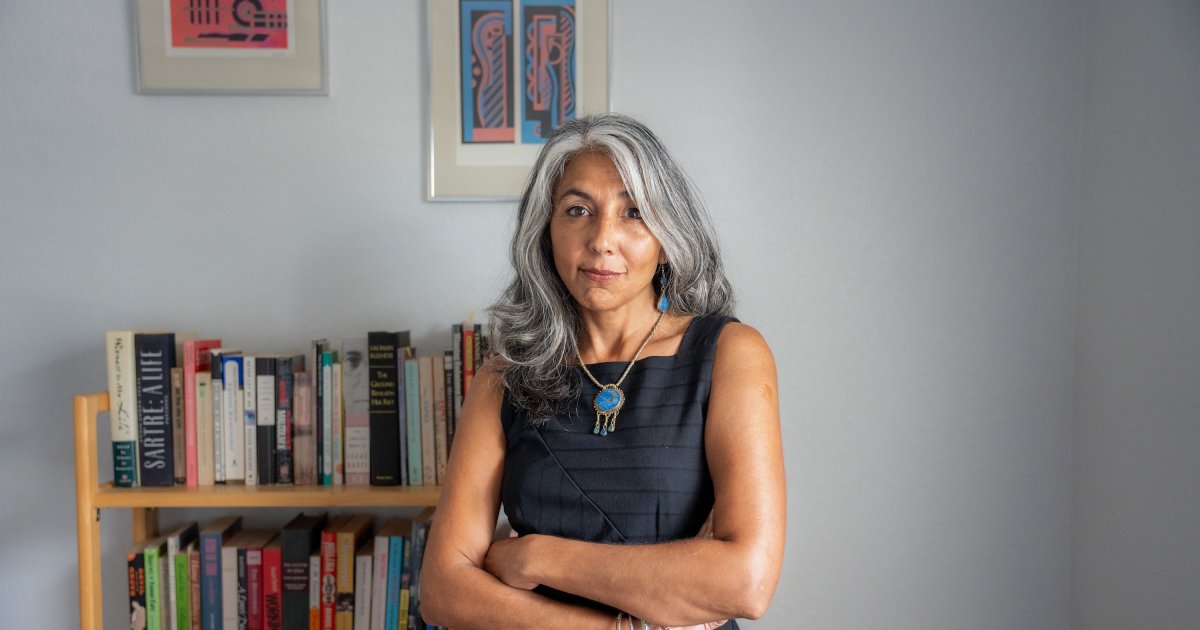
South Florida State College English professor Vinita Prabhakar was fired after assigning Ottessa Moshfegh’s short story “Bettering Myself” in a freshman literature course. She has filed a federal lawsuit claiming the firing violated her First Amendment rights. Represented by FIRE, she seeks reinstatement and damages from college President Fred Hawkins and the board of trustees.
In a case that has drawn national free-speech attention, Prabhakar says she lost her job for doing what English professors are hired to do: teach literature. According to the Foundation for Individual Rights and Expression (FIRE), the college president called the assigned story “political,” ordered her to stop teaching it, and moved to end her contract the next day—without a hearing or formal complaint.
The federal lawsuit, filed in the United States District Court for the Southern District of Florida, names Hawkins and the South Florida State College board of trustees. For readers tracking how workplace rights, income security, and professional risk collide, the dispute also sits near broader conversations covered in our Wealth Hacks & Passive Income hub—especially when a sudden firing threatens a long-built career.
Key Takeaways
- Prabhakar was fired after assigning Moshfegh’s award-winning short story “Bettering Myself” in Freshman English II.
- President Fred Hawkins allegedly called the story “political,” banned it from her teaching, and terminated her contract a day later.
- Department leaders backed her pedagogical explanation; she says she never received due process or a policy-based complaint.
- With FIRE’s support, her lawsuit seeks reinstatement, damages, and a declaration that the firing violated the First Amendment.
- FIRE links the episode to a wider Florida pattern of campus speech restrictions, including litigation over the “Stop WOKE Act.”
Why was Vinita Prabhakar fired from South Florida State College?
Prabhakar has taught English for close to two decades. After working at several upstate New York colleges, she moved to Florida in 2023 to be closer to her elderly parents and joined SFSC’s Avon Park campus.
In spring 2026, she assigned “Bettering Myself” in Freshman English II. She had used the story for nearly a decade. The piece follows an alcoholic, directionless Catholic-school teacher whose self-destructive behavior and inappropriate jokes make for an unsympathetic narrator. It won the 2013 Plimpton Prize for Fiction and is commonly taught at schools including the University of Florida, West Virginia University, and NYU, FIRE reported.
One student told Prabhakar she was “uncomfortable” with the reading. After classroom discussion, the student said she felt better about it. The issue did not end there.
Hawkins learned of the assignment and called Prabhakar into a meeting. She explained that the story fit a unit on unsympathetic and unreliable narrators and was taught alongside works by Hemingway and Raymond Carver. The English department chair, the dean of arts and sciences, and the college vice president backed that explanation, according to FIRE.
Hawkins was unmoved. He voiced a personal dislike of the story, demanded she stop teaching it, and would not specify what he objected to beyond calling it “political” and saying, “I don’t want to ever see this story again.”
The next day, Prabhakar was placed on administrative leave and told her contract would end after the semester. She says she never received a formal complaint or a clear statement of which policies she had broken. Human resources’ only explanation, FIRE reported, was that “the president has the final say.”
What does her First Amendment lawsuit claim?
Prabhakar is represented by FIRE Legal Network member Gary Edinger of Benjamin, Aaronson, Edinger & Patanzo, along with FIRE. The lawsuit argues that a public-college administrator cannot punish a professor simply for assigning relevant literature whose ideas the administrator dislikes.
“President Hawkins firing a professor for teaching a work of literature isn’t just a betrayal of every principle that a university is supposed to embrace,” Edinger said in FIRE’s announcement. “As a state employee, he also trampled over our client’s constitutional rights. The First Amendment doesn’t let public officials suppress ideas by firing the people who teach them.”
FIRE Senior Attorney Greg Greubel put the constitutional point bluntly: at a public university, “the Constitution has the final say.” The group argues the First Amendment protects professors from punishment merely because administrators disagree with ideas taught in class.
FIRE draws a line between legitimate curriculum control and viewpoint suppression. Colleges may set broad course expectations—an economics professor who assigned only scuba-diving books would be on thin ice. But assigning a short story inside an English literature course, FIRE says, was plainly relevant. Banning it because leaders dislike its ideas crosses into forbidden territory at a public college.
The complaint seeks reinstatement, compensatory damages, punitive damages, and declaratory relief. Those remedies matter beyond campus politics: they are the practical tools plaintiffs use when a contested firing strips salary, benefits, and professional standing overnight.
How does this lawsuit fit Florida’s free-speech fight?
FIRE frames Hawkins’ actions as part of a broader First Amendment struggle in Florida. Since 2022, the organization has been in federal court challenging provisions of the state’s so-called “Stop WOKE Act,” which it says chilled or banned classroom instruction on disfavored viewpoints about race, gender, and sexuality.
According to FIRE, Hawkins—a former Republican legislator—voted for that law and supported Gov. Ron DeSantis’s efforts to retaliate against Disney for criticizing it. Earlier in July 2026, the U.S. Court of Appeals for the Eleventh Circuit ruled in FIRE’s favor and upheld an injunction blocking Florida from enforcing the law against university students and faculty.
The appeals court rejected the state’s claim that it could dictate professors’ classroom speech. “Florida’s restrictions are, as the State admits, an attempt to force uniformity of thought on students by curtailing the free exchange of ideas in universities—the very environments traditionally regarded as laboratories for expression and truth seeking,” the court held, as quoted by FIRE.
Against that backdrop, Prabhakar’s case is not only a personnel fight. It tests whether a college president can yank a commonly taught story from an English class and fire the instructor who assigned it.
What is Prabhakar saying—and what happens next?
“For 20 years, I’ve taught students how to engage with stories that excite them, challenge them, and broaden their experience of what it means to be human,” Prabhakar said. “I don’t plan on stopping now. If what happened to me becomes the norm, colleges across America will become less curious, less vibrant, and less free.”
The lawsuit was announced July 29, 2026, from Sebring, Florida. It is now before a federal district court in South Florida. Unless the parties settle, the case will turn on discovery, constitutional arguments about academic speech, and whether the court finds viewpoint-based punishment.
For now, the core dispute is stark. A longtime literature teacher assigned a prize-winning short story used nationwide. A public-college president allegedly labeled it “political,” banned it, and ended her job. Her answer is a First Amendment lawsuit seeking her classroom—and a ruling that the Constitution, not a president’s personal taste, has the final say.