FDA leaders name longevity a priority at ARDD panel
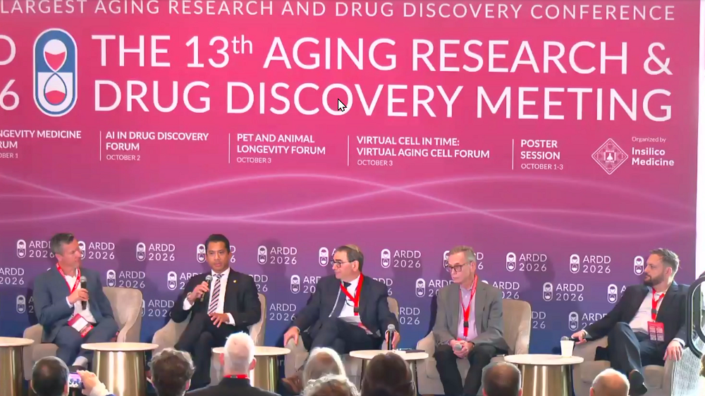
FDA leaders name longevity a priority at ARDD in Boston, saying aging will join the agency's Focus Areas of Regulatory Science and outlining paths for gerotherapeutic approval. Officials called it a defining moment for how the FDA adapts to rapidly evolving longevity science.
Key Takeaways
- At ARDD 2026 in Boston, senior FDA officials said aging and longevity will appear in the forthcoming Focus Areas of Regulatory Science (FARS) update, with a tentative fiscal year 2027 target.
- Deputy Commissioner Lowell Zeta called the moment an "inflection point" for how the FDA adapts to longevity science.
- Panelists outlined approval paths based on multiple age-related conditions or measures of intrinsic capacity, and urged biomarker collaboration.
- Sponsors were encouraged to submit concrete protocols through the Investigational New Drug (IND) process.
What happened at the ARDD FDA panel?
The 2026 Aging Research and Drug Discovery Meeting (ARDD) opened in Boston rather than its usual Copenhagen home, on a shortened three-day schedule. Day 1 focused on policy, regulation, and clinical translation.
A panel titled "Matching Clinical Trials of Therapeutics & Regulatory Mandates," moderated by Andrew Brack of ARPA-H, featured four senior FDA officials. They described growing agency interest in aging and how gerotherapeutics could progress toward approval—news closely watched across longevity and biohacking.
According to Lifespan.io's report, Lowell Zeta, Deputy Commissioner for Strategic Initiatives, said the topic matters for the agency and HHS at large: "It's a defining moment, an inflection point for the future of FDA and how we adapt to the rapidly evolving science in this space."
Why does including aging in FARS matter?
The clearest announcement came from Steven Kozlowski, the FDA's Chief Scientist. He said FARS sets high-level principles on areas that are very important to the agency, and that aging and longevity will be among those topics.
Kozlowski gave a tentative release target of fiscal year 2027. The previous FARS version was released several years ago. Elevating longevity into that agenda signals regulatory science attention that sponsors and researchers have long sought.
How could longevity therapies reach approval?
Jeffrey Siegel, Director of the Office of Drug Evaluation Sciences, described two approaches. One would accumulate evidence that a treatment benefits several age-related conditions. Another would measure deterioration across physical and mental capacities—intrinsic capacity—and show treatment slows that decline.
Justin Penzenstadler, Acting Associate Director of the Office of Cardiology, Hematology, Endocrinology, and Nephrology, expects early trials that could support approval to focus on age-related comorbidities or mortality. Functional assessments collected alongside those outcomes could inform later metrics.
He cautioned that broader aging claims need evidence beyond a drug's known benefits, and that decades of treatment with modest gains make benefit–risk demanding. He favors initial trials in older, higher-risk populations. Biomarkers may shorten trials only if they reliably reflect clinical benefit; the panel discussed collecting outcomes and candidate biomarkers together.
Penzenstadler urged a pre-competitive consortium to build a shared "cookbook of biomarkers," plus regular meetings among regulators, researchers, and industry. He identified his clinical review office as responsible for aging as an indication and encouraged sponsors to submit protocols and evidence through the IND process.
That push aligns with broader field efforts, including the Biomarkers of Aging Consortium's October 5–6, 2026 conference at Harvard Medical School, which brings regulatory and research leaders together on validated aging measures.